Last updated 7 August 2026. This page was reviewed on that date. Prices, rates and opening hours change often in Singapore — confirm anything that matters directly with the business before you travel or spend.
Quick answer: The best primary schools in Singapore depend on what you value most for your child. Nanyang Primary and Tao Nan School are superb for bilingual immersion, Raffles Girls’ and Methodist Girls’ offer strong all-girls environments, while Henry Park and Catholic High are known GEP centres. Ai Tong suits families wanting deep Chinese cultural roots. All seven below are well-regarded, each with its own character.
Choosing a primary school in Singapore is never just about proximity or programmes—it’s about finding a place that mirrors what your family values most. Whether it’s a strong bilingual tradition, a focus on inquiry, or a through-train path that removes one more hurdle, each school tells a different story about where your child belongs.

Want to compare across the whole category? That is what Best Tuition, Events & Services in Singapore is for — 19 guides in total.
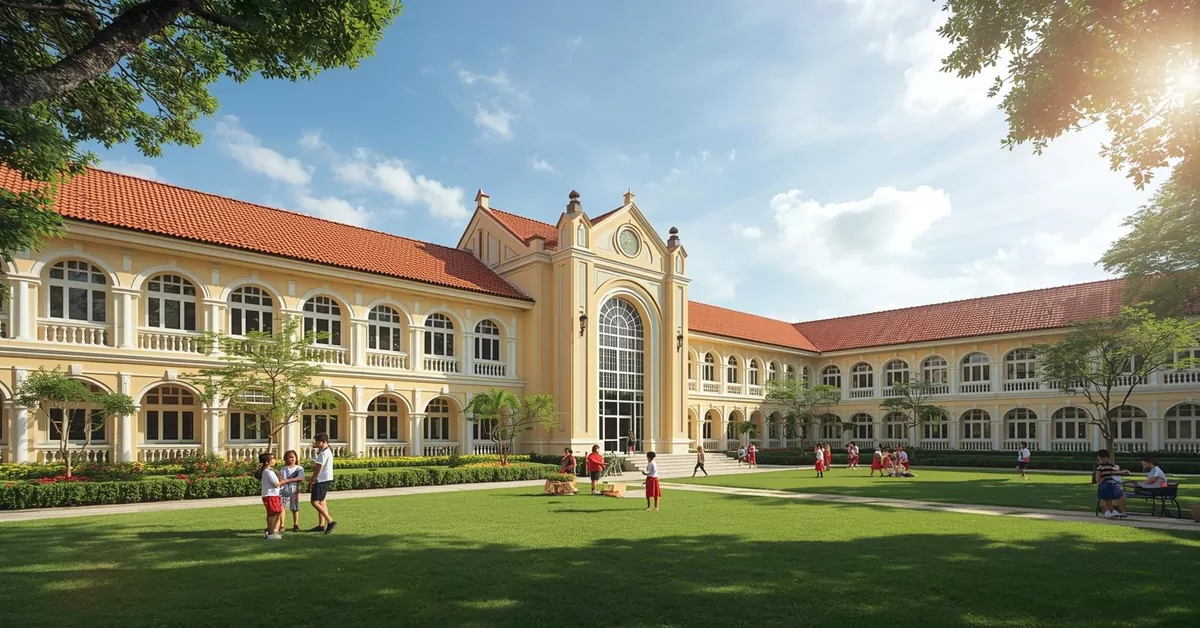
Choosing a primary school is less about chasing a name and more about finding a place where your child will grow into themselves. The schools on this list have long histories and distinct personalities. A few are SAP schools, which means they put extra weight on Chinese language and culture. Others are GEP centres, running the Gifted Education Programme for children who need a faster pace. Some offer both. And a couple are simply steady, well-loved neighbourhood institutions that have earned their reputation over decades. This is our own selection, not a paid one. Tell us if there is somewhere we should have included.
How to choose
Start with what you cannot change: your home address and the phases of Primary 1 registration. Distance matters, especially in the later phases, and some of these schools are in estates where demand far outstrips places. Then think about what your child actually needs.
If they thrive on language and culture, a SAP school like Ai Tong or Tao Nan could be a natural fit. If they already show signs of needing extra academic stretch, a GEP centre like Catholic High or Henry Park gives them that path without moving schools later. For parents who want a single-gender setting, Raffles Girls’ and Methodist Girls’ both provide that through-train feel from primary right up to secondary.
There is no official price tag for a government primary school, but school fees for Singapore citizens are modest. The real costs show up in uniforms, books, enrichment and transport. Factor in your daily logistics too. A school across the island means a child who spends hours commuting, and that time adds up fast over six years.
| School | Type | GEP Centre | Affiliation / Through-Train | Area |
|---|---|---|---|---|
| Nanyang Primary School | Co-ed, SAP | Yes | Nanyang Girls’ High (affiliated) | Bukit Timah |
| Raffles Girls’ Primary School | All-girls | Yes | Raffles Girls’ School (Secondary) | Bukit Timah |
| Catholic High School (Primary) | All-boys, SAP | Yes | Catholic High School (Secondary) | Bishan |
| Ai Tong School | Co-ed, SAP | No | None | Bishan |
| Tao Nan School | Co-ed, SAP | Yes | None | Marine Parade |
| Henry Park Primary School | Co-ed | Yes | None | Bukit Timah |
| Methodist Girls’ School (Primary) | All-girls | No | Methodist Girls’ School (Secondary) | Bukit Timah |
Nanyang Primary School

Along King’s Road in Bukit Timah, Nanyang Primary has been shaping children since 1917 and carries a quiet confidence that comes from doing it well for a very long time.
It is both a SAP school and a GEP centre, so the bilingual push is real and the academic ceiling is high. STEM gets proper attention here, with innovation labs and robotics workshops woven into the week. CCAs run from sports to Chinese heritage studies, so a child who loves tinkering and one who loves calligraphy both find their corner.
Address: 52 King’s Road, Singapore 268097
Phone: +65 6467 2677
Hours: Monday to Friday, 8:30 AM to 6:00 PM (general office)
Visit Nanyang Primary School
This one suits the family that sees Chinese fluency as non-negotiable and wants a proven, demanding programme without an overly pressured feel. The campus has a settled, unhurried atmosphere, and many parents say their children grow into self-starters here.
This is a natural fit for families where bilingualism and academic aspiration are woven into everyday life. The Bukit Timah setting feels unhurried and assured, much like the school itself. It suits children whose idea of fun includes robotics workshops, and parents who see Mandarin and STEM as complementary strengths rather than separate tracks.
Raffles Girls’ Primary School

On Hillcrest Road, RGPS has been educating young women since 1959. It is a GEP centre, and its whole design assumes girls will step into leadership early and often.
The gifted programme is the backbone, but what makes the school feel different is how much space it gives to character and voice. Performing arts studios and eco-gardens sit alongside science labs. CCAs push into music, innovation clubs, and sports. The school expects a lot academically, but it also makes room for girls to figure out who they are, which is exactly what many parents are hoping for at this age.
Address: 21 Hillcrest Road, Singapore 289072
Phone: +65 6468 4377
Hours: Monday to Friday, 7:00 AM to 5:30 PM during term time (general office)
Visit Raffles Girls’ Primary School
If your daughter is already showing strong opinions and a hunger to lead, RGPS gives her the framework to channel that. The all-girls environment means girls take every role, from sports captain to science club head, and that normalises ambition in a way that sticks.
Parents who view education as a leadership crucible will find that rhythm here. The school expects girls to shape opinions early and share them often. It appeals to families who want the secondary-school-ready composure to emerge organically—through performance, eco-projects, and a culture that treats student voice as a given, not a privilege.
Catholic High School (Primary)

In Bishan, Catholic High has been an all-boys SAP and GEP school since 1935, and its alumni list tells you something about the kind of men it aims to produce. The through-train to its secondary section is a big draw for parents who would rather not go through the secondary school selection dance twice.
Values sit alongside academics here in a way that feels deliberate, not bolted on. The bilingual programme runs deep, the GEP cohort pushes the pace, and the media library and science labs are geared for boys who learn by doing. Sports, leadership camps and cultural activities fill out the week. There is an earnestness to the place that many families find grounding.
Address: 9 Bishan Street 22, Singapore 579767
Phone: +65 6458 9869
Hours: Monday to Friday, 7:30 AM to 5:30 PM (general office)
Visit Catholic High School (Primary)
This is the school for parents who want their son to be sharp but also kind, and who value the Catholic ethos of service and responsibility. The through-train takes a load off your mind, too. This is our own selection, not a paid one. Tell us if there is somewhere we should have included.
This all-boys school speaks to parents who prize continuity—the through-train to its secondary section soothes the transition anxiety. It fits families who want values like self-discipline to develop alongside academic rigour, and for whom a deeply bilingual foundation feels as essential as the Bishan location itself.
Ai Tong School

Ai Tong in Bishan has been a SAP school tied to the Singapore Hokkien Huay Kuan since 1929, and it wears its Chinese heritage comfortably. It is one of those schools that regularly tops the Phase 2A registration numbers, which says something about the trust families place in it.
The Chinese Heritage Centre on campus is the heart of the cultural programme, and mathematics gets a strong push alongside it. CCAs like table tennis and gymnastics are taken seriously, and the inquiry-based learning approach means children are taught to ask questions rather than just absorb answers. There is a warmth to the parent community, too. People tend to stay involved.
Address: 100 Bright Hill Drive, Singapore 579646
Phone: +65 6454 7672
Hours: Monday to Friday, 7:30 AM to 5:30 PM (general office)
Visit Ai Tong School
Pick Ai Tong if your family speaks Mandarin or dialect at home and you want a school that reinforces that identity every day. It is also a good fit for a child who does not need the GEP track but still wants an academically solid environment with a strong sense of belonging.
For families with a quiet pride in Chinese heritage and community trust, Ai Tong feels like home. The strong Phase 2A registration numbers reflect generational loyalty. It suits children who light up when mathematics is given the spotlight and who find their footing in the cultural programmes anchored by the Chinese Heritage Centre.
Tao Nan School

Tao Nan School in Marine Parade was founded in 1906, making it one of the oldest Chinese schools in Singapore. It is now a SAP school and a GEP centre, and it carries its history lightly while keeping its eyes on the future.
Heritage rooms on campus anchor the cultural education, and the bilingual programme is thorough. CCAs span arts, sports and leadership, and the inquiry-based learning spills over into enrichment activities that get children thinking across subjects. East-side families who want a top SAP school without crossing the island every morning circle this one on their list early.
Address: 49 Marine Crescent, Singapore 449761
Phone: +65 6442 8307
Hours: Monday to Friday, 7:30 AM to 5:30 PM (general office)
Visit Tao Nan School
If you are in the East and bilingualism is high on your list, Tao Nan is the natural first look. It suits a curious child who enjoys language and culture, and the GEP option means high-ability learners are catered for without changing schools later. For a similar cultural emphasis in a different part of the island, you might also look at our list of Enrichment Classes Elevating Young Minds in Singapore.
A school that balances a 1906 lineage with a GEP future suits families who love heritage that never feels old-fashioned. The Marine Parade location means East Coast mornings stay breezy. It’s for the relentlessly curious child, and for parents who believe a bilingual programme should feel as alive as the inquiry spilling out of every classroom.
Henry Park Primary School

On Holland Grove Road, Henry Park has been a GEP centre since 1977 and has built a reputation as a school where bright children are stretched without being overwound. It is co-ed, non-SAP, and its focus is squarely on critical thinking and creativity.
The GEP is the headline, but the arts and sports programmes are genuinely strong, and innovation labs and learning journeys give children ways to apply what they learn. Parents often mention the supportive feel of the place. The campus has space to move, and the rhythm of the school day feels considered rather than crammed.
Address: 1 Holland Grove Road, Singapore 278790
Phone: +65 6466 3600
Hours: Monday, Tuesday, Thursday, Friday: 7:15 AM to 1:30 PM; Wednesday: 7:15 AM to 1:00 PM (school sessions; office till 5:00 PM)
Visit Henry Park Primary School
Henry Park suits the parent who hears “GEP” and worries a little about balance. The school seems to understand that high ability needs high support, not just high demand. If your child picks things up quickly but also needs room to be a kid, this one is worth the visit. Many families here also explore Enrichment Centres in Singapore to supplement what the school offers.
This is the match for parents who believe bright children need stretching, not stressing. The co-ed, non-SAP environment gives equal weight to critical thinking, creative expression, and sports. It suits the child who learns best when curiosity leads, and families who prefer a Holland Grove address that hums with quiet focus.
Methodist Girls’ School (Primary)

MGS has been on Blackmore Drive since 1887, an all-girls school with a through-train to its secondary section and a strong Methodist character that runs through everything it does. It is not a SAP school or a GEP centre, yet its academic results hold their own against any school in the country.
English and literature are particular strengths, and values education shapes the culture more than any single programme. The sports complex supports a serious athletics and performing arts CCA line-up, and leadership training is woven into the daily experience. Many alumnae speak of the school as formative in a deeper sense, not just for what they learned but for the confidence they gained.
Address: 11 Blackmore Drive, Singapore 599986
Phone: +65 6469 4800
Hours: Monday to Friday, 7:30 AM to 5:30 PM (general office)
Visit Methodist Girls’ School (Primary)
Choose MGS if you want your daughter in a nurturing, all-girls setting where moral grounding and academic rigour go hand in hand. The through-train is a practical plus, and the school has a way of producing young women who are articulate and self-assured without being brittle. For parents thinking about long-term health alongside education, our piece on Urology Hospitals in Singapore covers another side of family wellbeing worth knowing about.
Summary
These seven schools each offer something real and distinct, from deep bilingual roots to all-girls confidence-building to GEP pathways that stretch capable children. Your choice turns on who your child is and what your family values most, paired with the practical realities of location and registration phases. There is no single best, only the best fit.
Disclaimer: All information provided here has been compiled from publicly available sources. While we have made every effort to ensure accuracy, we do not guarantee that the information is complete or error-free. We disclaim any liability for inaccuracies or omissions. If you find any errors or have concerns about the content, please let us know so we can address them promptly.
Read next
Frequently asked questions
MGS draws families who want a values-led, all-girls education where English and literature serve as a lens on the world. The through-train to secondary school lifts a weight, and the absence of GEP or SAP labels belies the quiet academic strength. It’s for parents who trust character development to carry achievement further than any programme alone.
What is the difference between a SAP school and a GEP centre?
A SAP (Special Assistance Plan) school emphasises Chinese language and cultural heritage through a bilingual curriculum. A GEP (Gifted Education Programme) centre runs a dedicated programme for children identified as high-ability learners. Some schools, like Nanyang Primary and Catholic High, are both.
Do I need to live nearby to get into these schools?
Proximity matters a lot in the later phases of Primary 1 registration. In the early phases, alumni connections and sibling priority carry more weight. Check the latest MOE distance categories for each school when planning.
Are there fees for these primary schools?
For Singapore citizens, monthly school fees are modest. The larger costs come from uniforms, textbooks, enrichment programmes and transport. The MOE website lists current fee amounts.
Which school is best for a child who is strong in Chinese?
All four SAP schools on this list—Nanyang, Catholic High, Ai Tong and Tao Nan—build Chinese language and culture deeply into daily school life. Ai Tong, in particular, has a Chinese Heritage Centre on campus.
Can my son attend an all-girls school on this list?
No. Raffles Girls’ Primary and Methodist Girls’ Primary are single-gender schools for girls only. Catholic High Primary is all-boys. The other schools are co-educational.
How do I prepare my child for the GEP if we are aiming for a GEP centre?
The GEP screening happens in Primary 3 for most children. The best preparation is a broad, curious childhood with plenty of reading, puzzles and conversation. No specific tuition is required, and the MOE advises against drilling for the tests.