Last updated 7 August 2026. This page was reviewed on that date. Prices, rates and opening hours change often in Singapore — confirm anything that matters directly with the business before you travel or spend.
Quick answer: Whether you want a rowdy family dinner over chilli crab or a quiet anniversary meal with lobster ee-fu noodles, these seven Chinese seafood restaurants deliver. Chin Huat Live Seafood is our go-to for communal feasting, while Summer Pavilion and Jiang-Nan Chun set the tone for Michelin-starred elegance. San Ren Xing bridges Fujian spice and Sichuan fire, and Shisen Hanten brings Szechwan kick with a view.
When the same old dinner rotation starts feeling like autopilot, a Chinese seafood restaurant can be the jolt you need—new flavours, new rooms, new reasons to gather your favourite people. This list is for Singapore diners who crave discovery and a little more drama on the plate. From sky-high Szechwan feasts to garden hideaways, here’s where to book next.

Not sure this is the right list? Best Chinese Food & Dim Sum in Singapore has 50 others alongside it.
San Ren Xing
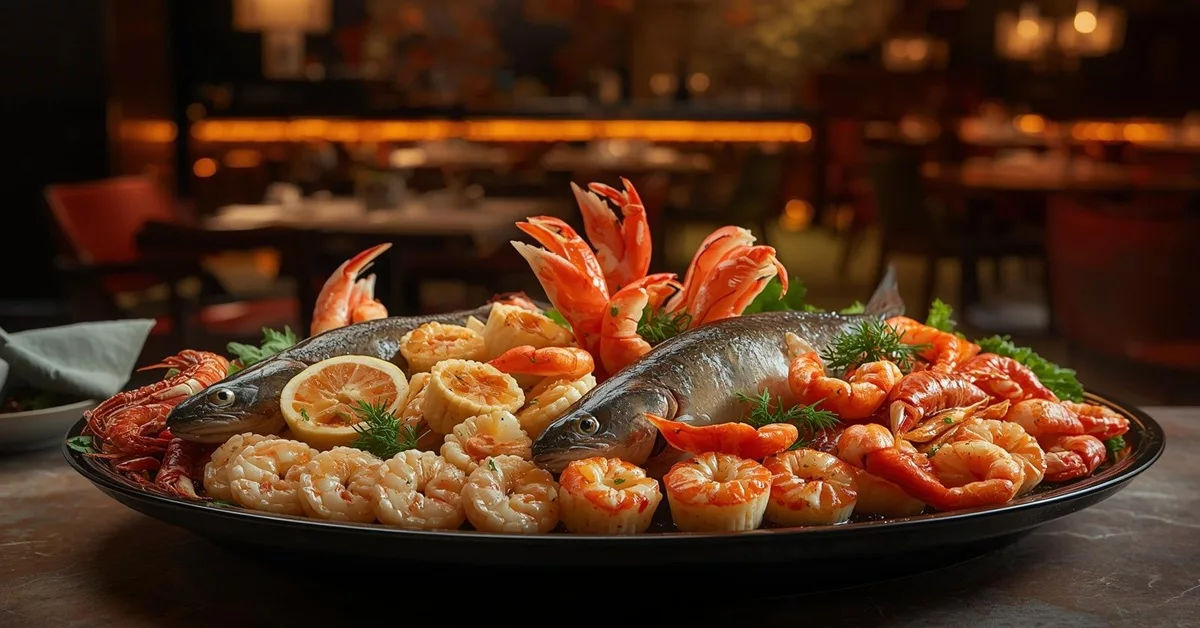
San Ren Xing on Upper Thomson Road is that corner spot where Fujian and Sichuan cooking do a polite tango. The kitchen puts out over 80 dishes, but the steamed fish and spicy prawns are what you’ll hear regulars ordering again and again. It’s a no-fuss family setup—tables are close, and the aroma of wok hei hangs in the air. The prawns are damn shiok, a bright, tingly heat that doesn’t bully the seafood.
Location & hours: 301 Upper Thomson Rd, #01-122/123, Singapore 574408. Open Sun–Thu 11am–9pm; Fri, Sat & public holidays 11am–9.30pm. Phone: 6970 2128. http://sanrenxing.sg/
If you have a big mixed group with different spice tolerances, this place covers everyone without making a dent in the wallet. It is equally at home for a weeknight dinner as it is for a spontaneous weekend feast.

If you enjoy exploring Singapore’s diverse food scene, you might also like our guide to Sichuan Food Restaurants in Singapore.
The kind of place you jio your most adventurous friends when everyone’s tired of the same old Cantonese seafood. The Fujian-Sichuan menu is a proper curveball—spicy, fragrant, and full of dishes you won’t find at the average wedding dinner. It’s casual, buzzy, and built for a long, messy feast.
Shisen Hanten by Chen Kentaro
Shisen Hanten sits high on the 35th floor of Hilton Singapore Orchard, and the view alone sets the stage for a Szechwan feast. The mapo tofu with crab arrives silken and dangerous, the spice building slowly until you’re reaching for the next mouthful. Lobster dishes here are a statement—the kitchen has held onto Michelin stars and a reputation that crosses borders from its roots in Japan.
Book this for a milestone birthday or an important client dinner—the 35th-floor view from Hilton Singapore Orchard does half the impressing before the first dish arrives. The kitchen’s touch with seafood is effortlessly refined, and the mapo tofu with crab is the dish you’ll still think about on the ride home.
Location: 333 Orchard Rd, Level 35, Hilton Singapore Orchard, Singapore 238867. Phone: 6831 6262. http://www.shisenhanten.com.sg/
A date night or a business meal where you want the city lights and some serious culinary heat—this is the one. The dining room feels dressed-up but never stiff.

We compile these ourselves and take suggestions. If your business belongs on this list, tell us why.
Jade Palace Seafood Restaurant
Jade Palace on Orchard Road, tucked into Forum The Shopping Mall, is a classic Cantonese seafood hall. The live tanks are the first thing you see, packed with crabs and prawns that can turn up on your table steamed, sautéed, or wok-fried with ginger and spring onion. Generations of families have held birthday dinners here; the service is old-school attentive, and the sauces are the kind you mop up with mantou.
This is where you take the whole extended family when aunties and uncles demand proper Cantonese cooking. The live tanks are the real deal, and the service has that old-school warmth that makes you feel like a regular even on your first visit. A safe pair of hands for festive reunions.
Location: 583 Orchard Rd, B1-13, Singapore 238884. Phone: 6732 6628. http://www.jadepalace.com.sg/
A comfortable, unfussy celebration where nobody feels underdressed. The menu is deep enough that you can return a few times and still find something new to try.

Chin Huat Live Seafood
Chin Huat Live Seafood down Sunset Way has been pulling in crowds since 1982. The drill is simple: you point at a tank, and a while later a steaming plate of chilli crab lands, the sauce a deep orange-red, demanding a basket of fried buns. The steamed fish is honest and clean-tasting—the kind of dish that reminds you why fresh is everything.
Location & hours: 105 Clementi Street 12, Sunset Way, #01-30, Singapore 120105. Daily lunch 11am–2.30pm; dinner 5pm–10.30pm (closed Tuesdays, except public holidays). Phone: +65 6775 7348. https://www.chinhuatliveseafood.com/
Go in a group, order way too much, and get your hands dirty. This is communal eating at its most primal—a birthday bash with friends who aren’t afraid to use their fingers.

While you’re moving around Orchard, you might also like our guide to Singapore’s Elite Premium Food in Telok Ayer.
Come here for the unpretentious crab dinner that started it all back in 1982. The atmosphere is pure Sunset Way nostalgia—plastic chairs, warm lighting, and the kind of chilli crab that demands you roll up your sleeves. Plan to tapau extra fried buns; the sauce is too good to leave behind.
Xin Cuisine Chinese Restaurant
Xin Cuisine, in the Holiday Inn Singapore Atrium, is one of those hotel restaurants that locals actually book for Sunday dim sum. But beyond the har gow and siew mai, the seafood menu is worth the trip alone. The braised lobster ee-fu noodles are silky and rich, and the abalone with sea cucumber feels like a proper treat. The kitchen’s dim sum accolades suggest they know their way around a steamer, which translates into delicate seafood handling across the board.
Location & hours: 317 Outram Rd, Singapore 169075. Lunch Wed–Fri 11.30am–3pm; dinner Wed–Sun 5.30pm–9.30pm; weekend lunch seatings 11.30am–1pm & 1.15pm–3pm (closed Mon & Tue). Phone: +65 3138 2531. https://singaporeatrium.holidayinn.com/xincuisine
It is an under-the-radar pick for Cantonese seafood that does not need a hotel lobby fanfare. Bring the family for a relaxed weekend lunch that still feels like an occasion—book ahead for dim sum hours.

A hotel restaurant that locals actually return to for non-hotel reasons. The lobster ee-fu noodles are rich and silken, perfect for when you want a celebratory meal without the full fine-dining fuss. Go on a Sunday, order some dim sum as a starter, and let the seafood take centre stage.
Summer Pavilion
Summer Pavilion at The Ritz-Carlton is a garden dining room that has held a Michelin star for nine years running. The Cantonese menu changes with the seasons, and the seafood is treated with a light touch—tea pairings and hand-painted plates add to the feeling that this is a step above. The kitchen works with the freshest catch and isn’t afraid to let the ingredients speak quietly.
For the quiet anniversary dinner where every detail matters. The garden setting at The Ritz-Carlton feels miles away from the city, and the kitchen treats seafood with a gentle precision. It’s the kind of meal that rewards slowing down—book an early seating and plan to linger over tea.
Location: 7 Raffles Ave., Level 3, The Ritz-Carlton, Millenia Singapore, Singapore 039799. Phone: 6434 5286. https://www.summerpavilion.com.sg/
Book a table when you have something special to toast—an anniversary, a promotion—and let the kitchen guide you. The room itself is serene enough that the meal becomes the memory.

Jiang-Nan Chun
Jiang-Nan Chun at Four Seasons Singapore draws inspiration from a poetic region, and the room feels like a refined countryside manor. The Peking duck, roasted over mesquite wood, often gets the headlines, but the braised spiny lobster shows what the kitchen can do with seafood. Seasonal ingredients shape the menu, and the soups are talked about long after the bowl is empty. A Michelin star and a One Diamond in the 2025 Black Pearl Restaurant Guide underline what regulars already know.
Location & hours: 190 Orchard Boulevard, Level 2, Four Seasons Hotel Singapore, Singapore 248646. Lunch 11.30am–2.30pm; dinner 6pm–10.30pm. Phone: +65 6831 7220. https://www.fourseasons.com/singapore/dining/restaurants/jiang_nan_chun/
When you need privacy and a menu that impresses without shouting, the private dining rooms here are the answer. It is the kind of place you book when the occasion deserves its own hush.

If you are into heritage eats, you could also check out Unwrap Opulence: Singapore’s Elite 7 Bak Zhang in 2025.
How to choose
Think about the mood first. Are you gathering a noisy group for chilli crab and beer, or is this a quiet dinner where someone is probably going to cry happy tears? If it’s the former, Chin Huat and San Ren Xing fit like a glove. For the latter, Summer Pavilion or Jiang-Nan Chun will hold the moment properly.
Spice tolerance matters. Sichuan heat can be a thrill, but not everyone at the table wants that fire. Shisen Hanten and San Ren Xing both do spice beautifully, while the Cantonese spots—Jade Palace, Xin Cuisine, Summer Pavilion, Jiang-Nan Chun—let the seafood’s natural sweetness take the lead.
Price-wise, Chinese seafood restaurants in Singapore cover a wide band. A casual crab dinner can start around $50 per person, while a multi-course meal with lobster and premium tea pairings can run past $200. Always confirm directly with the restaurant before you book, especially if you are planning a large gathering.
We compile these ourselves and take suggestions. If your business belongs on this list, tell us why.
| Restaurant | Cuisine | Standout Dish | Setting | Best For |
|---|---|---|---|---|
| San Ren Xing | Fujian & Sichuan | Spicy prawns, steamed fish | Casual family-friendly | Mixed groups, everyday indulgence |
| Shisen Hanten | Szechwan | Mapo tofu with crab, spicy lobster | Luxurious high-rise | Romantic dinners, business meals |
| Jade Palace | Cantonese | Live crab & prawn dishes | Timeless elegant | Family gatherings, comfortable celebrations |
| Chin Huat Live Seafood | Chinese seafood focus | Chilli crab, steamed fish | Lively upscale casual | Group feasts, birthday bashes |
| Xin Cuisine | Cantonese | Braised lobster ee-fu noodles, abalone | Warm inviting | Dim sum lunch, seafood treats |
| Summer Pavilion | Modern Cantonese | Seasonal seafood creations | Serene garden elegance | Special occasions, fine dining |
| Jiang-Nan Chun | Cantonese | Braised spiny lobster, Peking duck | Rustic luxury | Private celebrations, refined meals |
Summary
From chilli crab in Sunset Way to lobster in a Michelin-starred garden, these seven restaurants cover the spectrum. The best one is the one that matches the mood you are after—so think about who is coming and what kind of memory you want to make. Every place on this list knows how to handle fresh seafood, so you really cannot go wrong.
Disclaimer: All details were accurate at the time of writing, but opening hours, menus and prices can change. Please confirm with the restaurant before you head down.
Read next
Frequently asked questions
Step into this Four Seasons dining room when you need a meal to feel like a calm, poetic escape. The braised spiny lobster is a highlight, but the real magic is in the way seasonal ingredients shape every course. Come with someone who appreciates a long, thoughtful lunch.
Which Chinese seafood restaurant in Singapore is best for a large family dinner?
Jade Palace Seafood Restaurant and San Ren Xing both offer spacious, welcoming settings with versatile menus that please different generations. Chin Huat Live Seafood also suits big groups if everyone is happy to dig into shared plates of crab and steamed fish.
Do any of these restaurants serve Sichuan-style seafood?
Yes, Shisen Hanten by Chen Kentaro specialises in Szechwan dishes like mapo tofu with crab and spicy lobster. San Ren Xing also brings Sichuan influence alongside Fujian cooking, so you get a range of bold, peppery seafood options there.
What is the best spot for chilli crab among these?
Chin Huat Live Seafood has been serving chilli crab since 1982 and is known for its thick, eggy sauce and fresh tank-to-table crabs. It is a top pick among locals for a messy, satisfying crab dinner.
Are private dining rooms available for celebrations?
Jiang-Nan Chun offers private dining rooms for more intimate gatherings. Other restaurants may have semi-private areas; it is best to check directly with the venue when you make your reservation.
Do I need to make a reservation?
Most of these restaurants, especially the hotel-based ones like Summer Pavilion and Jiang-Nan Chun, strongly encourage reservations. Even casual spots like Chin Huat and San Ren Xing fill up on weekends and public holidays, so calling ahead is a good idea.
What is the typical price range at these restaurants?
Costs vary widely. Casual crab-and-rice meals can start around $50 per person, while fine-dining experiences with lobster, abalone and tasting menus can top $200 per person. Confirm current prices with the restaurant directly, as they can shift with seasonal ingredients.