Last updated 7 August 2026. This page was reviewed on that date. Prices, rates and opening hours change often in Singapore — confirm anything that matters directly with the business before you travel or spend.
Quick answer: For Singapore businesses looking to open a corporate account, DBS and OCBC are standout choices for multi-currency flexibility and strong digital platforms. UOB rewards local spending with rebates, while CIMB keeps costs low with no fall-below fees. If you run an e-commerce startup, Airwallex and Aspire offer borderless, fintech-first experiences. Maybank is your go-to if you need deep ASEAN connections. The right fit depends on where your money moves.
For those needing an account that juggles many currencies smoothly, the fit is Business Bank Accounts That Handle Multiple Currencies in Singapore.

When a client payment stalls or payroll won’t clear, you need a corporate bank account that doesn’t just look good on paper—it works the moment you need it. This list is for business owners who’ve had enough of slow onboarding and hidden fees. Focus on what matters: fast setup, cross-border handling, and daily transaction smoothness, so you can get back to running your company.
If none of these quite fit, Best Bank Accounts & Savings in Singapore has 21 lists covering the rest of the category.
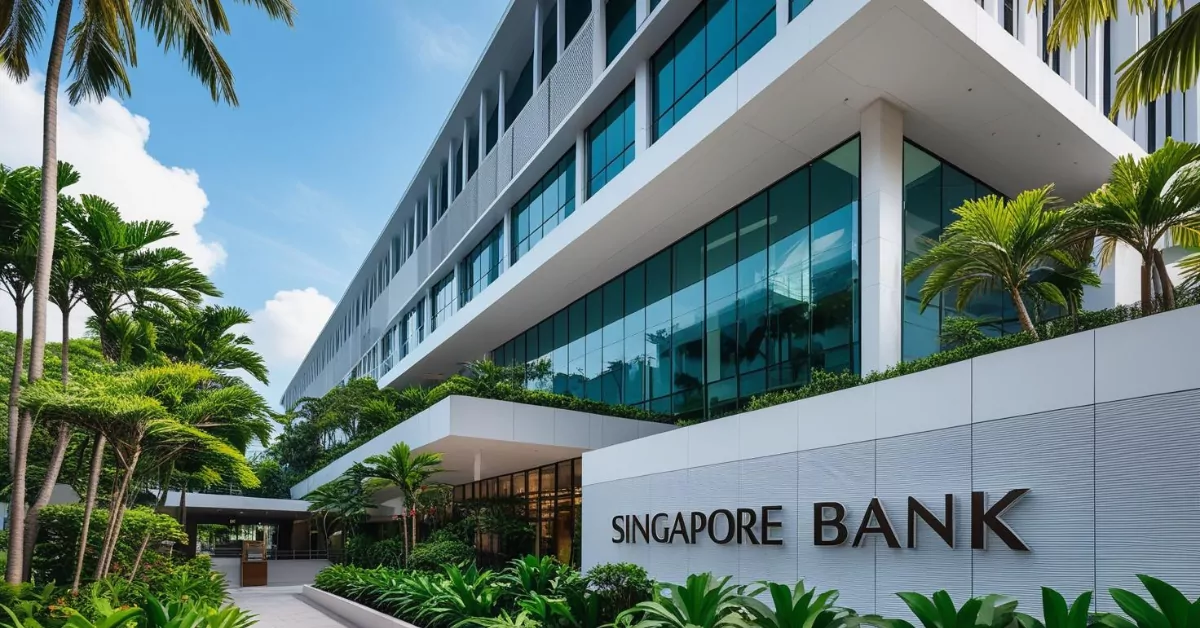
DBS Bank
DBS sits at Marina Bay and is the bank most founders think of first when the business starts trading across borders. They’ve poured serious effort into making digital banking work without the usual hassle – the DBS IDEAL platform ties your payroll, trade finance, and cash management into one dashboard, so you’re not hopping between five screens just to approve a payment.
Their Business Multi-Currency Account handles SGD and twelve other currencies, including USD, EUR, and AUD. You get unlimited free FAST and GIRO transfers, no FX fees at competitive rates, and 1% cashback on corporate card spends. If your firm already invoices overseas or pays suppliers in multiple currencies, all that paperwork and cost just shrinks.
Phone: 1800 222 2200 (local) or +65 6222 2200 (overseas). Main branch: 12 Marina Boulevard, DBS Asia Central @ Marina Bay Financial Centre Tower 3, Singapore 018982. Operating hours Monday to Friday, 8:30am to 8:30pm, excluding public holidays. DBS Bank
This account suits the ambitious exporter, the startup planning a Series A, and anyone who wants a bank that has already won “Asia’s Safest Bank” multiple times and still pushes out useful app updates every quarter. If you’re also thinking about personal wealth, our look at Elite Bank Accounts for Singapore’s Affluent Entrepreneurs in 2025 might come in handy later.

If you’re scrambling to consolidate payroll, trade finance, and cross-border cash flow, DBS lets you do it all from one IDEAL dashboard. Setup is quick, leaving you more time to calm the crisis at hand. The multi-currency account keeps currency conversion simple, so when an overseas client pays late, you can still process without a second thought.
OCBC Bank
OCBC has deep roots in Singapore’s SME scene, and it shows. Their Chulia Street headquarters isn’t just a landmark; the teams there actually listen when a business owner says they need more than a cookie-cutter account.
The OCBC Business Growth Account gives you 1% cashback on debit card spending and unlimited FAST and GIRO transactions for the first two months. Bundle it with a Multi-Currency Account supporting 13 currencies, and you can park, receive, and send USD or ringgit without opening separate accounts. The real draw for businesses in healthcare, logistics, or F&B is the sector-specific support – OCBC Velocity can generate e-invoices and cashflow snapshots that make a huge difference when you’re chasing receivables.
Phone: +65 6538 1111. Main office: 65 Chulia Street, OCBC Centre, Singapore 049513. Open Monday to Friday, 8:00am to 8:00pm. OCBC Bank
Good for owners who want a relationship manager who remembers their name, and for anyone whose business runs on regional supply chains. Euromoney named them Best SME Bank in Singapore, and you’ll feel why when you call their business hotline.

For SME owners who’ve been burned by rigid banking terms, OCBC’s approach feels like a partner that actually listens. Open the Business Growth Account during a tight month, and the cashback and unlimited transactions for the first two months help you stretch every dollar while you stabilise cash flow.
If your priority slides from corporate features to growing personal savings simply, consider Which Bank for Savings Account Wins Without the Fuss.
UOB Bank
UOB’s Plaza at Raffles Place is a familiar sight for anyone who’s done a corporate deal in town. Their eBusiness Account is built for companies that do most of their business within Singapore but still want a little financial reward for all that activity.
You get rebates on FAST and GIRO payments – up to S$0.50 per transaction – and fee waivers on bulk payroll runs. Spend online with the corporate card and you’ll see up to 1.5% cashback. The UOB Infinity app and SME app are free to use, and while multi-currency options are limited, if your cashflow is mainly SGD the savings add up fast.
Phone: +65 6259 8188. Address: 80 Raffles Place, UOB Plaza, Singapore 048624. Banking hours Monday to Saturday, 8:00am to 8:00pm (Saturday hours are a lifesaver). UOB Bank
Perfect for the local service business, the restaurant group, or the construction firm that just wants to hold on to more of what it earns. The Saturday hours mean you can sort out paperwork without losing a weekday morning.

No one bought a spot on this list. If we have overlooked you, say so and we will consider it next time round.
When you’re managing daily local payments and payroll under pressure, UOB rewards that routine. The eBusiness Account gives you rebates on FAST and GIRO, and bulk payroll fee waivers free up funds for unexpected outlays. It’s designed for the hours you spend on routine banking, turning them into small savings.
CIMB Bank
CIMB may not have the biggest signage on Raffles Place, but their SME Account is like that reliable uncle who never overcharges you. It runs on a lean model: unlimited free FAST, GIRO, and payroll transactions through BizChannel@CIMB, and – importantly – no fall-below fee. If your balance dips, you won’t get that painful monthly deduction.
The account is SGD-focused, so it’s not the one for handling euros daily. But you do get access to business loans, trade financing, and treasury services when you need them. E-alerts and mobile banking keep you in touch without fancy dashboards.
Phone: 1800 438 7888 (toll-free) or +65 6438 7888. Office: 30 Raffles Place, #04-01, Singapore 048622. Open Monday to Friday, 9:00am to 5:00pm, closed on weekends and public holidays. CIMB Bank
A solid choice for lean startups, sole proprietorships, and small teams who’d rather spend their budget on growth than on bank charges. CIMB’s awards for Best Islamic SME Bank in Singapore reflect a culture of straightforward, no-nonsense service.

Business owners tired of surprise maintenance fees find relief with CIMB. No fall-below charge means one less line to worry about when your balance dips between supplier payments. The unlimited free transactions keep your daily cash moving without eroding margins, a practical comfort during lean periods.
Airwallex
Airwallex is a fintech that operates out of Cecil Street but lives in the cloud. If your business was born online – an e-commerce store, a SaaS startup, a cross-border marketplace – you’ll feel right at home. Their Business Account supports over 20 currencies for both holding and transfers across more than 30 countries, with FX rates that make traditional banks sweat.
There’s no cheque support (but when was the last time you wrote one?), and everything runs through a clean dashboard with API integrations if your tech team wants to automate payments. Customer support is via chat or email ([email protected]), and the service is available online 24/7.
Office: 30 Cecil Street, #19-08 Prudential Tower, Singapore 049712. Airwallex
This is for the entrepreneur whose business address is a laptop, who pays freelancers in three time zones, and who hates waiting three days for a wire transfer to clear. The speed and cost-effectiveness have earned them spots on global fintech lists. For more banking ideas, see our roundup of Singapore&# ;s Elite Business Bank Accounts.

For online businesses that hit a wall when a cross-border payment stalls, Airwallex gets you moving again. Their platform handles over 20 currencies and gives you real FX rates, so you can convert and transfer funds fast, avoiding the delays that frustrate your overseas customers.
Aspire
Aspire runs an all-in-one digital platform from their Syed Alwi Road office, and they’ve made a name for themselves by letting you open a business account from your phone without a single visit to a branch. The account handles 19 currencies, bulk payments, and expense management, and it syncs with accounting software – think Xero or QuickBooks.
Funds are held in a trust with a Tier 1 Singapore bank, so your money sits safely. There’s no cheque support, but for digital-first SMEs, that’s hardly a loss. Custom plans are available for larger firms, and the opening process is free.
Phone: +65 3165 1500; email: [email protected]. Address: 1 Syed Alwi Road, #04-04, Singapore 207628. Accessible online 24/7. Aspire
Built for founders who do their banking between meetings, who want expenses tracked without spreadsheets, and who plan to scale across the region. If you like what they’re doing, you might also want to peek at our list of Online Savings Accounts in Singapore to park surplus cash wisely.

If your startup needs a business account opened yesterday, Aspire’s phone-based setup is a lifeline. While you sort out supplier contracts, the account syncs instantly with Xero or QuickBooks, so your books stay tidy. Funds sit safely with a Tier 1 bank, giving you peace of mind during the rush.
Maybank
Maybank’s tower at Battery Road is a quiet powerhouse for companies with one foot in Singapore and the other in Malaysia, Indonesia, or beyond. Their FlexiBiz Account wraps together flexible financing, trade services, and their Maybank2u digital platform – nothing flashy, but deeply practical when you’re moving goods across the Causeway.
Competitive interest rates on business loans and a suite of payroll and remittance tools make it easy to run a regional operation from a single account. Their ASEAN connectivity is the real selling point; if you’re expanding into markets where Maybank already has a strong presence, the support network comes pre-built.
Phone: 1800-777 0022. Address: 2 Battery Road, Maybank Tower, Singapore 049907. Hours Monday to Friday, 10:00am to 6:30pm (closed weekends and public holidays). Maybank
Ideal for trading companies, manufacturers with regional supply chains, and family businesses that value a banker who knows the local landscape in more than one country. They’ve won Best Trade Finance Bank in Singapore, and clients keep mentioning the personalised advice.

No one bought a spot on this list. If we have overlooked you, say so and we will consider it next time round.
About the figures on this page. Rates, bonuses and qualifying spends were checked against the issuers’ own sites on 5 August 2026. Singapore banks revise these frequently — several cut their headline savings rates more than once in 2026 alone — so treat every number here as correct on that date rather than a standing promise, and confirm on the issuer’s page before you apply or move money.
How to choose
Start with where your money actually moves. If you pay suppliers and get paid in SGD most of the time, an account like UOB’s eBusiness Account will give you the most value through rebates. If your receivables are in USD, EUR, or ringgit, you need a multi-currency workhorse – DBS and OCBC let you hold and move a dozen currencies without separate accounts.
Next, think about volume. CIMB’s unlimited free transfers suit a business that churns through payments daily, while Aspire and Airwallex are designed for online-first companies that process payments digitally and rarely write cheques. Sector matters too: OCBC has dedicated teams for healthcare, logistics, and F&B, so if you’re in those trades you’ll get advice that isn’t generic.
Always ask about fall-below fees, initial deposit requirements, and transaction charges beyond the first few months. Many accounts advertise free periods that later shift to a fee schedule. A quick call to the business hotline before you open is time well spent.
| Bank | Best For | Key Feature | Multi-Currency Support | Fees to Note |
|---|---|---|---|---|
| DBS Bank | International trade, digital-first firms | Business Multi-Currency Account, 12 currencies, unlimited free FAST/GIRO, 1% cashback | 12 currencies | No FX fees, competitive rates |
| OCBC Bank | SMEs in healthcare, logistics, F&B | Business Growth Account, 1% cashback, unlimited FAST/GIRO for first 2 months, sector-specific support | 13 currencies | Free local transfers initially; check ongoing fees |
| UOB Bank | Domestic-focused businesses | eBusiness Account, rebates on FAST/GIRO, up to 1.5% cashback on online spends, payroll fee waivers | Limited | Rebates lower cost; check transaction fees |
| CIMB Bank | Lean SMEs, cost-conscious startups | SME Account, unlimited free FAST/GIRO/payroll, no fall-below fee | SGD-focused | No fall-below fees |
| Airwallex | E-commerce, global startups | Business Account, 20+ currencies, API integrations, competitive FX | 20+ currencies | No cheque support; FX spreads apply |
| Aspire | Digital SMEs, expense management | Business Account, 19 currencies, accounting integrations, funds in trust with Tier 1 bank | 19 currencies | Free opening; custom plans for large firms |
| Maybank | ASEAN expansion, trade finance | FlexiBiz Account, flexible financing, trade services, competitive interest rates | ASEAN connectivity | Check interest rates and fees |
Summary
The best corporate account is the one that matches your cashflow – whether you need a multi-currency workhorse from DBS or OCBC, a rebate-heavy domestic account from UOB, a no-fee option from CIMB, a digital-first experience from Airwallex or Aspire, or Maybank’s regional reach. Spend a little time comparing the small-print fees and you’ll land the right fit for your business.
Disclaimer: All details were correct at the time of writing but can change. Confirm directly with the business before opening an account.
Read next
Frequently asked questions
Traders with regular shipments across the Causeway appreciate Maybank’s steady hand during a logistical hiccup. Their FlexiBiz Account wraps flexible financing and trade services into one digital dashboard, so you can release a held shipment with a few clicks, no frantic calls needed.
Which corporate bank account is best for small businesses in Singapore?
For lean startups or sole proprietorships that want to keep costs low, CIMB’s SME Account is a strong pick because it has no fall-below fee and unlimited free FAST, GIRO, and payroll. If you’re comfortable managing everything online, Aspire and Airwallex let you open an account without visiting a branch and support multiple currencies.
Can I open a corporate bank account online without visiting a branch?
Yes. Aspire and Airwallex are fully digital, so you can open an account remotely. Traditional banks like DBS and OCBC also offer partial online applications but may require a visit or additional documentation, especially if you are a new business.
What are the typical fees for a corporate bank account?
Fee structures vary. DBS offers unlimited free FAST and GIRO and no FX fees. OCBC gives unlimited free local transfers for the first two months. UOB provides rebates that offset transaction costs. CIMB stands out with no fall-below fees and free transfers. Aspire and Airwallex have free account openings; check their site for ongoing transaction fees.
Do these accounts support multi-currency transactions?
Most do. DBS supports 12 currencies, OCBC 13 currencies, Airwallex over 20, and Aspire 19. UOB’s multi-currency options are limited, making it better suited for SGD-dominant firms, and CIMB is SGD-focused. Maybank’s strength lies in ASEAN connectivity rather than a broad currency list.
Is there a minimum balance requirement for these accounts?
Only CIMB explicitly states there is no fall-below fee, so you won’t be charged if your balance drops. Other banks typically have a minimum average daily balance policy. It’s best to ask the bank directly before opening.
How long does it take to open a corporate bank account?
Digital-only providers like Aspire and Airwallex can often approve an account within a few business days if your documents are in order. Traditional banks may take a week or more, depending on verification and the need for a branch appointment.