Last updated 7 August 2026. This page was reviewed on that date. Prices, rates and opening hours change often in Singapore — confirm anything that matters directly with the business before you travel or spend.
Quick answer: Singapore’s seafood scene runs deep, and these seven spots are where you’ll find the real deal – from buttery oysters at Humpback to the claypot crab bee hoon that made Mellben famous. Greenwood Fish Market is the go-to for fresh platters and a fish counter, Marcy’s brings bold Latin flair, and Jumbo Signatures puts a fine-dining spin on chilli crab. Red House Seafood, New Ubin Seafood, and Mellben round out the list for families, big groups, and crab diehards.
If halal certification is a must for your seafood feast, turn to our guide to halal seafood worth marking the calendar for in Singapore.

Seafood here splits two ways: the shell-cracking, rice-ordered-on-the-side communal feast, and the sharp, precise plate where the fish does the talking. This list is for when you are deciding which craving to feed. The question is not which is best, it is what kind of evening you are actually planning.
Browsing rather than buying today? Best Seafood in Singapore lays out all 12 guides in one place.
Humpback

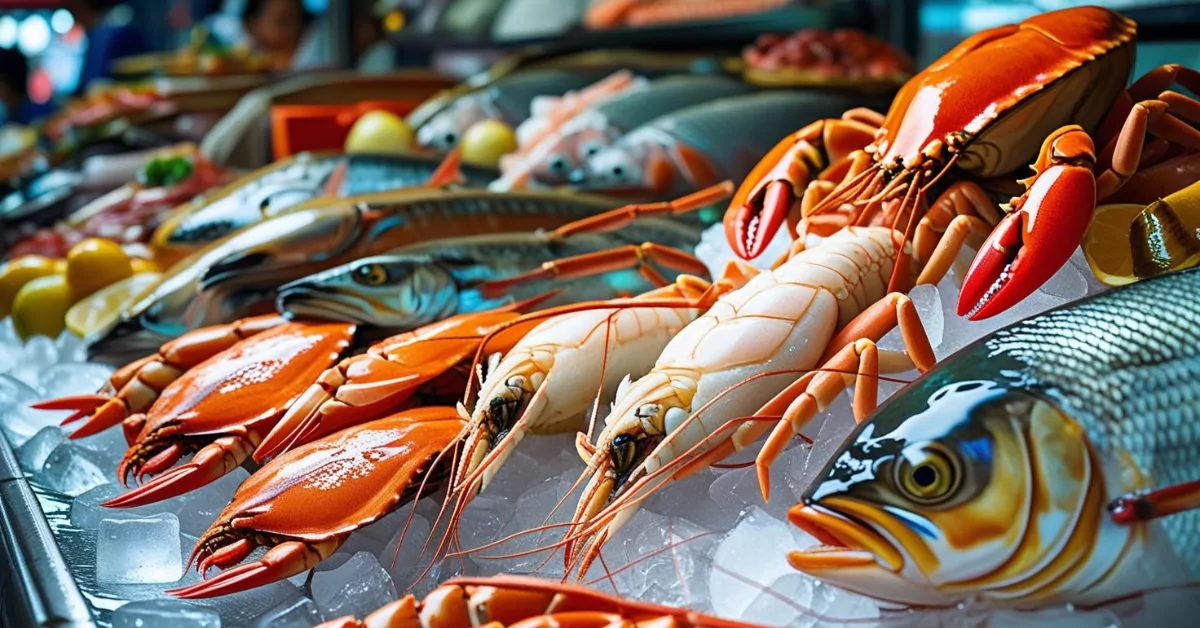
Tucked along a row of shophouses on Bukit Pasoh, Humpback does oysters properly – flown in from the Pacific Northwest within 36 hours, shucked to order, and lined up on ice with barely a squeeze of lemon. The kitchen blends European technique with Japanese restraint, so you get small plates like house-cured hamachi pastrami and mussel toast with nduja that taste clean and deliberate. Ricotta cavatelli with swordfish belly bacon shows up often, and when marble goby is on, just order it. The wine list runs over sixty labels, most available by the glass, which makes it easy to try a few.
It’s the kind of place you book when someone says “I feel like seafood but not zi char tonight” – enough buzz to feel like you’re out, but quiet enough to hear your date without shouting.
Go when the plan is a tight, considered date night where the bill covers craft, not volume. The room feels like a secret you earned by walking past three bars on Bukit Pasoh. Sit at the counter and let the shuckers set the pace.
Address: 18-20 Bukit Pasoh Road, Singapore 089834
Phone: +65 9772 9896
Hours: Mon–Fri 5pm–11pm, Sat 12pm–11pm, Sun 12pm–9pm
Website: humpback.sg
Greenwood Fish Market

Greenwood Fish Market has been doing the sea-to-table thing since 2003, and their Bukit Timah flagship still pulls in families and weekend regulars who know exactly which slab of fish they want from the counter. This is part market, part restaurant – you can grab KYS oysters, half a Boston lobster, marinated yellowfin tuna, and house-smoked salmon on a cold platter, then settle in for an omakase session or a bowl of Fisherman’s Stew that pulls from Western, Asian, and Japanese cooking.
The vibe is no-fuss air-conditioned indoors with a side of neighbourhood chatter. Come for lunch, stretch it into a lazy afternoon, and maybe buy a couple of fresh fillets to cook at home tomorrow. The wine list is crisp and the portions are meant for sharing – good luck not over-ordering.
This suits the family Sunday lunch where half the table wants something cooked and the other half is eyeballing the chiller cabinet. The buy-from-the-counter-then-eat-it flow makes indecisive groups oddly decisive.
Address: 34 Greenwood Avenue, Singapore 289236
Phone: +65 6467 4950
WhatsApp: +65 9067 7660
Hours: Daily 12pm–10:30pm
Website: greenwoodfishmarket.com
Nothing on this page is a paid placement. If you know a place that should be here, let us know before the next update.
For a thoughtfully chosen selection of seafood spots, turn to our guide to seafood restaurant smarts in Singapore.
Marcy’s

Duxton Road has a few surprises and Marcy’s is one of them – a narrow little bistro that throws Latin American swagger into Italian seafood plates and somehow makes it all taste effortless. The red prawn mafaldine is a reason to go by itself, the Pacific amberjack tiradito comes sporting a dollop of avruga caviar, and the hassleback frites with Patagonian prawn cocktail feel like a cheeky snack that got an upgrade.
Dim lighting, a counter that faces the bar, and a playlist that knows what it’s doing – this place works for a date night when you want food that sparks conversation. Happy hour runs 5:30pm to 6:30pm Tuesday to Thursday and Sunday, so early birds get a better deal on cocktails before dinner.
Book this when you want seafood that arrives looking like a party. It is narrow, loud in the right way, and the kind of place where an extra plate of pasta just materialises because the table cannot agree to stop ordering.
Address: 39-40 Duxton Road, Singapore 089503
Phone: +65 9012 3747
Hours: Tue–Thu & Sun 5:30pm–10:30pm, Fri–Sat 5:30pm–12am
Website: marcys.sg
Jumbo Signatures

This is chilli crab done the fine-dining way – colonial-style booth seating, sommelier-guided wine pairings, and a tasting menu that lets you eat award-winning mud crab without the messy fingers. Jumbo Signatures at Marina Bay Sands pre-peels its live crabs, so the sweet meat comes out clean, whether it’s the classic chilli crab or a black pepper version dressed with truffle and egg white.
They run executive set lunches on weekdays and longer weekend sittings, which makes a midday crab indulgence less of a splurge. Save this one for when the in-laws are in town or you’re marking a milestone that deserves cloth napkins and polished service.
Pick this when parents are visiting and chilli crab needs to happen without the wet tissue carnage. The pre-peeled crab is the whole value proposition. Go for the executive lunch if you want the room at its calmest.
Address: 2 Bayfront Avenue, #B1-01B, The Shoppes at Marina Bay Sands, Singapore 018972
Phone: +65 6688 7023
Hours: Lunch Mon–Fri 11:30am–3pm, Sat–Sun 12pm–3:30pm; Dinner daily 5:30pm–10:30pm
Website: jumbosignatures.com.sg
Red House Seafood

Red House Seafood has been around since 1976, long enough that many Singaporeans first tasted chilli crab at one of their tables. Today the Grand Copthorne Waterfront outlet keeps that Nanyang soul intact while stretching the menu to include whole lobsters prepared eleven different ways – cheese-baked, braised with ee fu noodles, you name it. They also do braised abalone, Scottish razor clams, and live Australian lobster sets for a proper blowout.
It’s big, airy, and built for multi-generational dinners where grandpa wants his chilli crab medium-spicy and the kids will eat anything in a fried bun. Book a table for Sunday lunch and settle in.
This is the intergenerational choice, especially the waterfront outlet. It handles the uncle who only trusts the classics and the cousin who wants to see a whole lobster done eleven ways, all without anyone feeling short-changed.
Address: 392 Havelock Road, Level 2, Grand Copthorne Waterfront, Singapore 169663
Phone: +65 6735 7666
Hours: Lunch 12pm–2:30pm, Dinner 5pm–10pm daily
Website: redhouseseafood.com
If Nyonya cuisine calls for a different kind of feast, see our Finest Nyonya Culinary Experiences in Singapore.
New Ubin Seafood

New Ubin Seafood started life as a rustic Pulau Ubin zi char stall and now owns its CHIJMES address like a boss – big tables, cold beer, and a menu that doesn’t pretend to be anything other than a good time. You come here for the weird-but-works combo of USDA Black Angus ribeye with heart attack fried rice, and you stay because the chilli crab and hokkien mee special taste like a loud, happy Sunday at home.
They’re open till 1am, which is a blessing when the craving hits late. Bring a group, order one of everything, and don’t skip the online pick-up if you’d rather eat in your own living room.
Come in a group of six or more, order one of everything that sounds improbable, and let the sharing plates land. The CHIJMES setting means you can pivot to drinks nearby after, but honestly, the fried rice might end the evening early.
Address: 30 Victoria Street, #02-01B/C, CHIJMES, Singapore 187996
Phone: +65 9740 6870
Hours: Daily 11am–1am
Website: newubinseafood.com
And for halal-friendly seafood spreads, our Finest Halal Seafood Experiences in Singapore guide has you covered.
Mellben Seafood

If crab is all you care about, Mellben Seafood in Ang Mo Kio has been the answer since 1985. Their claypot crab bee hoon soup is the stuff of group chats – milky, rich, and filled with fresh crab that soaks up that broth. The butter crab and creamy salted egg prawns don’t let the side down either, and the menu stretches to 36 dishes if you need something beyond claws and shells.
The space is nothing fancy, and the queue starts early, so go soon after they open at 5pm or be prepared to wait. This is for the crab purist who wants flavour, freshness, and zero pretence.
The move is to come on a weekday, queue before peak, and treat the claypot crab bee hoon as the main, the side, and the soup course. It is a one-dish focus in a space that has zero interest in impressing you with decor.
Address: 232 Ang Mo Kio Avenue 3, St 22, #01-1222, Singapore 560232
Phone: +65 6285 6762
Hours: Daily 5pm–11pm
Website: mellbensignature.sg
Nothing on this page is a paid placement. If you know a place that should be here, let us know before the next update.
How to choose
Start with the kind of meal you want. If you’re after a quiet, romantic dinner with oysters and wine, Humpback or Marcy’s makes sense. For a big family gathering where the table shares everything, Red House Seafood or New Ubin Seafood fit the bill – the former is more old-school Nanyang, the latter is rowdier and runs late. Crab obsessives who don’t need white tablecloths can head straight to Mellben.
Budget-wise, places like Humpback, Marcy’s, and Jumbo Signatures will feel like a treat night out. Greenwood Fish Market and Red House sit in the middle, and New Ubin or Mellben deliver serious value for what you get, especially in a group. Check opening hours carefully – a few only open for dinner, and weekends fill up fast. When in doubt, call ahead and ask about the day’s catch.
| Restaurant | Specialty | Atmosphere | Price Range | Best For |
|---|---|---|---|---|
| Humpback | Oysters & seasonal small plates | Intimate bistro, date-night chic | Check with the business | Wine & oyster lovers |
| Greenwood Fish Market | Cold seafood platters, fish market | Casual, market-style | Check with the business | Families, fresh fish takeaway |
| Marcy’s | Latin-Italian raw seafood & small plates | Dim, secret-gem vibe on Duxton | Check with the business | Adventurous date night |
| Jumbo Signatures | Refined chilli & pepper crab | Colonial elegance at MBS | Check with the business | Special occasions, business dinners |
| Red House Seafood | Nanyang-style crabs and lobster | Grand, old-school waterfront dining | Check with the business | Multi-generational feasts |
| New Ubin Seafood | Crab and zi char with meat dishes | Lively, communal CHIJMES setting | Check with the business | Group dinners, late-night makan |
| Mellben Seafood | Claypot crab bee hoon soup | No-frills neighbourhood crab house | Check with the business | Crab purists, casual dinner |
Summary
These seven tables cover the seafood spectrum in Singapore – from a quiet plate of oysters to a messy, glorious crab feast with family. What ties them together is freshness, a clear point of view in the kitchen, and the kind of meal you’ll find yourself texting a friend about the next day.
After all that richness, a good pot of tea helps everything settle – our Finest Tea Brands in Singapore list has some calming brews worth checking out.
Disclaimer: Details can change, hours shift, and menus evolve. Always confirm directly with the business before heading down.
Read next
Frequently asked questions
Which seafood restaurant is best for a special occasion?
Jumbo Signatures offers tasting menus and pre-peeled crab in a polished Marina Bay Sands setting, ideal for celebrations. Humpback’s intimate bistro with a long wine list suits romantic milestones beautifully.
Are these seafood restaurants halal-certified?
Not all listed spots are halal. For dedicated halal seafood options, refer to our Finest Halal Seafood Experiences in Singapore guide.
Do I need to make a reservation?
Most of these places fill up during dinner, especially on weekends. It’s safer to call ahead or book online, particularly for Marcy’s and Humpback.
What’s a good seafood restaurant for families with young children?
Red House Seafood has spacious seating and a familiar Nanyang menu that works for all ages. New Ubin Seafood’s lively zi char style also handles big family groups easily.
Where can I get the best crab in Singapore?
Mellben Seafood is legendary for its claypot crab bee hoon soup, while Jumbo Signatures serves a refined chilli crab with truffle. Both draw fresh crabs daily.
Are these restaurants budget-friendly?
Prices vary. New Ubin Seafood and Mellben offer generous portions that make sharing affordable. Humpback and Marcy’s lean more towards a special night out; Greenwood Fish Market sits comfortably in the middle.