Last updated 12 August 2026. This page was reviewed on that date. Prices, rates and opening hours change often in Singapore — confirm anything that matters directly with the business before you travel or spend.
Quick answer: The best live music venues in Singapore in 2026 include Simply Live by Tin Box for Mandopop concert vibes, Cool Cats for proper sit-down jazz, Wala Wala Cafe Bar in Holland Village for a reliable rock-and-pop night, and Le Noir at Marina Bay Sands when you want to dress up. A_Livehouse, Blu Jaz Cafe and Timbre round out the picks with their own distinct rhythms.
Your weeknight window is tight and the wrong venue wastes it. You need a room where the band is already on, the sound hits right, and you can settle in without a whole production. These places deliver live music without the stadium fuss. Pick one, check the set time, and go.

Best Bars & Nightlife in Singapore is the parent list here, with 20 guides covering everything in this area.


Simply Live by Tin Box
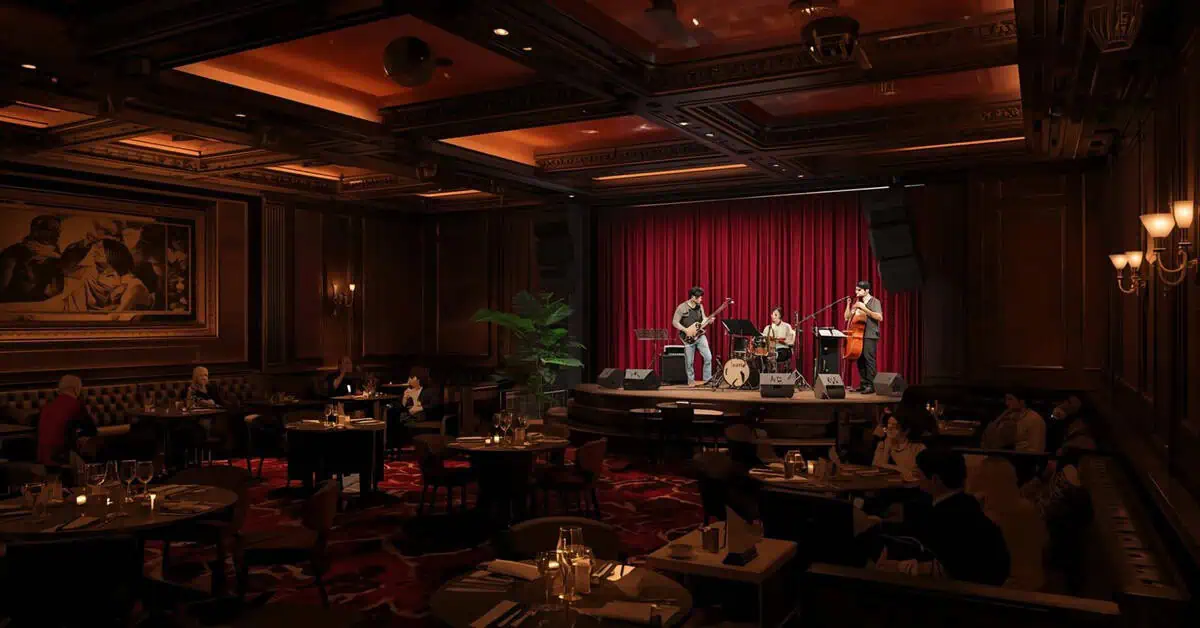
Simply Live by Tin Box sits in Bras Basah and goes all in on the concert experience without you ever needing a stadium ticket. A six-piece band and seven vocalists rotate through Mandopop hits and other crowd-familiar genres on a sound system that is built to fill the room properly.
The acoustics are the main draw here. The space is designed so you feel the kick drum in your chest but can still hold a conversation at the table. Monday and Tuesday they wrap by 11pm, so it works for a weeknight unwind that does not wreck your next morning. Friday and Saturday they push to 1am. Closed Sundays.
This is the one to book when you have friends visiting who want to see Singapore’s Mandopop side up close, or when your own playlist has been on a Mandarin ballad streak and you want it live. Dinner is part of the deal, which saves you sorting a pre-gig makan elsewhere.
📍 73 Bras Basah Rd, #01-01/02, Singapore 189556
📞 +65 6339 6720
📧 [email protected]
🕒 Mon-Tue 6pm–11pm, Wed-Thu 6pm–12am, Fri-Sat 6pm–1am (Closed Sun)
🔗 Simply Live by Tin Box
Go when the act leans Mandopop; the room is tuned for it and the crowd is locked in. Arrive early to chope a spot near the console—that is where the mix sounds most even. The concert feel works best when you plan to stay for the full set, not just a drink.
A_Livehouse
A_Livehouse at Marina Square keeps things simple: live bands every night, a casual dining menu, and hours that go deep. Bands like Genesis, Electri5 and Happy Band cycle through rock and pop sets that start at 5pm and run until 3am most nights, 4am on Saturdays.
What sets it apart is the consistency. The daily lineup means you never roll up to a dead room. It is the sort of place you can drop into solo after a long workday, grab a drink, and let the music do the thinking for you. The Marina Square location also means you are near everything without being in the middle of club chaos.
If your idea of a good night is discovering a band you have never heard and walking out with three new songs on your phone, this is your spot. Works for small groups too, especially when nobody can agree on a plan—just point them here.
Nobody paid to appear here. If you think there is a gap in this list, we would rather hear about it than not.
📍 6 Raffles Blvd, #01-01/02/03 Marina Square, Singapore 039594
📞 +65 9067 8569
📧 [email protected]
🕒 Sun-Fri 5pm–3am, Sat 5pm–4am
🔗 A_Livehouse
While you are planning a night out, some kakis might be hunting a different kind of evening—our Whiskey Bars in Singapore guide covers the quieter side of a good pour.
This is your safety net when everywhere else is winding down. The 3am and 4am closing times make it the choice after a late dinner or a cinema run. Solo drop-in works fine here—grab a seat at the bar, let the band fill the room, and leave when you are ready.
Le Noir
Le Noir sits beneath Marina Bay Sands and leans into the glam side of live music. The acts change nightly—soul singers, rock bands, the lot—covering both nostalgic hits and their own material. The room itself feels dressed up, so you probably want to do the same.
The bar and dining setup means you can make a full evening of it without relocating. Open every day from 6pm to 2am, which makes it reliable when you need a plan that sounds impressive but required zero effort to arrange. Bring a date or a client and it does the heavy lifting for you.
If you are someone who books a night out to feel the city’s charge, not just hear it, this is the right call. The MBS address adds a sense of occasion that works for anniversaries, birthdays, or just the end of a very long quarter.
📍 Marina Bay Sands, 2 Bayfront Avenue #B1-67, Singapore 018972
📞 +65 8684 2122
📧 [email protected]
🕒 Mon-Sun 6pm–2am
🔗 Le Noir
Dress up a bit, book a table, and make this your anchor for the evening. The room suits a date night or a small group that wants live music without the stand-and-sweat crowd. Go earlier in the week when the energy is more lounge and less party.
Cool Cats
Cool Cats on Beach Road is built around live jazz five nights a week, and the room shows they mean it. The design is lounge-soft, the lighting low, and the acts are the evening’s anchor, not background noise. Tuesday to Saturday, 7pm till midnight.
The cocktail list leans into the theme hard—try the B-Flat Trumpet and you will see what they are going for. Bar bites like Xinjiang Lamb Skewers are there to keep you grounded while the sax does its thing. It is inside the JW Marriott, so the service runs polished without being stiff.
This one is for the friend who says they miss proper jazz clubs, or the couple who want a conversation with their music rather than a wall of sound. Closed Sunday and Monday, so plan your week around it.
📍 32 Beach Road, Singapore 189764
📞 +65 9880 2471
📧 [email protected]
🕒 Tue-Sat 7pm–12am (Closed Sun-Mon)
🔗 Cool Cats
Tuesday is the sleeper pick here—the room is quieter, the band is still tight, and you actually catch the cocktail programme properly. The jazz sets are the point, not the sideshow, so park yourself facing the stage and let the night stretch.
Blu Jaz Cafe
Blu Jaz Cafe on Bali Lane has been holding down the indie corner for years, and the multi-level shophouse still hums with jazz, funk and soul across its floors. There is an open-air area upstairs that catches the evening breeze, which on a dry night is half the reason to go.
The global menu runs from truffle fries to more substantial plates, and the craft cocktails are done with enough care that you notice. Hours stretch from noon till 1am or 2am depending on the day, so you can start with a lazy lunch and stay until the band kicks in.
It suits the group where one person wants to eat, another wants to drink, and a third just wants to discover whatever act is playing. The Kampong Glam location also means the pre- or post-gig wander is already sorted—the whole street is alive most evenings.
📍 11 Bali Lane, Singapore 189848
📞 +65 9199 0610
📧 [email protected]
🕒 Mon-Thu 12pm–1am, Fri-Sat 12pm–2am, Sun 12pm–12am
🔗 Blu Jaz Cafe
If the bohemian energy at Blu Jaz makes you want more left-field finds, our Singapore’s Premier Cat Cafes roundup is a different kind of unexpected night out.
Head upstairs to the open-air floor on a dry evening and aim for a funk or soul night. The breeze and the brass section work together. This is a good late-start option when you want the music to build while you eat through the menu.
Timbre
Timbre built its name on alfresco live music, and its one-north location at JTC LaunchPad keeps that open-air spirit intact. Local bands run through rock, pop and indie sets while you work through gourmet pizzas and craft beers under the sky.
The vibe skews young and group-friendly. Tables tend to be full of colleagues letting off steam or birthday parties that started as five people and somehow became twenty. Monday to Thursday closes at 1am, Friday and Saturday at 2am, closed Sundays.
Choose Timbre when the brief is “somewhere with energy but not a club,” or when you want music loud enough to feel it but you still want to see people’s faces. The outdoor setting makes it feel like an event, even if the only event is that it is finally Friday.
Nobody paid to appear here. If you think there is a gap in this list, we would rather hear about it than not.
📍 73A Ayer Rajah Crescent, JTC LaunchPad @ one-north, Singapore 139957
📞 +65 6338 8030
📧 [email protected]
🕒 Mon-Thu 6pm–1am, Fri-Sat 6pm–2am (Closed Sun)
🔗 Timbre
Best when your group grows beyond a table of four and everyone wants cold beer and familiar choruses. Weeknights are less mobbed, so you get the open-air feel without the scramble. Book ahead if you are rolling in on a Friday.
Wala Wala Cafe Bar
Wala Wala Cafe Bar in Holland Village is the old friend of this list. Two floors, live bands every night, rock and pop classics that most of the room can sing along to, and a menu of comfort food—chicken wings and craft beers—that does not overthink itself.
The upstairs space gets loud and close to the stage; downstairs is easier for talking. Both work. Hours stretch from 3pm or 4pm depending on the day, and it closes at 1am on weekdays, 2am on Friday and Saturday. The Lorong Mambong address puts you right in the Holland Village mix, so a post-gig supper is literally steps away.
Wala Wala is the safest bet when someone says “surprise me” and you do not want to gamble. It has been doing this long enough that the band quality is a known quantity, and the relaxed, unpretentious rhythm of the place means you can show up in your Friday casuals and fit right in.
📍 31 Lorong Mambong, Holland Village, Singapore 277689
📞 +65 6462 4288
📧 [email protected]
🕒 Mon-Thu 4pm–1am, Fri 4pm–2am, Sat 3pm–2am, Sun 3pm–1am
🔗 Wala Wala Cafe Bar
For date-night inspiration that pairs well with a pre-show wardrobe upgrade, check out Where to Buy Finest Men’s Jeans in Singapore. And if you are still in planning mode for a bigger celebration, Unveil Singapore’s Most Wedding Venues might come in handy.
Le Noir MBS

Le Noir MBS Pte. Limited, (incorporated 16 November 2018) is a live music lounge on the Marina Bay waterfront at The Shoppes at Marina Bay Sands. ACRA-sourced registry records confirm the company is live, with restaurant as its primary activity and pub as a secondary activity. Direct fetch of the venue’s own site confirmed the address, hours, and phone number below match exactly, plus surfaced a WhatsApp contact not in the original listing.
You catch the last glow of sunset over the water, and a bartender slides a cocktail across the counter with a knowing nod. Le Noir comes alive when the city lights flicker on—this is for the evening you planned to be atas but unfussy, where the live band reads the room and leans into soulful, easy classics. The waterfront breeze and plush lounge seating make it a natural choice when you want music to wrap around the night, not shout at you.
Products or Services
Le Noir offers cocktails and a globally inspired food menu alongside nightly live music performances, with a sound system and curated lineup spanning popular hits and vocal interpretations.
Contact Information & Location
- Address: 2 Bayfront Ave, #01-84, The Shoppes at Marina Bay Sands, Singapore 018972
- Phone: +65 8684 2122
- WhatsApp: +65 9011 6480
- Email: [email protected]
- Operating Hours: Mon-Thu 3pm-1am, Fri 3pm-2am, Sat 11:30am-2am, Sun 11:30am-1am
Le Noir MBS is your crisp waterfront reset when the evening needs polish without the crush. Slip in after a dinner at Marina Bay Sands and let the live soul and pop carry the night. The open-air terrace does half the work, and the vibe is just upscale enough to turn a rough week around — ideal for a date or a quiet solo escape.
Website: Le Noir
Hero's Bars Singapore

Hero’s Bars Singapore Pte. Ltd., (incorporated 11 December 2013) operates a Wild West saloon-themed live rock venue in Boat Quay. ACRA-sourced registry records confirm the company is live, with a principal activity of food/beverage retail. Direct fetch of the venue’s own site confirmed it is planning 2026 events and describes itself consistently with the original listing (2,500 sq ft, Boat Quay), though a full current address and hours were not shown on the page fetched — the original listing’s details are carried over below.
An uncles’ corner of Boat Quay still smells faintly of spilled beer and grins, and inside, a guitarist is winding up for a screeching solo. Hero’s is the fix when your group is rowdy and the night needs leather, denim, and loud, unapologetic rock covers. The Wild West decor is full-on, almost kiasu in its commitment, but it works—you’re not here for quiet, you’re here to sing along until your voice cracks. It’s a messy, joyful throwback to when cover bands ruled the riverfront.
Products or Services
Hero’s offers bourbons, whiskeys, craft beers, and signature cocktails, alongside an Indian-Western fusion food menu. Live rock ‘n’ roll runs most nights, with live sports screenings and self-serve beer-tap tables in the VIP area.
Contact Information & Location
- Address: 69 Circular Road, #01-01, Boat Quay, Singapore 049423
- Phone: +65 6438 6058
- Email: [email protected]
- Operating Hours: Mon-Fri 5pm-3am, Sat 6pm-4am, Sun Closed
When plans unravel and you need a quick reset, this Boat Quay saloon delivers a warm, unpretentious live rock energy that feels like a sure thing. The 2,500 sq ft space is airy enough to breathe, and the walk-in friendly setup means no long wait to settle into the rhythm. It suits a spontaneous group hang or a solo escape when the evening needs a reliable, upbeat lift.
Website: Hero’s
Notes & Spirits

Notes & Spirits Pte. Ltd., (incorporated 1 November 2023) is a Mandopop live-performance venue at Millenia Walk. ACRA-sourced registry records confirm the company is live, with restaurants as its primary activity and nightclub/karaoke as a secondary activity, address matching the original listing exactly. Finding, disclosed: the venue’s own website (notesnspirits.com) now redirects to notessg.com, with a “Notes SG — Coffee, Music & Moments” tagline visible on the new domain — we could not fully confirm whether this reflects a broader concept change or simply a rebrand/URL consolidation, since independent sources (business directories, review sites) still describe it as an active Mandopop live-band bar at this address. Worth a quick check before a special trip if Mandopop specifically is the draw.
You hear the first Mandarin ballad bleed through the door before you even reach the host stand, and someone at the bar is already mouthing the lyrics. Notes & Spirits is built for the Mandopop devotee who wants a date night or a table of old friends, sinking into familiar melodies without the chaos of a concert hall. The space feels intimate, almost like a private listening room, and the crowd leans more ‘heartfelt nostalgia’ than ‘dance party.’ Come when you need music that tugs, not thumps.
Products or Services
Notes & Spirits specializes in live Mandopop performances with a concert-like sound and lighting setup, alongside dining and a selection of drinks.
Contact Information & Location
- Address: 9 Raffles Boulevard, #02-09, Millenia Walk, Singapore 039596
- WhatsApp: +65 9349 0025
- Email: [email protected]
- Operating Hours: Mon-Sat 5:30pm-2am, Sun Closed
Notes & Spirits is the answer when the group chat fills with selca requests and someone jios a Mandopop singalong. The Millenia Walk location makes it easy to reach, the setlists go deep into Chinese pop classics, and the room feels like a private concert without any pretence. Grab your kakis who can belt out every chorus and let the lyrics do the bonding.
Website: notessg.com (redirected from the original notesnspirits.com)
Verve Holdings (Warehouse)

Verve Holdings Pte. Ltd., (incorporated 12 May 2008) operates Warehouse, a live music venue at Gillman Barracks. ACRA-sourced registry records confirm the company is live, with a principal activity of restaurant/café/bar. Direct fetch of the venue’s own site confirmed the address below is current and the venue is actively operating with nightly live bands; specific hours were not listed on the page fetched, so the original listing’s hours are carried over below.
Past the old barracks doors, a band is locking into a tight, funky groove while couples drift onto the floor. Warehouse has survived waves of nightlife trends by sticking to a tried formula: honest, unpretentious live music that spans retro hits to current chart-toppers, delivered by musicians who clearly enjoy playing together. It’s the safe bet when you have mixed-company plans and need a place where aunty, client, and jaded poly mate can all nod along and order another round.
Products or Services
Warehouse features live bands nightly across a mix of genres, with draft beers, wines, and cocktails, plus a food menu of shareable platters, burgers, kebabs, pizzas, and pastas.
Contact Information & Location
- Address: 8 Lock Road, Gillman Barracks, Singapore 108936
- Email: [email protected]
- WhatsApp: +65 9819 2590
- Operating Hours: Mon-Fri & Sun 5pm-3am, Sat 5pm-4am (not independently re-confirmed this update)
Verve Holdings (Warehouse) sits in the Gillman Barracks arts enclave, so you don’t have to think about logistics when the plan is last-minute. Live bands play nightly, and the room strikes that sweet spot between lively and loungey — just enough stage energy to lift you, with plenty of space to still hold a conversation off to the side.
Website: Warehouse
Tin Box Group Singapore (Simply Live)

Tin Box Group Singapore Pte. Ltd., (incorporated 23 May 2016) operates Simply Live, a Mandopop-focused live music venue and restaurant on Bras Basah Road. Finding, disclosed: a direct opengovsg fetch of this UEN initially surfaced an older registered name, “CCY Pte. Ltd.,” at a different address (Bukit Pasoh Road) — investigated further and confirmed this is the SAME entity that later renamed to “Tin Box Group Singapore Pte. Ltd.” (matching incorporation date, and independently corroborated via multiple sources describing Tin Box Group as a multi-venue lifestyle brand, formerly known as CCY, now operating 11 venues across 7 brands including Simply Live). Not a wrong UEN — a registered-name and registered-address change over time, both resolved before this UEN’s current registered office (Jalan Kilang Barat) was reached. ACRA-sourced registry records confirm the company is live.
A quiet weeknight along Bras Basah Road, and a voice warm as a slow-cooked soup spills from an open door. Simply Live is the zi char of live music venues—humble in look but deeply satisfying, with Mandopop and Cantopop tunes that land just right for a homesick heart. The setup is cosy, more neighbourhood joint than slick lounge, and the crowd is in on a secret: this is where you go when you don’t need a spectacle, just a good song and a cold drink at hand.
Products or Services
Simply Live features a resident band alongside local and regional acts, performing Wednesday to Saturday with a focus on Mandopop and other genres, plus an Asian fusion food and cocktail menu.
Contact Information & Location
Direct fetch of the venue’s own site confirmed the address and hours below are current.
- Address: 73 Bras Basah Road, #01-01/02, Singapore 189556
- Email: [email protected]
- Operating Hours: Wed-Thu 6pm-12am, Fri-Sat 6pm-1am, Sun-Tue Closed
Tin Box Group Singapore (Simply Live) is where you head when the week has been sian and only a full-throated Mandarin ballad session will do. The Bras Basah location makes it a convenient meeting point, the setlists are heavy on crowd favourites, and the dinner-service-meets-live-band setup means you can roll in hungry and leave completely reset.
Website: Simply Live
Disclaimer
Information here was verified directly against ACRA-sourced registry records and each business’s own website where accessible, as of July 2026. Nightlife venue hours, lineups, and concepts can change with little notice — please confirm directly with the venue before visiting. If you find any errors or have concerns about the content, please let us know so we can address them promptly.
You remember the old kopitiam uncle who’d tapau your teh halia only after calling out the exact change. This listing holds that same spirit — meticulous, a little kiasu about getting it right, verified against ACRA records so you know it’s not some fly-by-night. Still, live music spots shift faster than an MRT announcement, so give the venue a ring before you head down. It’s the kind of old-school thoroughness that saves you from a wasted trip.
How to choose a live music venue
The first question is genre. Cool Cats is jazz, full stop—if someone wants rock or Mandopop they will be disappointed. Simply Live by Tin Box anchors itself in Mandopop with strong concert production. The rest lean into rock, pop, funk and soul in their own ratios. Check the band lineup on the venue’s socials before you commit; most post their weekly schedule.
Then there is timing. Some venues close at midnight or earlier on weekdays (Simply Live, Cool Cats). Others run past 2am (A_Livehouse, Wala Wala). If your group is the “one more song” type, pick a late-night spot. If you want live music over dinner and still catch the last train home, the earlier-closing venues work better.
Think about the occasion too. Le Noir and Cool Cats suit date nights, anniversaries, or anytime you want the room to feel special. Timbre, Wala Wala and Blu Jaz are built for groups, birthdays and casual catch-ups where the music is centre stage but the dress code is not. Simply Live and A_Livehouse sit in between—nice enough for a planned outing, easy enough for a walk-in.
Price-wise, most of these venues operate on a food-and-drink spend model rather than a ticket fee, but it is worth checking for special event nights or minimum spends at the MBS and hotel-linked spots. A fair range for a night out with drinks and a meal is $60 to $120 a person, with the higher end bumping up when cocktails and sharing plates stack up.
| Venue | Vibe | Music Style | Best For | Price Signal | Hours |
|---|---|---|---|---|---|
| Simply Live by Tin Box | Concert hall meets lounge | Mandopop, classics | Mandopop fans, group hangouts | Mid to upper | Mon-Sat evenings, closed Sun |
| A_Livehouse | Intimate, late-night energy | Rock, pop (rotating bands) | Solo wind-downs, spontaneous plans | Mid-range | Sun-Fri 5pm–3am, Sat till 4am |
| Le Noir | Glam, dress-up occasion | Soul, rock, originals | Date nights, celebrations | Upper | Daily 6pm–2am |
| Cool Cats | Lounge, jazz-club intimacy | Jazz | Conversation-driven evenings | Upper | Tue-Sat 7pm–12am |
| Blu Jaz Cafe | Bohemian, multi-level shophouse | Jazz, funk, soul | Indie spirit, mixed groups | Mid-range | Daily from noon, late closing |
| Timbre | Alfresco, youthful buzz | Rock, pop, indie | Large group gatherings | Mid-range | Mon-Sat 6pm till late, closed Sun |
| Wala Wala Cafe Bar | Laid-back, reliable heartbeat | Rock, pop classics | No-plan nights, comfort seekers | Mid-range | Daily from 3–4pm, late closing |
Summary
Singapore’s live music venues cover a lot of ground—from the Mandopop concert feel of Simply Live to the jazz warmth of Cool Cats and the easy reliability of Wala Wala. Your choice really comes down to genre, how late you want to stay, and whether the night calls for flip-flops or something sharper. Seven solid options, each with a different answer to the same question: where should the music come from tonight?
Disclaimer: All details were correct at the time of writing. Hours, lineups and prices can shift—please confirm directly with the venue before heading down.
Read next
Frequently asked questions
Downstairs for conversation, upstairs if you want to be in the thick of the singalong. The crowd knows the songs, so the room lifts fast. Show up before 7pm to settle in before the Holland Village after-work wave hits.
Which live music venue in Singapore is best for jazz?
Cool Cats on Beach Road is built specifically around live jazz five nights a week, with a lounge atmosphere, artisanal cocktails and bar bites. Blu Jaz Cafe also features jazz alongside funk and soul in a more bohemian shophouse setting.
Where can I hear Mandopop live in Singapore?
Simply Live by Tin Box at Bras Basah centres on Mandopop performances with a full band and multiple vocalists. The sound system and concert-like setup are tailored to that genre.
Are there live music venues in Singapore open past midnight?
Yes. A_Livehouse at Marina Square runs until 3am most nights and 4am on Saturdays. Wala Wala Cafe Bar and Timbre also stay open until 1am or 2am on weekends depending on the day.
Do live music venues in Singapore charge an entry fee?
Most of the venues here operate on a food-and-drink spend model rather than a ticket fee. It is worth checking for special event nights or minimum spends, especially at hotel-linked spots like Le Noir and Cool Cats.
Which live music venue suits a large group?
Timbre at one-north and Wala Wala Cafe Bar in Holland Village are both strong for groups. Timbre’s alfresco setup handles bigger tables well, while Wala Wala’s two-floor layout gives a group room to spread out.
Can I find live music on a Sunday or Monday night in Singapore?
Several venues are open. A_Livehouse runs Sunday through Friday. Wala Wala and Blu Jaz Cafe also open on Sundays. Simply Live by Tin Box, Cool Cats and Timbre are closed on Sundays, and Cool Cats also closes Mondays.