Last updated 11 August 2026. This page was reviewed on that date. Prices, rates and opening hours change often in Singapore — confirm anything that matters directly with the business before you travel or spend.
Quick answer: For iPhones and Apple products specifically in Singapore, five established options stand out: Apple Orchard Road (official flagship), iStudio City Square Mall (Apple Premium Reseller), Singapura Mobile Repair and 8th Ave Mobile (independent repair/trade specialists), and MobyShop (Far East Plaza retailer). (Looking for other phone brands or general multi-brand retailers instead? See our guides to phone brands and mobile shops in Singapore.)
If you’re more focused on finding the right device than soaking up the store atmosphere, our iPhone buying guide could help you nail the decision.

Buying an iPhone in Singapore is a shared ritual — there’s always a kaki nearby who knows the best spot. Whether you want the full hands-on gallery feel or a quick fuss‑free pickup among other enthusiasts, the right iPhone Store visit turns a purchase into part of your weekend lepak. Here are five places where the vibe matters as much as the device.
Apple Orchard Road

Apple’s official flagship retail store in Singapore (operated locally as Apple South Asia Pte. Ltd.,), offering the full range of Apple products and services with expert in-house support.
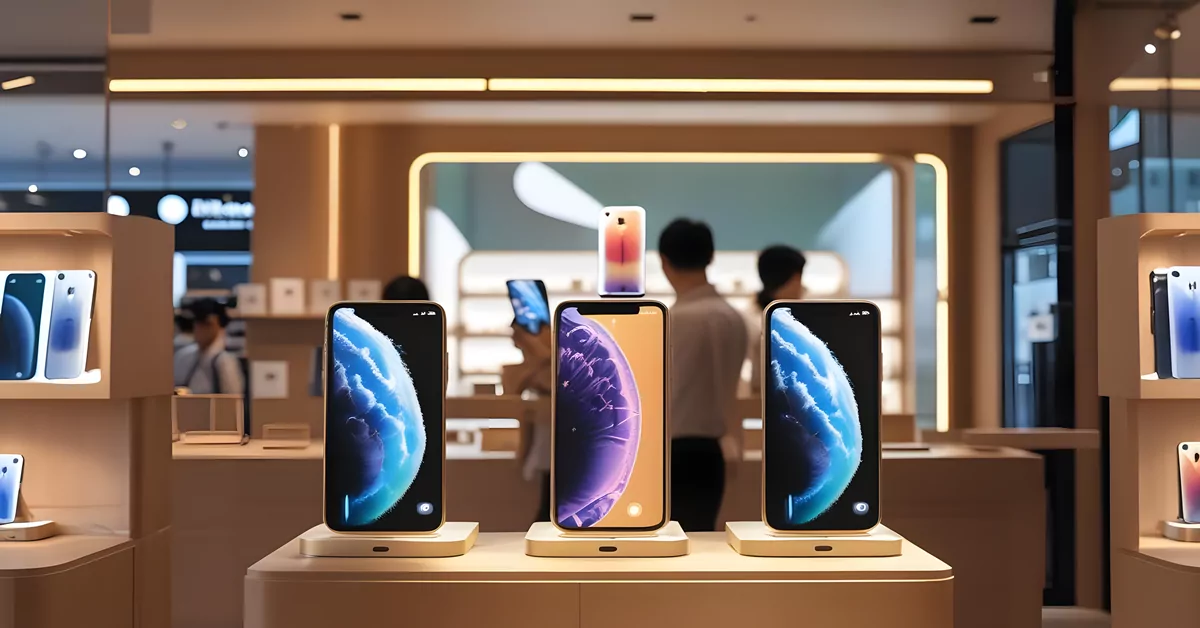
Stepping inside is less about a purchase — more like walking into a living tutorial. You’ll see groups gathered for free art sessions, while others casually test AirPods under the canopy light. No one pressures you. It suits the curious wanderer who wants to soak in the latest without commitment. But if you crave a quick nip-and-tuck fix, the polished calm might feel too much like a gallery.
The glass staircase draws you upward into a light-filled room where the hum of conversation replaces any retail buzz. Staff float between product tables, never hovering, ready to demo but not to sell. You can simply sit at a long communal table and sketch on an iPad alongside strangers, no registration needed. If you’re with a friend, they’ll likely drift to the sound booth to test spatial audio. Check the session board near the entrance and time your visit for a free creative class.
Products or Services
- Sales of all Apple products: iPhones, Macs, iPads, Apple Watch, and accessories.
- Genius Bar for technical support and repairs (device setup, Apple Account recovery, screen replacement).
- One-on-one Specialist sessions for personalized product advice.
- Today at Apple sessions, including workshops on Apple Intelligence.
- Online purchase with in-store pickup.
Contact Information & Location
- Location: 270 Orchard Road, Singapore 238857
- Operating Hours: Daily 10am-10pm
- Phone: 1800 699 2824
- Website: Apple Orchard Road
Step in and it feels like a community living room filled with natural light and people happily testing camera features side by side. The wide tables and open layout make it easy to wander, ask questions, and join a free workshop together — ideal when you want the full Apple session with friends who are as curious as you are.
Singapura Mobile Repair (AMK)

Singapura Mobile Repair is an independent repair specialist operating since 2014, covering iPhones, iPads, and Samsung phones — it states it uses genuine parts.
The repair counter buzzes like a zi char stall just before dinner rush. You hand over your cracked screen, and they start prying it open while you watch, no appointment needed. The air is unpretentious; nearby kopitiam tables tempt you to tapau a kopi while waiting. Suits the kiasu fixer who wants it done now, not the type who needs an official stamp of reassurance.
You push through the glass door and the scent of heated adhesive hits. The technician’s bench is a landscape of tiny screws and suction cups. While your phone lies open, you can lean over the counter and ask what each part does—they’ll answer without slowing down. Bring a friend to chope a seat at the kopitiam across the void deck; the repair rarely takes more than a kopi’s worth of time. If you’re curious, ask to see the genuine part box before they start.
Products or Services
Screen, motherboard, water-damage, battery, camera-lens, and speaker repair, plus data recovery services.
Contact Information & Location
- Address: 631 Ang Mo Kio Ave 4, #01-940, Singapore 560631
- Phone: +65 8622 2297
- Email: [email protected]
- Operating Hours: Daily 10:30am-9:30pm
- Website: Singapura Mobile Repair
This heartland fixture has become a gathering spot for phone owners who love comparing repair notes while they wait. The air‑conditioned corner is small and social, with regulars dropping in to check screen replacements or recover precious photos — a practical, friendly stop when your device needs quick TLC before the next group outing.
Once you’ve got the phone in mind, you might be browsing cases that are worth hunting down across the island.
8th Ave Mobile

8th Ave Mobile started as a mobile phone kiosk in 2018 and now operates both online and from multiple physical locations.
CDC vouchers in hand? They accept them here, which already sets a different tone—helpful, not atas. You’ll find the team cuts to the chase, from browsing used units to quick battery swaps. No lengthy consultations; just a straightforward deal. Good for those who like to chope a bargain and get out, maybe with a tapau kopi from a nearby stall if the wait stretches.
The kiosk is snug—just a glass counter and a wall of boxed phones. You’re in and out before you can queue for the nearby bubble tea. Staff don’t do small talk; they hand you a device to inspect, then ring it up. If you’re trading in, they’ll wipe your data on the spot while you watch the progress bar. Come with your old phone charged and your mind made up; indecision here just means someone else gets the last unit of the colour you wanted.
Products or Services
New and used phones from leading brands, repair services (screens, batteries), and smart home devices; CDC vouchers accepted.
Contact Information & Location
- Locations: Ang Mo Kio (703 Ang Mo Kio Ave 8, #01-2533), Bugis (62 Queen Street, #01-106), Bedok (311 New Upper Changi Road, #B1-14), and Westgate (3 Gateway Drive, #03-K02). See their store locator for the current list and hours.
- WhatsApp: +65 8885 5131
- Email: [email protected]
- Website: 8th Ave Mobile
The multiple locations mean you can swing by whichever one your group chat picks for the afternoon. Browsing feels like a treasure hunt — you might spot a pre‑loved handset while someone else gets a battery swap — and the acceptance of CDC vouchers adds a neighbourly touch that turns a quick errand into a casual pit stop.
iStudio City Square Mall

iStudio is an Apple Premium Reseller with multiple stores island-wide, including this City Square Mall location.
Skip the Orchard shuffle and head to this less crowded reseller. The standout is the complimentary setup assistance—patient staff walk you through moving data from your old phone, no eye-rolling. It’s a quiet corner of City Square Mall; you might finish, then grab makan at the basement food court. Perfect if you dread tech transitions and just want someone to do it with you.
The store is a modest rectangle, just enough room for a few display tables and a service counter. When you hand over your old iPhone for data migration, they pull up a stool for you to sit. The transfer ticks along while you sip a cold drink from the shop next door. Staff don’t rush; they’ll even help you re-pair your Apple Watch if you ask. Once the progress bar hits full, they hand you the new phone unlocked and ready—no need to remember your iCloud password in a panic.
Products or Services
Full range of Apple products (iPhones, iPads, MacBooks, Apple Watch), Apple and third-party accessories, Virtual Setup Assistance consultations, and complimentary short-term workshops.
Contact Information & Location
- Address: City Square Mall, #01-28/29, 180 Kitchener Road, Singapore 208539
- Phone: +65 6634 6679
- Email: [email protected]
- Operating Hours: Not independently confirmed for this outlet — check the iStudio website or City Square Mall directory before visiting.
- Website: iStudio City Square Mall
Tucked within a mall that buzzes with weekend shoppers, this Premium Reseller makes device setup feel like a relaxed get‑together. Their Virtual Setup Assistance lets you and a companion walk through personalising a new MacBook or iPhone together, while short complimentary workshops offer a reason to linger and learn side by side.
MobyShop

MobyShop (, registered as Moby Group) is a Far East Plaza mobile retailer trading since 2010, offering new/used smartphones, accessories, and trade-in services. (Note: a related entity, Moby World Technology Pte. Ltd., shares the same registered address at 14 Scotts Road and trades under the similar “Moby Shop” name — covered from a different angle in our mobile shops guide.)
Far East Plaza delivers a no-fuss trade-in vibe. Hand over your tired iPhone, get a quote in minutes, and while they process, you’re free to wander the indie fashion boutiques downstairs. No appointment, no rigid counters—just a quick transaction. Ideal for the instant-gratification seeker who wants to leave with a new (or new-to-you) device and a bubble tea in hand.
The shop sits deep within Far East Plaza’s warren of corridors, so you might circle once before spotting the sign. Inside, it’s all glass counters and wall-mounted display cases. Trade-in is swift: they check the screen, the body, and the battery health, then name a figure. If you’re buying used, they’ll pull out three units of the same model and let you choose the one with the fewest microscratches. Wander down to the escalator lobby while they finish the data wipe. You’ll leave with cash or a phone before the afternoon sun hits the Scotts Road junction.
Products or Services
New and used smartphones, mobile accessories, and trade-in/recycling services for old devices.
Contact Information & Location
- Address: 14 Scotts Road, Far East Plaza, #03-76A, Singapore 228213
- Phone: +65 6733 4110
- Email: [email protected]
- Operating Hours: Mon-Sat 12pm-8pm; closed Sundays
- Website: MobyShop
Nestled in Far East Plaza, this long‑running shop has a constant stream of shoppers trading phones and swapping recommendations, giving it an informal hangout energy. The compact space naturally sparks conversation between strangers who end up discussing specs or cases — a great stop when you want browsing to feel more social than transactional.
At a Glance
| Store Name | Type | Location |
|---|---|---|
| Apple Orchard Road | Official Apple flagship | Orchard Road |
| Singapura Mobile Repair | Independent repair specialist | Ang Mo Kio |
| 8th Ave Mobile | Buy/sell/repair, online + physical | Multiple locations |
| iStudio City Square Mall | Apple Premium Reseller | City Square Mall |
| MobyShop | New/used phones, trade-in | Far East Plaza |
Read next
Frequently Asked Questions
What’s the difference between this list and your phone brands / mobile shops guides?
These five focus specifically on Apple/iPhone retail and repair, from the official Apple store to independent specialists. Our phone brands guide covers other manufacturers’ official stores, and our mobile shops guide covers general multi-brand retailers.
Is this a ranking of the best iPhone stores?
No. This is a directory of five established iPhone-focused stores to help you compare options — it isn’t an endorsement or ranking, and it doesn’t cover every reputable store in Singapore.
Disclaimer: Information here has been compiled from the businesses’ own websites and other publicly available sources, current as of July 2026, and may change. We do not guarantee it is complete or error-free and disclaim liability for inaccuracies or omissions; let us know if you spot an error so we can correct it.
Mood Calls the Store Visit
A flagship visit is a production. You walk into Apple Orchard Road for the full theatre – the warm wood tables, the staff gliding over with that quiet confidence, and you leave with your new iPhone set up while you sit under the skylight. It suits a Saturday when you want the ritual, maybe after a long lunch nearby. For a workday crisis, though, the calculus flips. You head straight to Singapura Mobile Repair in Ang Mo Kio, where the counter is just an arm’s length away, and the uncle diagnoses your cracked screen while you chope a kopi from the kopitiam below. No appointment, no fuss, just the layered hum of a shop that fixes things while you wait.
When errands dictate the rhythm, iStudio at City Square Mall becomes the natural stop. It carries that official Apple Premium Reseller calm, so you can handle the latest models, ask a few questions, then tapau dinner from the basement food court right after. It is the middle ground – more polished than a repair counter, less of an event than the flagship. For something purely transactional, like trading in an old device, MobyShop at Far East Plaza offers a quick, straightforward exchange. You walk in, get a quote, and leave with cash or a newer phone in your pocket, all within the buzz of a vertical mall.