Last updated 8 August 2026. This page was reviewed on that date. Prices, rates and opening hours change often in Singapore — confirm anything that matters directly with the business before you travel or spend.
Quick answer: For that proper charcoal-grilled snap, Kele Confectionery and Goodwood Park Hotel are the ones to beat. Baker’s Well gives you a savoury Hei Bee Hiam twist, Rasa Sayang nails a nutty black sesame, and Kee Wah Bakery brings a delicate Hong Kong-style lightness. If you want halal-certified, pure-ingredient rolls, Mdm Ling Bakery fits the bill, while Bengawan Solo’s pandan version is the familiar classic many households grew up with. (Update, August 2026: Kee Wah Bakery has since closed its ION Orchard store.)
Chinese New Year love letters don’t have to empty your ang pow fund. The real gems aren’t always wearing the prettiest tin, but they deliver that shiok crisp and fragrant coconut or pandan hit. Whether you’re stocking up for house visits or your own snack jar, these picks let you outsmart the price without anyone guessing the tag.

If none of these quite fit, Best Malay, Peranakan & Local Food in Singapore has 30 lists covering the rest of the category.
Baker’s Well

Baker’s Well sits in a quiet Katong corner on East Coast Road, hand-rolling their love letters fresh since 2004. You can taste that they lean on proper ingredients, not shortcuts.
The lineup covers Traditional, Charcoal, and a Hei Bee Hiam version that folds spicy dried shrimp sambal into that crisp golden tube. Tins start at $23. The Hei Bee Hiam is a real conversation starter—savoury, aromatic, and a welcome jolt among all the sweet snacks on the table.
If your clan likes a mix of familiar and adventurous, this is the shop. The rolls are light, not oily, and you can pick up at their flagship or arrange delivery.
35 East Coast Road, Singapore 428754 | +65 6348 6864 | Open daily 8am–9pm
Baker’s Well
If your family likes a little heat with the sweet, the savoury shrimp love letters from Baker’s Well are a smart move—two tastes in one tin. Swing by the Katong shop after your wet market run and you’ll find hand-rolled, golden tubes that make your snack table feel extra special without any zhng work.
Kele Confectionery

Kele Confectionery has been at it in Chinatown since 1983, and they still bake their love letters over open charcoal flames with iron moulds. That’s the old-school way, and it comes through in every bite.
Their Premium Love Letters go for $17.80 a pack, thin and shatteringly crisp, with an eggy, smoky fragrance that fills the room the moment you open the tin. No frills, just the kind of kuih kapit your grandparents would recognise instantly.
This is the one to bring when you’re visiting elders—it tastes like tradition, the way it was meant to. They operate a flagship at Smith Street and have outlets at VivoCity for easier pick-up.
2 Smith Street, Singapore 058917 | +65 6560 1249 | Open daily 9am–7pm (till 8pm on weekends)
Kele Confectionery
If you’re building a full reunion spread, a hot pot always brings people together—our guide to Fish Steamboat Destinations in Singapore has some solid picks to warm up the evening.
Kele has been baking over charcoal since ’83, and picking up a pack from their Chinatown store feels like tapping your auntie’s secret source. The eggy, smoky fragrance is the real deal—no fancy packaging, no atas price. Grab them while buying decorations for double the value.
Kee Wah Bakery

Kee Wah Bakery brings a Hong Kong lightness to ION Orchard. Their love letters are almost wafer-thin, airy enough to dissolve the moment they hit your tongue.
Pick from a few flavours—the Coffee Love Letters at $21 carry a gentle buttery note that feels a bit more modern, while still keeping the spirit of the season. Since they’re right in Orchard, it’s dead convenient if you’re already running CNY errands.
The texture is what sets them apart—delicate, never dense, good for anyone who finds traditional rolls a little heavy. They pop up at Takashimaya and Jewel too, so you’ve got options.
ION Orchard B4-30, 2 Orchard Turn, Singapore 238801 | +65 6339 0118 | Open daily 10am–10pm
Kee Wah Bakery
This is our own selection, not a paid one. Tell us if there is somewhere we should have included.
If you’re already doing a CNY run through Orchard, tapau a few tins from Kee Wah. The coffee love letters are a welcome switch from the usual pandan, and the airy texture means the tin feels fuller than it costs. No need to make a special trip—convenience is part of the value here.
Update, August 2026: the ION Orchard store has since closed, and the brand now appears mainly through pop-ups.
Rasa Sayang

Rasa Sayang landed here in 1998 with Indonesian roots, and their black sesame love letters quickly became a cult favourite. The moment you lift the lid, that roasted sesame scent tells you exactly what you’re in for.
The Black Sesame Love Letters are priced at $19 a pack. Toasted seeds are worked into the batter and rolled while still warm, so each piece carries a nutty depth that lingers long after the crisp. Lightly sweet, they pair beautifully with hot tea or coffee.
Good choice when you want to bring something a little different but still elegant. You can order online or catch their pop-up at Takashimaya Square during the festive season.
31 Jalan Keli #03-01, Singapore 577931 | +65 9222 2106 | Pop-up hours: check with the business
Rasa Sayang
And after the visits are over, there’s comfort in a humble bowl—our Finest Lu Rou Fan in Singapore guide points you to some deeply satisfying braised pork rice.
Rasa Sayang’s black sesame love letters are a playful pick—the roasted scent alone makes your snack table look more current. At their price, you can buy double and still have change. If you’re hosting, this is the sort of thing that makes guests think you went the extra mile without any extra spend.
Mdm Ling Bakery

Mdm Ling Bakery built its name on family recipes, pure coconut milk, and no artificial nonsense. The result is a love letter that tastes clean and honest, with a coconut fragrance you don’t have to imagine.
Their Traditional Nanyang Love Letters come in tins at a premium price point. They’re halal-certified and vegetarian-friendly, which spares you the headache when you’ve got a mixed table. The crisp is sharp, the fragrance unmistakable.
If dietary inclusivity is on your mind, this is the safest and tastiest bet. You can find them at Techpoint in Ang Mo Kio or the Jewel Changi Airport outlet, open till 10pm.
10 Ang Mo Kio Street 65, #05-12 Techpoint, Singapore 569059 | +65 8468 0201 | Jewel outlet daily 10am–10pm
Mdm Ling Bakery
Worth the premium because it solves the mixed-table headache—halal and vegetarian, so one tin does it all. The coconut taste is clean, not the cloying kind, which means you actually taste the ingredient. That’s practical savvy, not just snacking.
Goodwood Park Hotel

Inside Goodwood Park Hotel on Scotts Road, the in-house patisserie hand-rolls love letters over live coals—a process you don’t see often. That extra step gives each stick a gentle smokiness and a deep golden colour that says “special occasion” the moment you set the tin down.
The Traditional Charcoal-Grilled Love Letters are priced at $38.80 a tin, available only during Chinese New Year. They’re a touch thicker than most, with a satisfying crunch that holds up well in a hamper.
When the gift is meant to impress—corporate clients, future in-laws, a host who appreciates the finer details—this is the tin you pass across the table.
22 Scotts Road, Singapore 228221 | +65 6737 7411 | Bakery operates roughly 7am–10pm
Goodwood Park Hotel
Goodwood Park’s charcoal-grilled love letters are your ‘special occasion’ pick for a reason—the gentle smokiness reads expensive. Keep these for gifting to the relatives you really want to impress, and serve the everyday tins for casual nibbling. One tin buys you a lot of face.
Bengawan Solo

Bengawan Solo has been a household name since 1974, and their pandan love letters are the sort of thing you’d find in most Chinese New Year snack jars. They’re rolled so thin that light almost passes through, carrying a gentle pandan note that never overpowers.
Classic Love Letters start from around $20+ a pack. Occasionally they release seasonal spins, but the original is what keeps people coming back. It’s simple, delicate, and tastes exactly like a proper Peranakan kitchen should.
You really cannot go wrong with this one—it’s the taste of many Singaporean childhoods, served up without fuss. Outlets islandwide, including ION Orchard and major malls.
ION Orchard B4-38, 2 Orchard Turn, Singapore 238801 (main retail) | +65 6756 9088 | Open 10am–10pm
Bengawan Solo
How to choose
Start with the baking method. Charcoal-grilled love letters (Kele, Goodwood Park) carry a distinct smokiness and a deeper colour; oven-baked ones tend to be lighter and more uniform. If that old-world aroma matters to you, go charcoal.
Flavour is the next big call. Tradition means pandan (Bengawan Solo) or pure coconut (Mdm Ling). For something with a kick, Baker’s Well’s Hei Bee Hiam or Rasa Sayang’s black sesame bring a savoury-nutty twist. Kee Wah’s coffee version is for those who prefer subtle, modern notes.
Price points spread from $17.80 to $38.80 a tin. Kele and Rasa Sayang sit at the more accessible end, while Goodwood Park is a clear splurge. If you need halal certification, Mdm Ling is the only one on this list that’s explicit about it, so factor that in for mixed gatherings.
Finally, think logistics. Some bakeries are mall-based and open year-round with seasonal runs (Kee Wah, Bengawan Solo). Others are smaller operations or hotel bakeries where you might need to pre-order or time your visit. Always check availability during the peak season.
| Brand | Price (SGD, indicative) | Key flavour/style | Halal / vegetarian | Best for |
|---|---|---|---|---|
| Baker’s Well | From $23 | Hei Bee Hiam, Traditional | Check with the business | Adventurous, savoury twist |
| Kele Confectionery | $17.80 | Charcoal-grilled, eggy | Check with the business | Traditional charcoal aroma |
| Kee Wah Bakery | $21 | Hong Kong-style, coffee | Check with the business | Light, modern texture |
| Rasa Sayang | $19 | Black sesame, nutty | Check with the business | Distinctive sesame fragrance |
| Mdm Ling Bakery | Check with the business | Nanyang classic, coconut | Halal, vegetarian | Inclusive gatherings |
| Goodwood Park Hotel | $38.80 | Charcoal-grilled, smoky | Check with the business | Premium gifting |
| Bengawan Solo | $20+ | Pandan, gossamer thin | Check with the business | Nostalgic, reliable classic |
This is our own selection, not a paid one. Tell us if there is somewhere we should have included.
Summary
If you’re after a charcoal-grilled love letter that smells of open fire and nostalgia, Kele and Goodwood Park deliver the real thing. For flavours that steer away from the usual, Baker’s Well’s Hei Bee Hiam and Rasa Sayang’s black sesame are hard to beat, while Bengawan Solo and Mdm Ling keep the pandan-and-coconut soul of CNY firmly in the tin.
Disclaimer: Details like prices, opening hours, and availability can change, especially during festive periods. Always confirm directly with the business before heading down.
Read next
Frequently asked questions
Bengawan Solo is your no-brainer, anywhere-in-Singapore option—these pandan love letters are thin, crisp, and kind to your wallet. They’re the kind you can stock up on without thinking too hard, and the large tins stretch nicely across the whole festive period. Just grab and go.
What exactly are love letters made of?
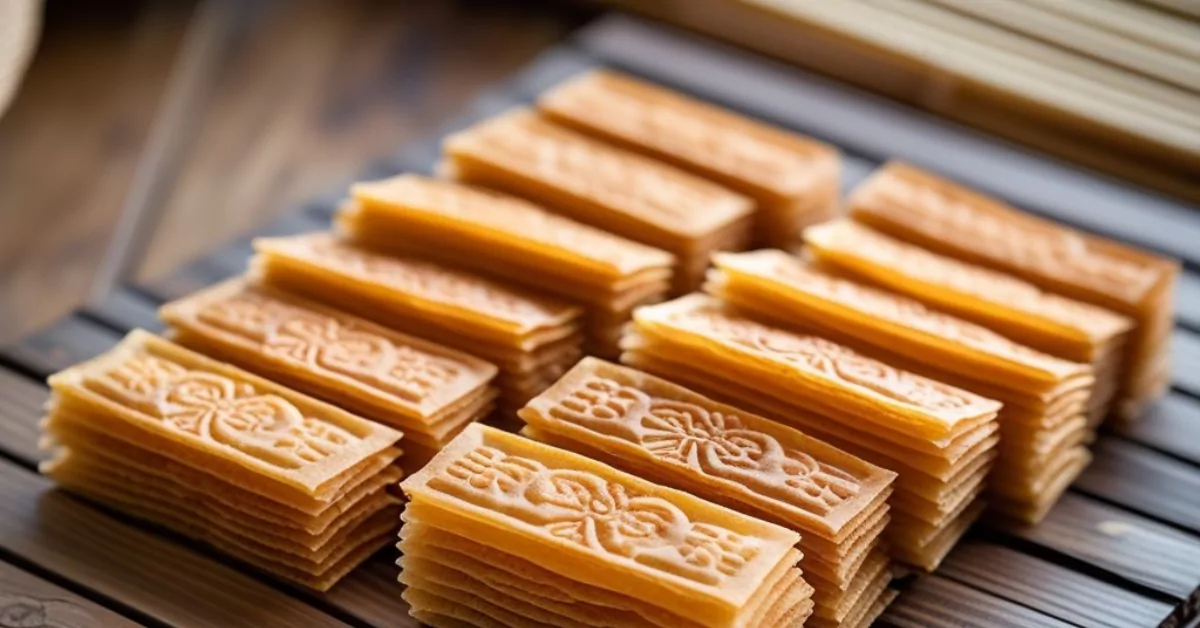
Love letters, or kuih kapit, are thin crispy wafers made from a batter of coconut milk, eggs, flour, and sugar, cooked between heated iron moulds and rolled while still hot. Flavours like pandan, sesame, or coffee are added to the batter for variation.
Are any of these love letters halal-certified?
Mdm Ling Bakery’s love letters are halal-certified and vegetarian-friendly. For other brands on this list, halal status varies and you should check directly with the bakery, especially when purchasing for guests with dietary requirements.
How long do love letters stay crisp?
Kept in an airtight tin at room temperature and away from humidity, most love letters stay fresh and crisp for several weeks after opening. Once the tin is opened, consume them sooner rather than later to enjoy the crunch at its best.
Can I order love letters for delivery during Chinese New Year?
Yes, many bakeries like Baker’s Well and Kele Confectionery offer islandwide delivery or self-collection options. During the peak season, it is wise to place orders early to avoid disappointment.
Which love letter is best for gifting to a corporate client or in-law?
Goodwood Park Hotel’s charcoal-grilled love letters, at $38.80 a tin, come with a five-star hotel presentation that suits formal gifting. Bengawan Solo’s classic pandan rolls are also a safe, widely appreciated choice for anyone who values tradition.
Where can I find love letters outside Chinese New Year?
Some bakeries like Kee Wah Bakery and Bengawan Solo have permanent mall outlets that might offer seasonal runs, but most love letters are produced specifically for the CNY period. It is best to check with each brand’s website or store for off-season availability.