

Kueh Lapis Singapore: A Delicious Multi-Layered Dessert
If you’re a dessert lover, you’ve probably heard of kueh lapis Singapore. This popular dessert is a multi-layered cake that’s buttery, spiced, and typically served during Chinese New Year. However, you can find it year-round in Singapore, where it’s a beloved treat among locals and tourists alike.

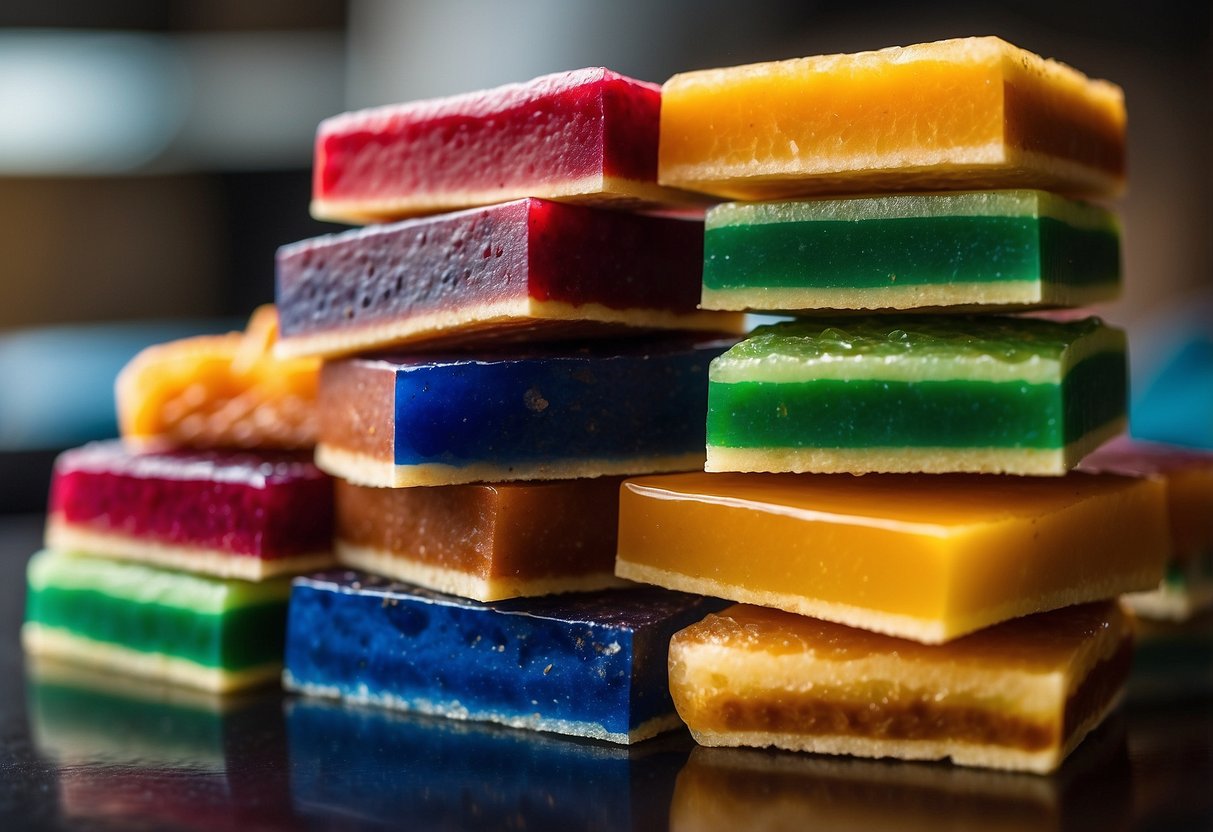
Kueh lapis has a rich history and origin, with roots in Indonesia and Malaysia. It’s made by layering thin sheets of batter, usually made with coconut milk and pandan, and baking them until they form a solid cake. The result is a moist, bouncy, and non-greasy pastry that’s perfect for any occasion. There are also many varieties of kueh lapis, including traditional and modern flavours, so there’s something for everyone to enjoy.
If you’re looking for a unique gift or simply want to indulge in something sweet, kueh lapis Singapore is definitely worth trying. With so many options available, you’re sure to find a flavour that suits your taste buds. Whether you prefer the traditional version or something more modern, this dessert is sure to satisfy your sweet tooth.
History and Origin
Cultural Significance
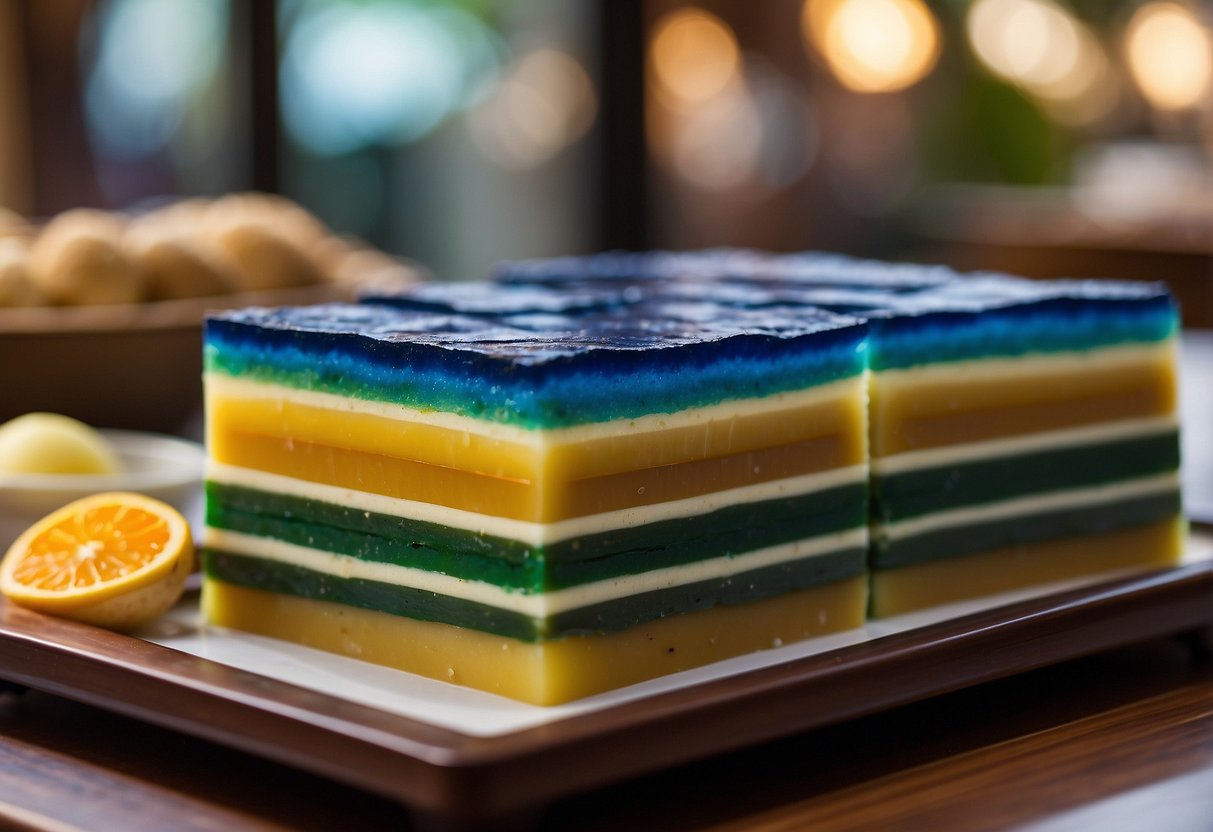
Kueh Lapis is a beloved dessert in Singapore, often enjoyed during special occasions and festivals such as Chinese New Year. Its cultural significance can be traced back to its origins in Indonesia, where it remains an iconic part of Southeast Asian cuisine.

Evolution of Kueh Lapis
The history of Kueh Lapis can be traced back to the Dutch colonial influence in Indonesia. The Dutch, with their passion for culinary arts and profound understanding of spices, created a cake known as Spekkoek in the 19th century. This cake, with its dark and light layers, resembled pork belly or bacon, hence the name. Over time, this cake evolved into what we now know as Kueh Lapis, with its distinctive thin layers of coloured cake.
Kueh Lapis has also evolved over time with various regional influences shaping its preparation methods and flavours. Today, Kueh Lapis is enjoyed in many different variations, including pandan, chocolate, and durian flavours.
Overall, the history and origin of Kueh Lapis is deeply rooted in Indonesian culinary traditions and the Dutch colonial influence. Its cultural significance and evolution over time have made it a beloved dessert in Singapore and Southeast Asia.
Making and Varieties
Traditional Ingredients
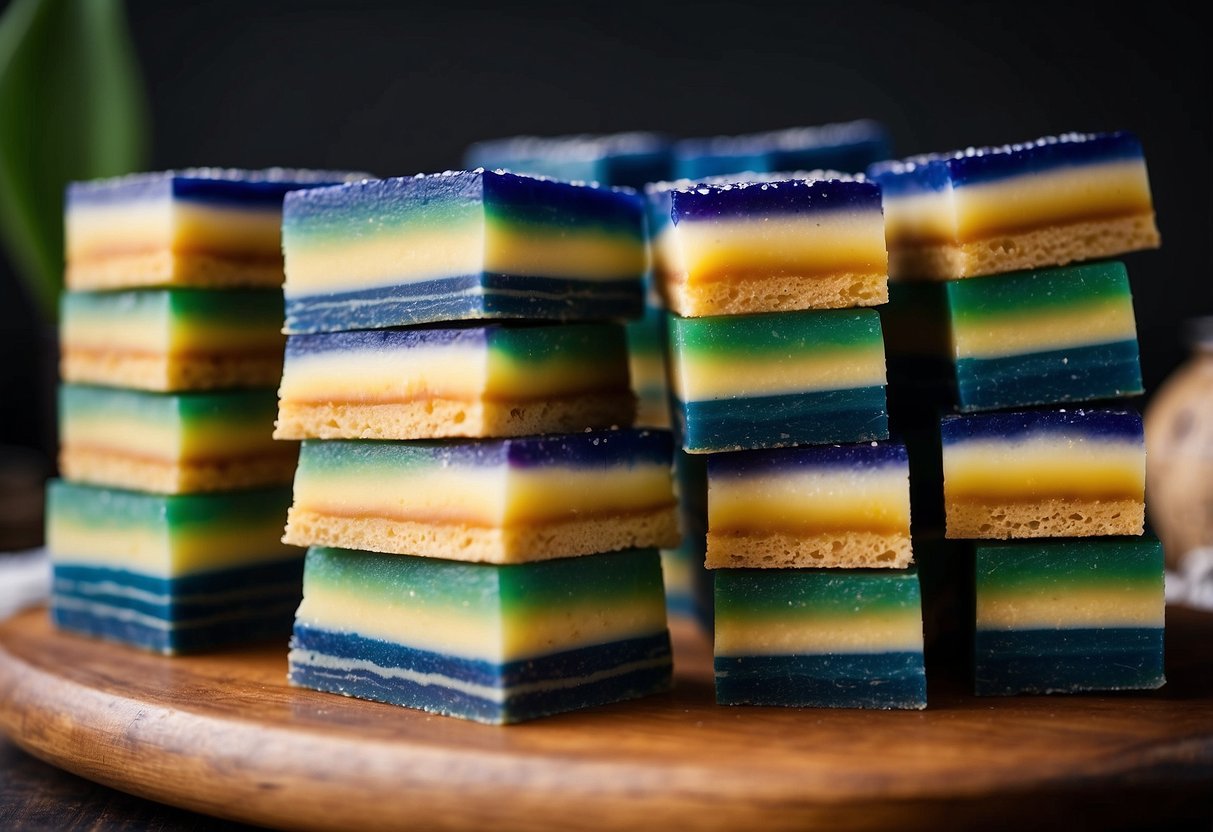
Kueh Lapis is a traditional Indonesian layered cake that has made its way to Singapore and become a popular dessert. The cake is made with simple ingredients such as eggs, flour, butter, and sugar. The traditional version of Kueh Lapis is flavoured with cinnamon and clove, which gives it a warm and comforting taste.
Modern Twists
In recent years, there have been many modern twists on the traditional Kueh Lapis. Some bakers have experimented with different flavours such as pandan, durian, and even Nutella. These new flavours have added a new dimension to the cake and have made it more appealing to a wider audience.
One popular variation is the prune rum lapis, which is infused with rum and studded with pieces of prune. Another popular variation is the signature mini lapis batavia, which is a smaller version of the traditional layered cake.
Serving and Pairing
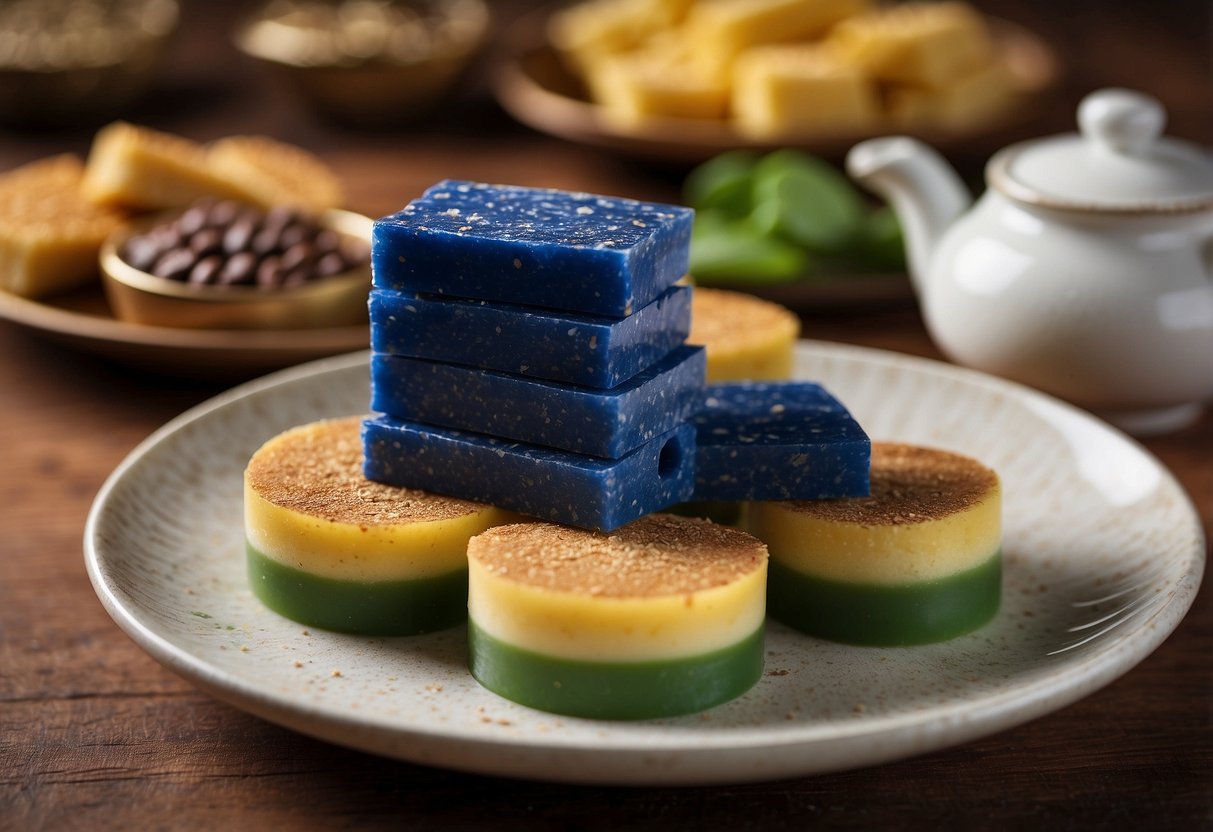
Kueh Lapis is a versatile dessert that can be served on its own or paired with other desserts. It is often served with a cup of tea or coffee. The cake also pairs well with ice cream or fresh fruit.

To enhance the presentation of the cake, some bakers add almond slivers on top or sprinkle it with icing sugar. Another option is to serve mini lapis nutella, which is a small version of the cake that is filled with Nutella.
Overall, Kueh Lapis is a delicious and versatile dessert that can be enjoyed in many different ways. Whether you prefer the traditional version or one of the many modern twists, there is a Kueh Lapis out there for everyone.
Frequently Asked Questions
Where can one purchase the finest Kueh Lapis in Singapore?
If you’re looking for the best Kueh Lapis in Singapore, there are plenty of bakeries and cafes that offer this delicious treat. Some of the most popular places to purchase Kueh Lapis include Bengawan Solo, Chinta Manis, and Rumah Makan Minang. These establishments are known for their high-quality ingredients and traditional recipes, ensuring that you get the finest Kueh Lapis in Singapore.
Could you share a traditional recipe for making Kueh Lapis at home?
If you’re feeling adventurous and want to try making Kueh Lapis at home, here’s a traditional recipe that you can follow:
Ingredients:
- 500g tapioca flour
- 500g rice flour
- 400g caster sugar
- 1 litre coconut milk
- 1 litre water
- 1 tsp pandan essence
- 1 tsp salt
- Food colouring (optional)
Instructions:
- Mix the tapioca flour, rice flour, and sugar together in a large bowl.
- Add the coconut milk, water, pandan essence, and salt to the bowl and mix well.
- Divide the mixture into equal portions and add food colouring to each portion if desired.
- Pour one portion of the mixture into a greased baking tin and steam for 10-15 minutes.
- Repeat with the remaining portions, layering each cooked portion on top of the previous one.
- Once all the portions have been cooked and layered, steam the entire cake for an additional 30-45 minutes.
- Allow the cake to cool before slicing and serving.
What’s the average price range for Kueh Lapis in Singapore?
The price of Kueh Lapis in Singapore can vary depending on where you purchase it from. On average, you can expect to pay between $10 and $20 for a small cake, and up to $50 or more for larger cakes or premium varieties.
Which establishments offer Halal-certified Kueh Lapis in Singapore?
If you’re looking for Halal-certified Kueh Lapis in Singapore, there are several establishments that offer this option. Some of the most popular include Tiong Bahru Galicier Pastry, Hjh Maimunah Restaurant & Catering, and Chinta Manis. These establishments use Halal-certified ingredients and follow strict preparation guidelines to ensure that their Kueh Lapis is suitable for Muslim consumers.
How should one properly store Bengawan Solo Kueh Lapis to maintain its freshness?
To maintain the freshness of Bengawan Solo Kueh Lapis, it’s important to store it properly. Keep the cake in an airtight container at room temperature, away from direct sunlight and moisture. If you need to store it for longer periods, you can also freeze the cake in an airtight container for up to 3 months.
Why is Kueh Lapis considered a premium delicacy and often priced higher than other sweets?
Kueh Lapis is considered a premium delicacy in Singapore due to its intricate layering, rich flavours, and lengthy preparation process. The cake is made using high-quality ingredients and requires a lot of time and effort to prepare, which is why it is often priced higher than other sweets. Additionally, Kueh Lapis is often associated with special occasions and celebrations, making it a highly sought-after treat.