

Science Lab Furniture: Choosing the Right Equipment for Your Needs
When it comes to setting up your science lab, choosing the right furniture is crucial. Not only does it need to be functional and durable, but it should also be comfortable for you and your students to use. Science lab furniture can range from chairs and workbenches to fume hoods and storage units, so it’s important to consider your specific needs and budget when designing your lab.

Designing Your Science Lab: Before you start furnishing and equipping your lab, it’s important to design the space to ensure that it meets your requirements. Think about the size of the lab, the number of students you’ll be teaching, and the type of experiments you’ll be conducting. This will help you determine how much space you need for each piece of furniture and equipment.
Furnishing and Equipping the Lab: Once you have your lab design in place, it’s time to start furnishing and equipping the space. Choose furniture that is made from high-quality materials and is designed to withstand the demands of a busy lab. You’ll also want to consider the ergonomics of the furniture to ensure that it is comfortable for you and your students to use. Additionally, make sure that you have all the necessary equipment and supplies to conduct your experiments safely and effectively.

Key Takeaways
- Design your science lab with your specific needs and budget in mind.
- Choose high-quality, durable, and ergonomic furniture for your lab.
- Ensure that you have all the necessary equipment and supplies to conduct experiments safely and effectively.
Designing Your Science Lab
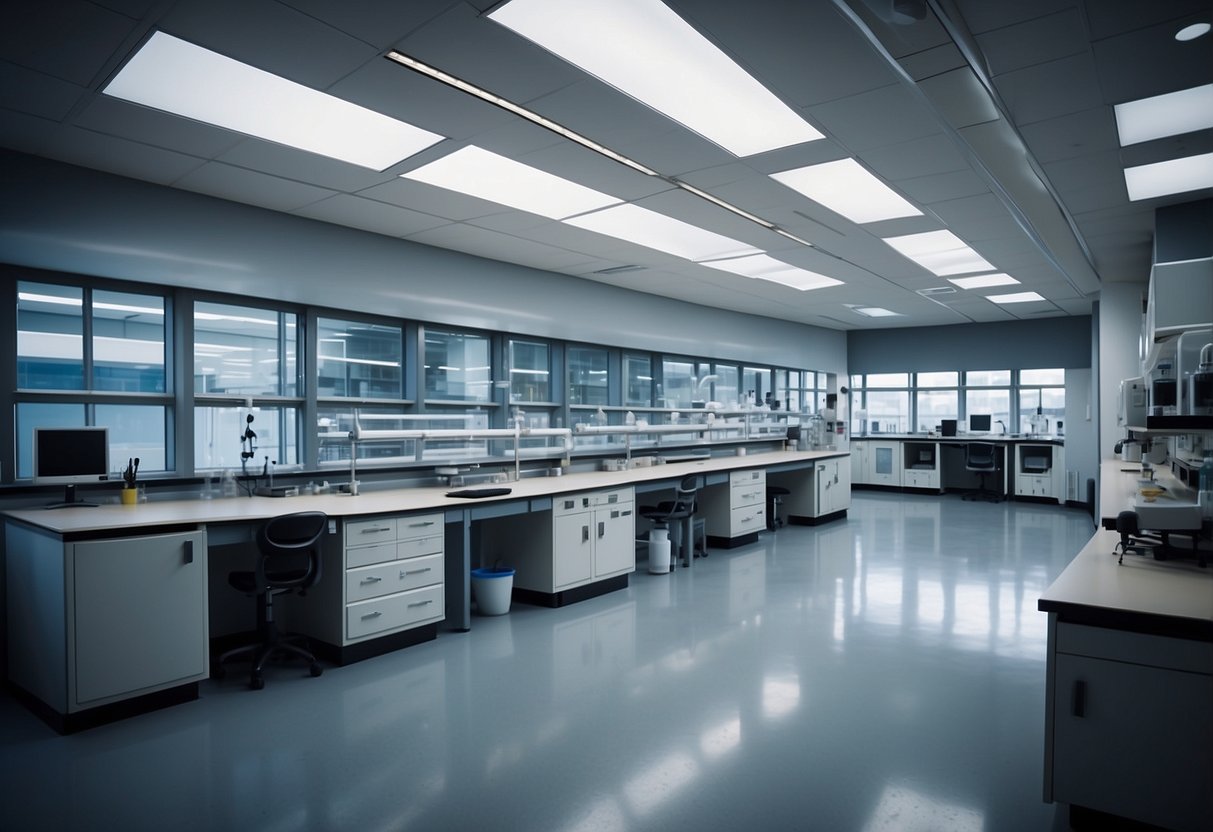
When it comes to designing your science lab, there are several factors to consider. Choosing the right furniture, selecting durable materials, ensuring safety and compliance, and customisation services are all essential aspects of a well-designed science lab.

Choosing the Right Furniture
Selecting the right furniture for your science lab is crucial. You need to choose furniture that is functional, durable, and can withstand the wear and tear of daily use. Some common materials used for science lab furniture include wood, metal, stainless steel, epoxy resin, and phenolic.
Material Selection for Durability
Durability is a key factor when selecting materials for your science lab furniture. Epoxy resin and phenolic are popular choices for countertops due to their resistance to chemicals and heat. Stainless steel is also a durable and easy-to-clean option for lab benches and cabinets.
Safety and Compliance
Safety is of utmost importance in any science lab. When designing your lab, it is important to ensure that all furniture and materials meet safety standards and comply with regulations. This includes selecting furniture that is fire-resistant and non-toxic.
Customisation Services
Customisation services are available for science lab furniture to meet your specific needs. Whether you require customised countertops or cabinets, manufacturers can provide tailored solutions to meet your requirements.
In summary, designing your science lab requires careful consideration of furniture design, material selection, safety, and customisation services. By choosing the right furniture and materials, ensuring safety and compliance, and utilising customisation services, you can create a well-designed science lab that meets your specific needs.
Furnishing and Equipping the Lab

When it comes to furnishing and equipping a science lab, there are a number of essential lab furniture products you will need to consider. These include lab tables, chairs, workstations, and benches. It is important to choose lab furniture that is durable, ergonomic, and easy to clean.
Essential Lab Furniture Products
Lab tables are an essential piece of lab furniture that provide a sturdy and stable surface for conducting experiments. Look for tables that are chemical-resistant, heat-resistant, and easy to clean. Lab chairs are also important for ensuring comfort during long periods of work. Make sure to choose chairs that are adjustable, ergonomic, and have a stable base.
Workstations and benches are also key pieces of lab furniture that provide ample workspace for conducting experiments. Look for workstations and benches that are height-adjustable, have ample storage space, and are easy to clean.
Storage Solutions and Organisation
In addition to lab furniture, storage solutions and organisation are also important considerations when furnishing and equipping a science lab. Carts, shelving, and cabinets are all useful for storing lab equipment, chemicals, and consumables. Make sure to choose storage solutions that are durable, easy to clean, and have ample space for all of your lab supplies.
Specialised Equipment and Accessories
Specialised equipment and accessories are also important for conducting experiments in a science lab. Fume hoods and biosafety cabinets are essential for protecting lab workers from harmful chemicals and pathogens. Make sure to choose equipment that is appropriate for the experiments you will be conducting.
Chemicals and consumables are also important for conducting experiments in a science lab. Make sure to choose high-quality chemicals and consumables that are appropriate for the experiments you will be conducting.
Overall, it is important to choose lab furniture, equipment, and accessories that are appropriate for the experiments you will be conducting. Make sure to consider durability, ergonomics, and ease of cleaning when selecting lab furniture, and choose storage solutions and specialised equipment that meet your specific needs.
Frequently Asked Questions

What considerations should one keep in mind when purchasing furniture for a science lab?
When purchasing furniture for a science lab, it is important to consider the specific needs and requirements of the lab. You should consider the type of experiments that will be conducted, the number of students who will be using the lab, and the available space in the lab. Additionally, you should consider the durability and functionality of the furniture, as well as its ease of maintenance and cleaning.
How does the material of laboratory benches affect their functionality?
The material of laboratory benches can affect their functionality in several ways. For example, benches made of stainless steel or other non-porous materials are easier to clean and disinfect, making them ideal for labs where cleanliness is a top priority. Wooden benches, on the other hand, may be more aesthetically pleasing and can provide a warmer, more inviting feel to the lab. However, they may not be as durable or easy to clean as other materials.
In what ways are mobile laboratory benches advantageous for a science lab?
Mobile laboratory benches can be advantageous for a science lab in several ways. They can be easily moved around the lab to accommodate different experiments and activities, and they can be used to create flexible workspaces that can be adapted to the needs of the lab. Additionally, mobile benches can be used to create more space in the lab when needed, or they can be stored away when not in use.
Why is it important to have storage options like drawers and shelves in lab benches?
Having storage options like drawers and shelves in lab benches is important because it allows you to keep your lab organized and efficient. By providing a place to store equipment, supplies, and other materials, you can keep your lab clean and clutter-free, which can help to improve safety and productivity. Additionally, having storage options can help to save space in the lab, allowing you to maximize the available workspace.
What role do science tables play in the laboratory setting?
Science tables play an important role in the laboratory setting because they provide a sturdy, flat surface for conducting experiments and other activities. They can be used for a variety of purposes, including mixing chemicals, preparing samples, and conducting tests. Additionally, science tables can be designed to accommodate specific needs, such as adjustable height or built-in sinks.
How do you choose the appropriate size and design of laboratory cabinets?
When choosing the appropriate size and design of laboratory cabinets, you should consider the specific needs of your lab. For example, you should consider the amount of storage space that you need, as well as the types of materials that you will be storing. Additionally, you should consider the available space in your lab and choose cabinets that will fit comfortably in the space. Finally, you should consider the design of the cabinets and choose a style that will complement the overall aesthetic of your lab.