Last updated 12 August 2026. This page was reviewed on that date. Prices, rates and opening hours change often in Singapore — confirm anything that matters directly with the business before you travel or spend.
Quick answer: The Banana Leaf Apolo in Little India still sets the standard for halal fish head curry after 50 years, while Samy’s Curry at Dempsey Hill suits a long, leafy lunch. For something more casual, West Coz Cafe does a creamy, coconut-rich version under $30. Muthu’s, Pavilion Banana Leaf, Karu’s, and Zam Zam round out the best halal-certified options across the island.
When your craving shifts to a charcoal-warmed pot, the evening calls for fish head steamboat gatherings.

When a friend asks you along for fish head curry and you’re not sure if the place is halal, it’s normal to feel a bit paiseh. Relax lah—these spots are all halal and every one knows how to make a gravy worth getting your hands messy for. Bring a few kakis, order extra rice, and just go with the flow. No need to wayang; the whole point is comfort.
Not sure this is the right list? Best Halal Food in Singapore has 9 others alongside it.
The Banana Leaf Apolo

Since 1974, The Banana Leaf Apolo has been the name that comes up first when anyone asks about halal fish head curry in Singapore. Their Little India Arcade outlet on Serangoon Road still runs on the same formula: over 20 spices, a tamarind base that hits that sour-sweet balance, and chunks of fresh fish soaking it all up. The pineapple and tomato in the gravy do a lot of the heavy lifting—they brighten the whole dish without making it sweet.
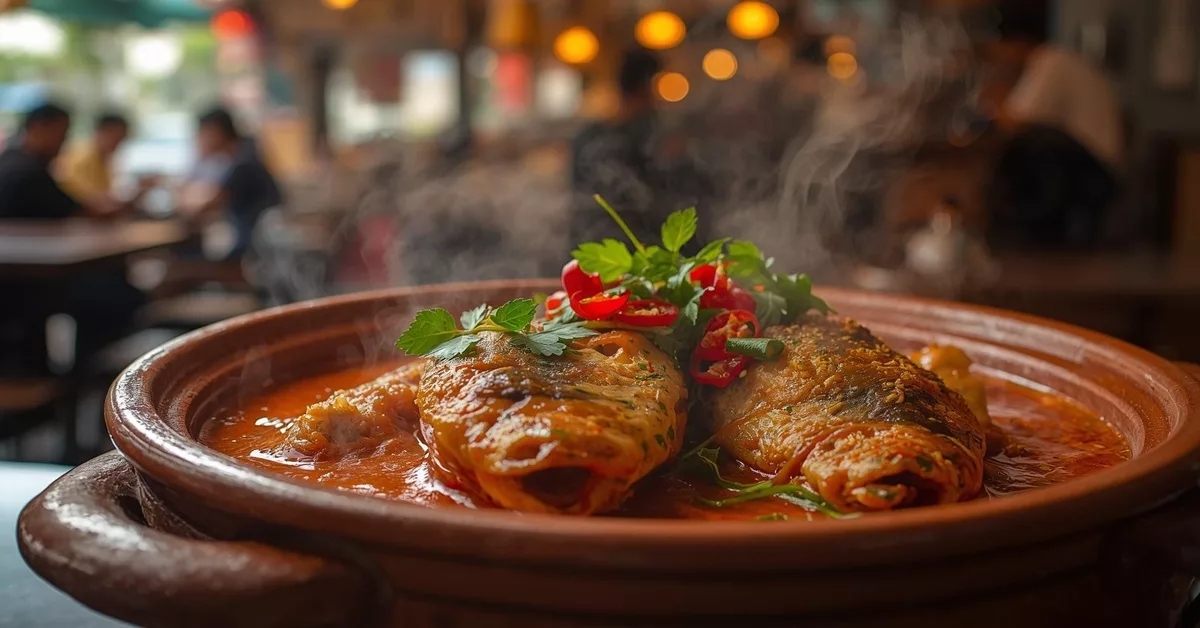
The Apolo Fish Head Curry starts at S$30.50. It comes to the table looking dramatic, head and all, on a banana leaf with rice and papadum on the side. The menu goes beyond curry too—butter chicken, masala prawns, the usual South Indian staples done with the confidence of a kitchen that has made them thousands of times.
Address: 48 Serangoon Road, #01-32 Little India Arcade, Singapore 217959 (multiple outlets islandwide)
Phone: +65 6333 6111
Hours: 10:30 AM to 10:30 PM daily
Website
This is the one to bring out-of-town guests to. The Little India location means you can make a whole afternoon of it—walk off the curry through the shophouses, maybe grab a teh halia nearby. It works for family dinners too; the space is casual enough that kids are fine, but the legacy gives it a sense of occasion.
Come hungry and bring your kaki—this is a dish best shared. The generous gravy soaks into the rice beautifully, and the air-conditioned outlet keeps things comfortable even on a scorching afternoon. If you are in Little India on a weekend, aim to arrive before noon to secure a table before the lunch crowd fills the place.
Muthu’s Curry

Muthu’s Curry has been on Race Course Road since 1969, which tells you something—that stretch is not kind to restaurants that coast on reputation. Their fish head curry takes a different path from the tamarind-led versions elsewhere. The gravy leans on coconut milk, which rounds out the spice and gives it a creamier mouthfeel. It is the sort of dish that feels substantial without being heavy.
The fish comes tender, almost spoonable off the bone, and the vegetables in the pot soak up the broth properly. Beyond the headliner, crab masala and mutton curry are the ones regulars order again and again. The room itself has tablecloths and proper service—not stiff, just buttoned-up enough that it feels like a proper night out.
Address: 138 Race Course Road, #01-01, Singapore 218591
Phone: +65 6392 1722
Hours: 10:00 AM to 10:00 PM daily
Website
Go here when the occasion calls for something a notch above casual but you do not want the formality of fine dining. Anniversary dinner, parents visiting, a promotion to celebrate—that kind of evening. The coconut-rich curry feels like a natural fit if you find tamarind-based versions a bit sharp.
We compile these ourselves and take suggestions. If your business belongs on this list, tell us why.
When you want your fish head curry rich and creamy without the sour kick, Muthu’s is your answer. The coconut milk gravy feels like a warm hug, and the air-conditioned dining room makes it a comfortable choice for a family dinner. Book a table if you’re going on a weekend—it fills up fast.
Deciding between a tangy assam kick and a richer coconut base might have you exploring which Singapore curry style fits tonight.
Samy’s Curry Restaurant

Samy’s Curry has been a Dempsey Hill fixture since the 1950s, back when the area was still quiet and green. It still feels that way. You sit under ceiling fans in an old colonial building, eating fish head curry off a banana leaf while the trees outside do their thing. The gravy here is spice-forward, lively without being punishing, and the fish is always fresh—you can tell from how clean it flakes.
The menu sticks to the classics: chicken masala, vegetable curries, rice and papadum. Nothing fussy, just proper execution from a family-run kitchen that has had decades to get it right. Lunch and dinner are separate seatings, so plan around that—closed Tuesdays too.
Address: 25 Dempsey Road, Singapore 249670
Phone: 6472 2080
Hours: 11:00 AM to 3:00 PM and 6:00 PM to 10:00 PM (closed Tuesdays)
Website
Samy’s is the go-to for a lazy weekend lunch that stretches into the afternoon. Bring a group, order a few dishes to share, and let the setting do half the work. The Dempsey location also makes it easy to pair with a walk through the boutiques afterward. It suits anyone who values atmosphere as much as what is on the plate.
For a lazy Sunday lunch that feels more like a garden party, Samy’s is the move. Settle under the ceiling fans, let the spice-forward gravy wake up your tastebuds, and order a mango lassi to cool things down. Bring a car—parking is easy and you’ll want to linger.
Pavilion Banana Leaf

Pavilion Banana Leaf runs on Chettinad recipes passed down over a century, and the fish head curry shows that heritage clearly. It arrives in a claypot, assam-tanged and mildly spicy, with okra, tomato, and brinjal swimming alongside a meaty fish head. The portion is generous—one pot feeds two or three comfortably with rice.
They have two outlets: one in Westgate Mall and another at Mandai. The Westgate location is a lifesaver if you are in Jurong and craving something serious without trekking to town. The menu spans North and South Indian staples, and the kitchen gives out free kids’ meals, which is a small thing that makes a big difference when you are dining with little ones.
Address: 3 Gateway Drive, Westgate Mall #02-28, Singapore 608532
Phone: 6270 3866
Hours: Monday to Friday 11:00 AM to 7:00 PM; Saturday, Sunday and public holidays 11:00 AM to 8:00 PM
Website
This is the pick for families in the west who want a proper fish head curry without a long drive. The assam base is gentler on young palates, and the mall setting means air-con and easy parking. Grab a table after a morning at the Singapore Zoo and the Mandai outlet is right there.
If you’re near Jurong East, the Westgate outlet lets you fit a proper claypot fish head curry into a shopping day. The assam tang is just right, and the generous portion makes it easy to share. The okra and brinjal soak up the gravy beautifully.
Karu’s Indian Banana Leaf Restaurant

Karu’s has been holding down Dunearn Road at Sime Darby Centre since 1993, serving halal South Indian food that does not try to be anything other than what it is: bold, honest, and satisfying. The fish head curry comes spicy and tangy, with portions big enough that ordering one for two people with a side of biryani is a solid plan. The gravy has real kick—not the kind that builds slowly, but the kind that announces itself.
The setting is warm and unpretentious, the sort of place where you see the same faces week after week. Their masala chai gets mentioned almost as often as the curry, and for good reason—it is made strong and arrives piping hot.
Address: 896 Dunearn Road, #05-01 Sime Darby Centre, Singapore 589472
Phone: 6762 7284
Hours: 11:00 AM to 10:00 PM daily
Website
Karu’s is for the Bukit Timah crowd who want a reliable, no-frills curry fix close to home. It works for a solo dinner after a long week or a casual meal with friends who can handle some heat. If your idea of comfort food involves spice levels that make your nose run a little, this is the one.
We compile these ourselves and take suggestions. If your business belongs on this list, tell us why.
This is your no-frills heartland hero. The gravy announces itself with real heat, so come prepared with an empty stomach and a love for bold flavours. Pair a portion with biryani for a meal that stretches your dollar—and your spice tolerance.
West Coz Cafe

West Coz Cafe sits inside West Coast Plaza, a halal zi char joint that happens to do a very decent fish head curry for S$26. The gravy is coconut-milk-rich, studded with long beans and brinjal, and the fish holds up well. They also do an Assam Fish Head version if you want something sharper. It is the kind of place where families roll in on a Saturday evening, order a few dishes to share, and leave full without checking the bill nervously.
The menu is Chinese-Indian fusion—think curry fish head next to hotplate tofu and cereal prawns. It is a halal-certified setup run by folks who understand the zi char format inside out. They have another outlet at Junction 10 in Woodlands, so the north side is covered too.
Address: 154 West Coast Road #02-23 West Coast Plaza, Singapore 127371
Phone: +65 6779 1303
Hours: 11:30 AM to 10:00 PM daily
Website
This is where you go when you want fish head curry but the group cannot agree on one cuisine. The zi char format means everyone gets something they like, and the price point makes it a no-stress weeknight outing. The creamy coconut version is also a safe bet for anyone who finds traditional fish head curry too sour.
When the whole family wants zi char and someone votes for fish head curry, West Coz delivers. The coconut-rich gravy is comfort in a bowl, and the long beans add a nice crunch. Grab a table in the aircon food court and order a few more dishes to share.
Singapore Zam Zam Restaurant

Zam Zam has been standing on North Bridge Road since 1908, right across from Sultan Mosque. Most people know it for murtabak and nasi biryani, but the fish head curry is a quiet achiever on the menu. The spices are fresh-ground, the gravy is robust, and the whole thing carries the weight of a kitchen that has been at it for over a century.
The room is nothing fancy—tiled floors, framed photos, the hum of a busy hawker-style operation. But that is the charm. You are eating in a piece of Singapore history, and the food holds up. Order the fish head curry with biryani on the side and you have a meal that costs less than it should.
Address: 697-699 North Bridge Rd, Singapore 198677
Phone: +65 6298 6320
Hours: 7:00 AM to 11:00 PM daily
Website
Zam Zam is the move when you are already in Kampong Glam, maybe after prayers or a wander through Haji Lane. It is ideal for a solo makan or a quick meal with a friend who appreciates heritage. The early opening time also makes it a solid breakfast curry option if that is your thing—no judgement.
How to choose
Start with location. Little India and Race Course Road have the highest concentration of old-guard names—Apolo and Muthu’s are a short walk apart, so you could almost decide on the spot. Dempsey suits a longer, more relaxed meal. If you are in the west, Pavilion Banana Leaf and West Coz Cafe save you the cross-island drive.
Then think about the gravy style. Tamarind-based versions like Apolo’s and Pavilion’s are tangier and brighter. Coconut-rich ones like Muthu’s and West Coz’s are creamier and milder. Zam Zam and Karu’s sit somewhere in the middle with a spice-forward approach. There is no wrong answer—just what your taste buds are asking for that day.
Budget-wise, most fish head curries land between S$26 and S$35. That feeds two to three people with rice and a side or two. The total bill climbs depending on how many extras you order—crab masala and mutton curry will push it up faster than vegetable dishes. A fair spend for two people is S$40 to S$60 at the casual spots, and S$70 to S$100 at Muthu’s or Samy’s if you go all in.
Consider the crowd. Family with young kids? Pavilion’s free kids’ meals and mall setting help a lot. A date or anniversary? Muthu’s tablecloths and service feel appropriately special. A group of spice-loving friends? Karu’s will not disappoint. Solo diner who just wants a good meal? Zam Zam or West Coz have you covered.
All seven spots are halal-certified, so that base is covered. What differs is the vibe, the gravy, and how far you are willing to travel. Pick accordingly, and maybe check out Restaurants on Amoy Street if you are planning a different kind of food crawl. For something completely different after all that spice, Milkshake Destinations in Singapore for a sweet cool-down are just a click away.
| Restaurant | Gravy Style | Price (Fish Head Curry) | Best For |
|---|---|---|---|
| The Banana Leaf Apolo | Tamarind, tangy | From S$30.50 | Guests, family dinners |
| Muthu’s Curry | Coconut, creamy | Check with the business | Special occasions |
| Samy’s Curry Restaurant | Spice-forward | Check with the business | Long weekend lunches |
| Pavilion Banana Leaf | Assam, mildly spicy | Check with the business | Families with kids |
| Karu’s Indian Banana Leaf | Spicy, tangy | Check with the business | Spice lovers |
| West Coz Cafe | Coconut, creamy | S$26 | Casual group meals |
| Singapore Zam Zam | Robust, spice-forward | Check with the business | Solo diners, heritage seekers |
Summary
The halal fish head curry scene in Singapore stretches from century-old institutions in Kampong Glam to mall-based zi char joints in the west. Whether you want a tamarind tang, a coconut-rich broth, or a spice level that wakes you up, there is a bowl with your name on it. All seven spots here are halal-certified, proven by decades of steady queues and clean plates, and each brings something different to the table.
If this guide was useful, you might also enjoy our lists of Kway Chap Destinations in Singapore and Fish Steamboat Destinations in Singapore.
Disclaimer: All information provided here has been compiled from publicly available sources. Details like prices and operating hours can change, so please confirm directly with the business before heading down.
Read next
Frequently asked questions
After prayers at Sultan Mosque, the Zam Zam buzz draws you in. The fish head curry is a sleeper hit—deep, robust, and made with freshly ground spices. Eat it with prata, soak up every last bit of gravy, and soak in a century of Kampong Glam history.
What makes fish head curry halal?
The restaurant must be halal-certified, which means all ingredients, preparation methods, and kitchen practices meet Islamic dietary requirements. The seven spots in this guide are all halal-certified.
How much does halal fish head curry cost in Singapore?
Most fish head curries range from S$26 to around S$35. The dish typically feeds two to three people with rice and sides added.
Which outlet has the tangiest gravy?
The Banana Leaf Apolo and Pavilion Banana Leaf both lean on tamarind or assam for a brighter, more sour profile. If you like that shiok tang, start there.
Is fish head curry very spicy?
It varies. Karu’s version is known to be spicier, while coconut-based versions at Muthu’s and West Coz Cafe are milder and creamier. You can usually ask the kitchen to adjust the heat.
Can I get halal fish head curry in the west of Singapore?
Yes. Pavilion Banana Leaf is in Westgate Mall, and West Coz Cafe is in West Coast Plaza. Both are halal-certified and save you a trip to town.
Which restaurant is best for a family with young children?
Pavilion Banana Leaf offers free kids’ meals and is inside a shopping mall, which makes everything easier with little ones. West Coz Cafe is also casual and family-friendly.