Last updated 11 August 2026. This page was reviewed on that date. Prices, rates and opening hours change often in Singapore — confirm anything that matters directly with the business before you travel or spend.
Quick answer: Eight new restaurants caught our attention this year, covering a lot of ground. For a special-occasion kaiseki meal, Zeniya in Shaw Centre is the one. Wagyu Jin, just upstairs, does a tight wagyu omakase. Jin Ting Wan up on Marina Bay Sands level 55 delivers Cantonese with a view. Pierre Hermé at RWS takes desserts seriously, II Giardino makes a date in the Botanic Gardens feel effortless, and Bon Broth rethinks hotpot without the MSG comedown. On the casual end, Scarpetta on Amoy Street slings fresh pasta from a tiny counter, and Tras Street newcomer Latido runs a monthly Colombian market brunch.
You want to walk into a room and have the table already say something about you. These eight new restaurants put you in the right seat—whether you’re after a quiet two-hour escape, a skyline dinner that handles the business crowd, or a no-reservations pasta counter that rewards the patient. Choose the one that fits the occasion, and let the rest do the work.

This sits inside Best Restaurants in Singapore by Occasion, alongside 41 related guides.
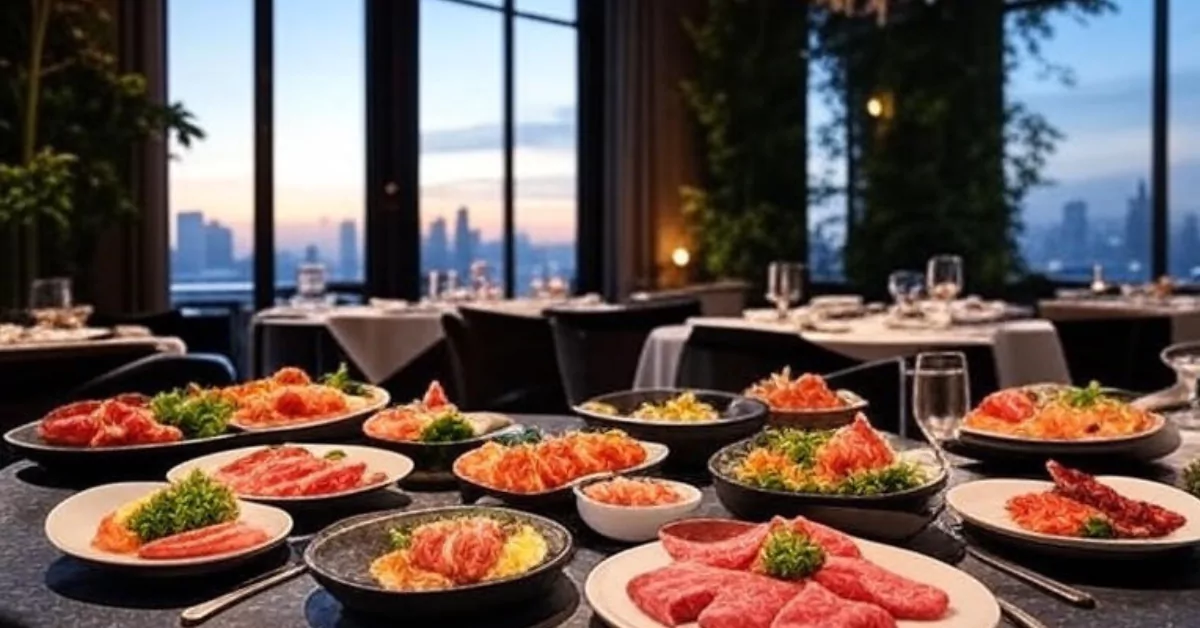
Zeniya

Zeniya is a 32-seat kaiseki counter on the ground floor of Shaw Centre, and it comes with real pedigree: its Kanazawa sibling holds two Michelin stars. The omakase moves with the seasons, pulling in sashimi and grilled plates from Japanese producers, and you sit close enough to watch the knife work. They also have a deep sake list that the team can walk you through.
Bring someone who would appreciate a quiet, two-hour dinner where every course arrives with intent. It is the kind of place you book when a parent turns sixty or an anniversary deserves more than a card.
- Address: 1 Scotts Road, #01-16 Shaw Centre, Singapore 228208
- Hours: Tue–Sun, Lunch 12pm–3pm (last seating 1:30pm), Dinner 6:30pm–11pm (last seating 8pm)
- Price signal: Premium omakase
- WhatsApp: +65 96666131
- Website: zeniya.com.sg
Bring someone who notices the details. The counter puts you close enough to see every slice, and the sake list gives you something to talk about between courses. This is the booking that tells your date you took the time to plan something special.
Wagyu Jin

Also in Shaw Centre, one floor up, Wagyu Jin is a kappo-style outfit by the Les Amis Group that builds its omakase around wagyu from Japanese prefectures. The chateaubriand sando and a clear wagyu consommé are two things you hope turn up on the menu. Counter seats put you in front of the chef, and the sake range is broad enough to turn the meal into a tasting session of its own.
This one is for the person who says they do not really eat beef but suddenly finishes your plate. It feels celebratory without being stiff, and the staff are good at reading the room.
- Address: 1 Scotts Road, #02-12/13 Shaw Centre, Singapore 098138
- Hours: Mon–Sat, Lunch 12pm–3pm (last order 1:30pm), Dinner 6:30pm–10pm (last order 8:30pm), closed Sun
- Price signal: Premium, below some high-end steakhouse alternatives
- Phone: +65 9635 0973
- Website: wagyujin.com.sg
We compile these ourselves and take suggestions. If your business belongs on this list, tell us why.
If the family votes you down on raw fish, our Family Restaurants in Singapore guide has backup plans.
You know the person who thinks they have tried it all. Bring them here. The chateaubriand sando and wagyu consommé are the kind of plates that reset the conversation. Counter seats keep the focus on the chef, and the sake selection turns the meal into a tasting session of its own.
Jin Ting Wan

Jin Ting Wan sits on the 55th floor of Marina Bay Sands, a 162-seat Cantonese dining room with floor-to-ceiling views. The kitchen sends out roasted duck worth ordering ahead for, Alaskan king crab when it is in season, and a wine list that the floor team will happily match to whatever you are eating.
The space works well when you have out-of-town guests who want to see the skyline while they eat, or a business dinner where the backdrop does half the talking. Book a window table if you can; the lunch crowd is lighter, so you stand a better chance.
- Address: 10 Bayfront Avenue, Hotel Tower 1, Level 55, Marina Bay Sands, Singapore 018956
- Hours: Mon–Sun, 11:30am–2:30pm, 5:30pm–9:30pm
- Price signal: Premium hotel dining
- Phone: +65 6688 9969
When the guest list includes people who measure a meal by the view, this is the call. The roasted duck is worth ordering in advance, and the floor team can match a wine to whatever you are eating. The 55th-floor windows do the heavy lifting so you can focus on the room.
Maison Pierre Hermé Paris

Pierre Hermé’s Southeast Asian flagship takes up 400m² at Resorts World Sentosa. It covers the expected ground—macarons, chocolates, an ice cream bar—and then adds a full-service restaurant with savoury dishes and some Singapore-inspired creations you will not find in Paris.
Worth the Sentosa run when you need a gift that is not another box of hotel chocolates, or you just sat through a long meeting and want a quiet afternoon sugar lift. They close at 6pm, so plan it as a day trip.
- Address: Weave, 01-234/234A, 26 Sentosa Gateway, Resorts World Sentosa, Singapore 098138
- Hours: Daily 9am–6pm
- Price signal: Pastry treats from moderate to very atas
- Phone: +65 6577 6688
- Website: pierreherme.com
That long meeting just ended. You need something that feels like a reward. The savoury dishes here surprise people who only know the macarons, and the Singapore-inspired creations are a conversation starter. Pick up a box for the home front and you will return with more than just a sugar rush.
II Giardino

II Giardino is an Italian restaurant on the second level of Singapore Botanic Gardens, open for dinner from Wednesday to Sunday. The menu leans traditional—spaghetti alle vongole, slow-cooked Venetian octopus, that sort of thing—and the wine list is paired for the dishes, not just the price tags.
Come here right as the light softens over the gardens, and the evening feels like a small holiday. It is a solid play when you want a date night that does not involve a mall, or you are celebrating with a small group that likes to linger over a second bottle.
- Address: 50 Cluny Park Road, Level 2, Singapore Botanic Gardens, Singapore 257488
- Hours: Wed–Fri, 6pm–10pm (last order 9:30pm); Sat–Sun, 5pm–10pm (last order 9:30pm)
- Price signal: Special-occasion Italian
- Phone: +65 9831 1106
- Website: ilgiardino.sg
For more green eating without the dinner bill, our Vegetarian Restaurants in Singapore guide covers spots that take vegetables just as seriously.
The light through the trees, a glass of something from the paired list, and a plate of spaghetti alle vongole. This is the table you book when you want a midweek reset that feels like a mini break. It works for early dates, long evenings, and any moment where you need the setting to carry half the conversation.
Bon Broth

Chef André Chiang’s hotpot concept inside Raffles City runs on eight bespoke soup bases, and the team has a broth sommelier who walks you through them. The big idea: additive-free broths, fresh seafood and meats, and a meal that feels rich without the heavy aftermath you sometimes get from a typical mala session.
Good pick when one person in the group is all about clean eating and the other just wants the meat to taste shiok. The Raffles City location makes it easy to book on a workday lunch too.
- Address: 252 North Bridge Road, #03-01, Raffles City, Singapore 179103
- Hours: Mon–Sun, 11am–10pm
- Price signal: Mid-to-upper hotpot, à la carte builds the bill
- Phone: +65 8380 7434
- Website: instagram.com/bonbroth.sg
The broth sommelier solves the group-chat debate before it starts. You get the clean, additive-free base your friend insists on, and the other side of the table gets meat and seafood that taste like they should. Everyone leaves feeling light, not weighed down. This is the hotpot that keeps the wellness crowd and the indulgence crowd at the same table.
Scarpetta

Scarpetta is a 16-seat pasta counter on Amoy Street that does not take reservations. They roll fresh pasta daily, pull influences from Rome and Naples, and plate everything family-style for sharing. The no-booking policy means you show up, put your name down, and grab a drink nearby until the ping comes.
Bring a friend who queues willingly and does not mind sitting elbow-to-elbow with strangers. The food hits the right note between casual weeknight and something you would happily post about, and the bill stays reasonable enough to make it a repeat.
- Address: 47 Amoy Street, Singapore 069873
- Hours: Tue–Wed, 11:30am–2:30pm, 6–10:30pm; Thu, 11:30am–2:30pm, 6–11pm; Fri–Sat, 11:30am–2:30pm, 6–11:30pm; closed Sun–Mon
- Price signal: Affordable for fresh pasta in town
- Website: instagram.com/scarpetta.sg
We compile these ourselves and take suggestions. If your business belongs on this list, tell us why.
The no-booking rule means you want to come early or be ready to wait. Grab a drink nearby, and when the ping comes, you will slide into a counter seat and watch the pasta being rolled. It is loud, it is close, and the food lands right where it should. This is the spot for a friend who will not hold a queue against you.
Latido

Latido brings Colombian cooking to Tras Street, led by chef Fernando Arévalo. The regular menu pulls from his childhood recipes, built for sharing, and once a month they run a weekend market brunch that fills the place with music and a bigger spread of Latin American flavours.
The brunch is the move if you are gathering a group that is sian of the same eggs Benedict routine. Dinner works for a midweek escape when you want something that does not taste like every other Tanjong Pagar restaurant.
- Address: 40 Tras Street, Singapore 078979
- Hours: Fri, 12pm–3pm, 6pm–12am; Sat, 6pm–12am; Tue, 6pm–10pm; Wed–Thu, 12pm–3pm, 6pm–10pm; closed Sun–Mon
- Price signal: Moderate, sharing plates keep it flexible
- Phone: +65 8961 8191
- Website: latido.sg
If you are chasing raw fish instead, our Sushi Restaurants in Singapore guide has more options that fit a special-occasion spend.
Belimbing

Belimbing, on the second floor of a restored shophouse on Beach Road, is a new-gen Singaporean restaurant by The Lo & Behold Group, led by Chef Marcus Leow (formerly of Naked Finn and Magic Square).
The nostalgia here is not the laminated-menu kind—it’s a sharper reconstruction, the way your memory insists a dish tasted before someone told you the recipe. The shophouse setting adds a gentle suspense, climbing stairs to find a meal that argues Singaporean cuisine can be both heirloom and experiment. The aged kanpachi might surface on your plate looking nothing like its hawker ancestor, but it closes the same argument. Skip this if you need a meal to fill a hole; come if you want one to start a conversation you’ll still be having on Monday.
Climb the shophouse stairs and find a room that feels more like a friend’s ambitious dinner party than a restaurant. The sharing plates land with an almost choreographed casualness—pass them around, fork what you like, argue about which reinterpretation most honors its roots. The move is to order across the menu, a few dishes per person, and trust the chef’s instinct for when a familiar flavor deserves a sharp left turn. A meal that rewards the kind of group that talks with its hands.
Products or Services
A 4-course dinner menu ($88) and 2-course lunch menu ($58), with dishes like aged kanpachi with cold coconut cream sauce, clam custard with assam pedas, and grilled “firefly” squid rojak, plus inventive cocktails.
Contact Information & Location
- Location: 269A Beach Road, Singapore 199546
- Phone: +65 8869 7243
- Email: [email protected]
- Operating Hours: Tue-Sun lunch 12-3:30pm, dinner 6-10:30pm
- Website: Belimbing
Climb the stairs of the Beach Road shophouse to find a dining room that balances heritage detail with modern Singaporean cooking. The evening menu unfolds like a conversation between familiar comforts and inventive twists, making it ideal for a date that you’ll both retell. The clam custard with assam pedas spark is a standout.
Station by Kotuwa

Station by Kotuwa, on Boon Tat Street, is a casual offshoot of Sri Lankan restaurant Kotuwa, led by Chef Rishi Naleendra and Head Chef Jay Teo.
This is the offshoot that didn’t get the memo about being a sidekick—the food carries its own passport. The blackened coconut gravy on the braised beef cheek is the sort of slow-building warmth that makes air-conditioning feel like an insult. It works best for a group that enjoys the low-grade chaos of passing plates around, arguing gently over the last piece of crispy tripe. If you’ve been telling yourself you’ll eventually get around to Sri Lankan food, this is the charming push—a little more polished than a kopitiam, a lot less kiasu than a tasting counter.
The space is tight, the bar seating a front-row seat to the kitchen’s steady rhythm. Dishes arrive not in courses but as a staggered parade, so the table fills quickly with small plates that demand immediate attention. Grab a fork and go in—the crispy tripe is a must, and the blackened coconut gravy on the braised beef cheek will have you mopping the plate with whatever’s nearest. It’s best experienced with friends who don’t mind overlapping elbows and a bit of friendly theft.
Products or Services
À la carte snacks, starters, mains, sides, and desserts, including Babath Crispy Tripe, braised beef cheek in blackened coconut gravy, and roasted chicken with devilled butter; the Station Feast ($68++ per person) offers a curated selection.
Contact Information & Location
- Location: 21 Boon Tat Street, Singapore 069620
- Phone: +65 6221 1911
- Email: [email protected]
- Operating Hours: Wed-Fri 12-3pm & 6-11pm; Tue & Sat 6-11pm only; closed Sun-Mon. Hours at newer openings change often — confirm before visiting.
- Website: Station by Kotuwa
This Boon Tat Street spot works brilliantly as a spontaneous after-work stop. The casual, bistro-like hum welcomes you to dip into bold Sri Lankan snacks and robust curries without ceremony. Order the Station Feast for a ready-made journey through the menu’s highlights, leaving you with enough time to enjoy the rest of the night.
Casa Cicheti

Casa Cicheti, in Tiong Bahru, is an Italian trattoria by The Cicheti Group.
The wood-fired crusts arrive with the confidence of a place that has stopped trying to impress you and simply expects you to catch up. Tiong Bahru’s low-rise calm seeps in, making this trattoria feel less like a reservation and more like a reliable habit you’re just now discovering. The Blinder Challenge is a gentle gamble for anyone who finds wine lists more exhausting than illuminating. Come for the handmade pasta, but linger for the focaccia that acts as a quiet thesis on why bread should never be an afterthought.
The trattoria unfolds with the easy charm of a Tiong Bahru regular, where the hum of conversation and the scent of wood smoke settle you in before you’ve even looked at the menu. You might come for a pizza, but the pastas deserve equal attention—order one of each to share, and don’t skip the wine challenge if you’re feeling adventurous without consequences. The room rewards lingering, so treat it like a neighbourhood spot you’ve always known, not a one-time reservation.
Products or Services
Handmade pasta, wood-fired Nea-Romana pizzas, and small plates for sharing, including the signature Casa Pane focaccia; extensive wine list; a Blinder Challenge ($109) for tiered wine discounts.
Contact Information & Location
- Location: 78 Guan Chuan Street, #01-41, Singapore 160078
- Phone: +65 8479 0060
- Email: [email protected]
- Operating Hours: Tue-Sun lunch 12-2:30pm (last order 2pm), dinner 6-10:30pm (last order 9:15pm; 9:30pm Fri-Sat); Mon closed
- Website: Casa Cicheti
A Sunday lunch in Tiong Bahru gains its glow from this trattoria’s wood-fired oven and warm, shared plates. Arrive with a few friends and pull the Blinder Challenge card—misses earn you a laugh, hits earn you a discount. The handmade pasta and signature focaccia keep everyone contentedly lingering long into the afternoon.
Matching Meal to Moment
Kaiseki at Zeniya is a slow, multi-course affair best reserved for an occasion when the meal is the whole point of the evening. Bring one person you actually want to talk to and settle in. For the opposite sort of outing, Bon Broth’s hotpot turns the table into a low-stakes laboratory of swirling broths and dipping experiments—ideal for a group that would rather play with its food than dissect it.
In between, Belimbing offers a rethought Singaporean lineup smart enough for a date but relaxed enough that you can wear shorts. Station by Kotuwa brings Sri Lankan flavours at a volume that rewards a crowd, and Casa Cicheti does Italian with a low hum that suits a long, wine-filled catch-up. The common thread is a real lack of ceremony outside Zeniya, so pick based on how much production you want your dinner to be.
How to choose
Start with the occasion, not the cuisine. A 55th-floor table at Jin Ting Wan or a kaiseki counter at Zeniya suit milestones—birthdays, business guests, a big promotion. II Giardino, in the Botanic Gardens, is only open for dinner, so the whole evening feels like it was planned for something good.
If the budget is tighter but you still want new and buzz-worthy, Scarpetta and Latido are the two to shortlist. Scarpetta’s no-reservations game means you need to be flexible with time; Latido gives you the monthly brunch as a larger social plan.
Wagyu Jin and Bon Broth sit in the middle: a focused wagyu omakase that feels like a treat without the full kaiseki price, and a hotpot built around clean broths that you can tune up or down depending on how many add-ons you order.
Pierre Hermé is really a category of its own—come for the pastry counter, stay for the savoury menu, and treat the Sentosa journey as part of the outing.
At a glance
| Restaurant | Cuisine / style | Setting | Price signal | Best for |
|---|---|---|---|---|
| Zeniya | Kaiseki omakase | Intimate 32-seat counter, Shaw Centre | Premium | Anniversaries, milestone dinners |
| Wagyu Jin | Wagyu kappo omakase | Counter dining, Shaw Centre | Premium | Beef lovers, sake pairings |
| Jin Ting Wan | Cantonese fine dining | Panoramic 55F, MBS | Premium | Business dinners, out-of-town guests |
| Maison Pierre Hermé | French pastry and café | Bright 400m² space, RWS | Moderate-to-expensive | Day trips, gifts, pastry fans |
| II Giardino | Italian al fresco | Botanic Gardens, dinner only | Special-occasion | Date nights, small groups |
| Bon Broth | Health-forward hotpot | Casual, Raffles City | Mid-to-upper | Group meals, clean eating |
| Scarpetta | Handmade pasta bar | 16-seat counter, Amoy Street | Affordable | Walk-in weeknights, pasta cravings |
| Latido | Colombian sharing plates | Casual, Tras Street | Moderate | Weekend brunch, groups, something new |
Summary
These eight new spots cover everything from a quiet counter omakase in Shaw Centre to a Colombian market brunch in Tanjong Pagar. Pick based on the mood and the company, and book ahead wherever you can—half the list runs on limited seats or set hours.
Disclaimer: Details can change. Always confirm hours, last orders, and availability directly with the business before you go.
Matching Meal to Moment
Kaiseki at Zeniya is a slow, multi-course affair best reserved for an occasion when the meal is the whole point of the evening. Bring one person you actually want to talk to and settle in. For the opposite sort of outing, Bon Broth’s hotpot turns the table into a low-stakes laboratory of swirling broths and dipping experiments—ideal for a group that would rather play with its food than dissect it.
In between, Belimbing offers a rethought Singaporean lineup smart enough for a date but relaxed enough that you can wear shorts. Station by Kotuwa brings Sri Lankan flavours at a volume that rewards a crowd, and Casa Cicheti does Italian with a low hum that suits a long, wine-filled catch-up. The common thread is a real lack of ceremony outside Zeniya, so pick based on how much production you want your dinner to be.
Read next
Frequently asked questions
When the group is sian of the same brunch routine, the monthly market brunch here brings music, a spread of Latin American flavours, and a proper reason to gather. Dinner works for a midweek escape when you want to feel like you have travelled somewhere without the airport. The sharing plates make it easy to order for a crowd.
Which of these new restaurants is best for a quiet anniversary dinner?
Zeniya and II Giardino. Zeniya gives you a hushed 32-seat kaiseki counter where the meal unfolds slowly. II Giardino puts you outdoors in the Botanic Gardens with Italian plates and wine, open only for dinner from Wednesday to Sunday.
Do I need to book ahead?
For most of them, yes. Zeniya, Wagyu Jin, Jin Ting Wan, and II Giardino all take reservations and you will want one. Scarpetta is the exception—they operate a no-reservations policy, so you queue and wait.
Are there affordable options on this list?
Scarpetta is the most wallet-friendly for a full meal, with fresh pasta shared family-style. Latido’s sharing plates and monthly brunch also keep things moderate. The rest lean toward special-occasion budgets.
Which one works for a big group?
Jin Ting Wan seats 162 and handles large tables well. Bon Broth’s hotpot setup suits a group that wants to order communally. Latido’s monthly weekend market brunch is built for a lively crowd too.
What if someone in the group does not eat meat?
Bon Broth’s broth-focused concept works well—choose a vegetarian base and load up on mushrooms and greens. Zeniya and Wagyu Jin are omakase-driven and less flexible for dietary switches, so call ahead and ask.
Where should I go just for dessert?
Maison Pierre Hermé Paris at Resorts World Sentosa. The pastry counter, ice cream bar, and café are the main draw, and they open from 9am daily, closing at 6pm.