

Bleeding Heart: A Gardener’s Guide to This Beautiful Plant
Bleeding heart is a captivating plant that will add charm to any garden with its delicate, heart-shaped flowers. These perennials are well-loved for their hanging pink, white, or red blooms that appear in early spring, resembling drops of blood from a broken heart. Bleeding hearts thrive in shady spots, making them perfect for areas where many other plants may struggle.

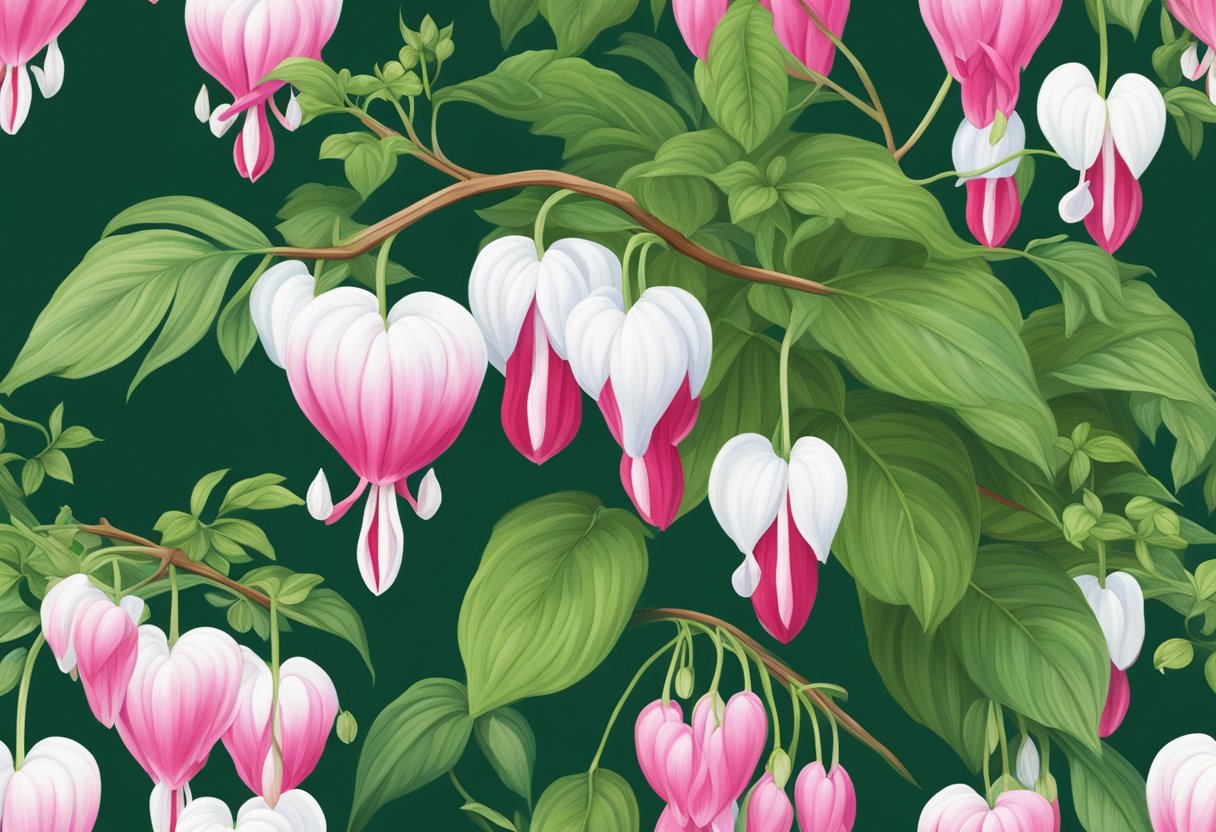
Growing bleeding heart in your garden is easy and rewarding. This shade-loving plant requires minimal maintenance and is hardy, providing a beautiful display year after year. You’ll appreciate how forgiving they are when it comes to soil type and conditions, as they flourish in both garden beds and containers.
Adding bleeding heart to your garden can also invite a touch of romance and elegance. Their unique flowers not only attract pollinators but also bring a sense of timeless beauty to any space. By selecting the right type and providing basic care, you can enjoy these stunning blooms throughout the spring and sometimes even into early summer.
Key Takeaways
- Bleeding hearts are shade-loving perennials with heart-shaped flowers.
- They are easy to grow and require minimal maintenance.
- The blooms add a romantic and elegant touch to gardens.
Cultivation and Care
Bleeding heart plants are a delightful addition to any garden, known for their unique appearance and sturdy nature. When cultivating and caring for them, it’s crucial to focus on proper planting, soil, light conditions, and seasonal care to ensure lush growth and prolific blooming.

Planting and Location
For best results, plant bleeding hearts in the early spring or autumn. They thrive in USDA hardiness zones 3-9. Choose a location that offers partial to full shade, as they prefer sheltered spots with some protection from strong winds. Consider planting near hostas or ferns to enhance the shady, woodland garden feel.
Soil and Water Requirements
Bleeding hearts prefer moist, well-drained soil with a slightly acidic to neutral pH. Ensure the soil stays consistently damp by watering regularly, especially during dry spells. Good drainage is key to preventing root rot. Mulching around the plants helps maintain moisture levels and keeps the roots cool.
Light and Temperature
These plants do best in cooler climates and should be shielded from the intense midday sun. While they can tolerate early summer heat, prolonged exposure to high temperatures can stress them. Aim for conditions with partial or full shade to mimic their natural woodland environment.
Fertilisation and Maintenance
Use a balanced, slow-release fertiliser in the spring to support new growth. Avoid over-fertilising, as this can cause more harm than good. Prune spent flowers to promote further blooming. Regularly check for any yellowing leaves or signs of disease and remove them promptly.
Pests and Diseases
Though generally hardy, bleeding hearts can face issues with aphids, slugs, and snails. Check beneath leaves regularly and use organic sprays if needed. Fungal diseases like powdery mildew and leaf spot can also occur in damp conditions. Ensure good air circulation and avoid overhead watering to reduce these risks.
Propagation Techniques
You can propagate bleeding hearts by seed, division, or cuttings. Division is often the easiest and most effective method, typically done in early spring or autumn. Gently dig up the plant, separate the root clumps, and replant immediately. Cuttings can be taken in the spring and rooted in a moist growing medium.
Companion Planting
Bleeding hearts pair well with other shade-loving plants like ferns and hostas. This not only enhances the garden’s aesthetic but also supports a healthy ecosystem. They also attract hummingbirds and butterflies, adding wildlife interest to your garden.
Seasonal Care
In early spring, remove any winter mulch to allow new shoots to emerge. Later in spring, watch for flower buds and ensure consistent watering. As the plants enter summer, their growth may slow. After flowering, allow the foliage to die back naturally to support the root system.
Winterisation
To prepare for winter, cut back the foliage after it has fully died back in autumn. Apply a thick layer of mulch to protect the roots from freezing temperatures. In extremely cold areas, consider additional protection like fleece covers or relocating the plants to a sheltered spot if possible.
Environmental Impact
Bleeding hearts are minimal-impact plants. They support local wildlife, including pollinators like butterflies and hummingbirds. By choosing companion plants wisely, you create a sustainable garden ecosystem that thrives with minimal intervention. Their preference for shade and partial sun makes them ideal for creating lush, green, and eco-friendly garden spaces.

Types and Selection
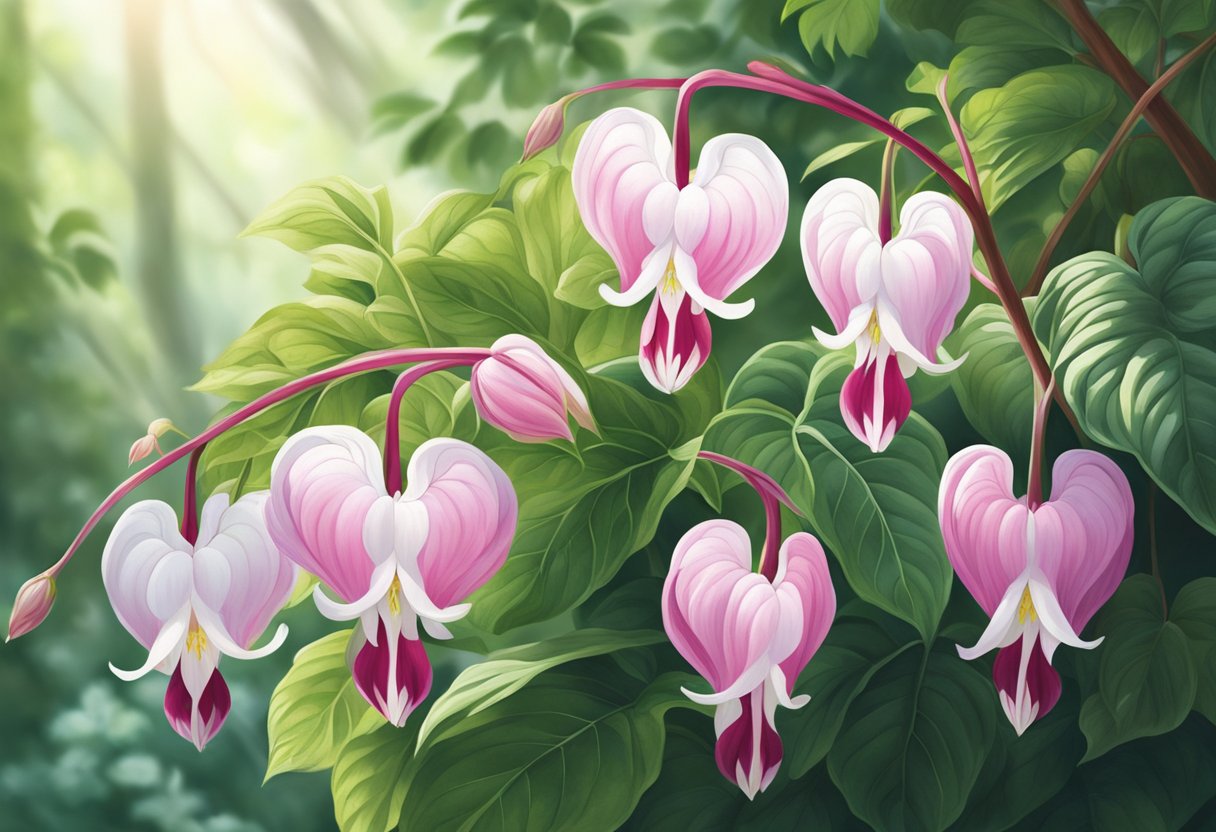
When choosing Bleeding Heart plants for your garden, consider the different varieties, their vibrant colours, and unique characteristics. Each type of Bleeding Heart offers something special.
Common Varieties
The Common Bleeding Heart (Dicentra spectabilis) is well-known. This variety grows up to three feet tall and has arching stems with pink or white heart-shaped flowers. The Western Bleeding Heart (Dicentra formosa) is smaller, reaching only about a foot in height, but it blooms prolifically in shades of pink and white.
Fringed Bleeding Heart (Dicentra eximia) is another popular choice. This variety features delicate, fern-like foliage and blooms in pink or white. It’s smaller, typically growing to about 18 inches, making it ideal for borders or shaded areas.
Colour and Appearance
Bleeding Heart flowers are famous for their heart-shaped blooms that dangle elegantly from their stems. Lamprocapnos spectabilis, a classic variety, usually has pink flowers with white tips. Other types, like Dicentra spectabilis, offer pure white blooms.
Some varieties, such as Dicentra eximia, feature fringed edges on their flowers, adding to their delicate appearance. You’ll also find types with red or even yellow flowers, although these are less common. The foliage can be as attractive as the flowers, often with finely divided, fern-like leaves.
Plant Attributes
Bleeding Hearts prefer shady locations with well-drained soil. They thrive as forest plants, often under trees where they receive dappled light. These perennials are hardy and can withstand cold winters, making them suitable for various climates.
The height and width of Bleeding Heart plants vary by species. Some grow as short as six inches, while others can reach up to three feet tall. The arching stems and unique foliage make them excellent choices for adding texture and visual interest to your garden.
Frequently Asked Questions
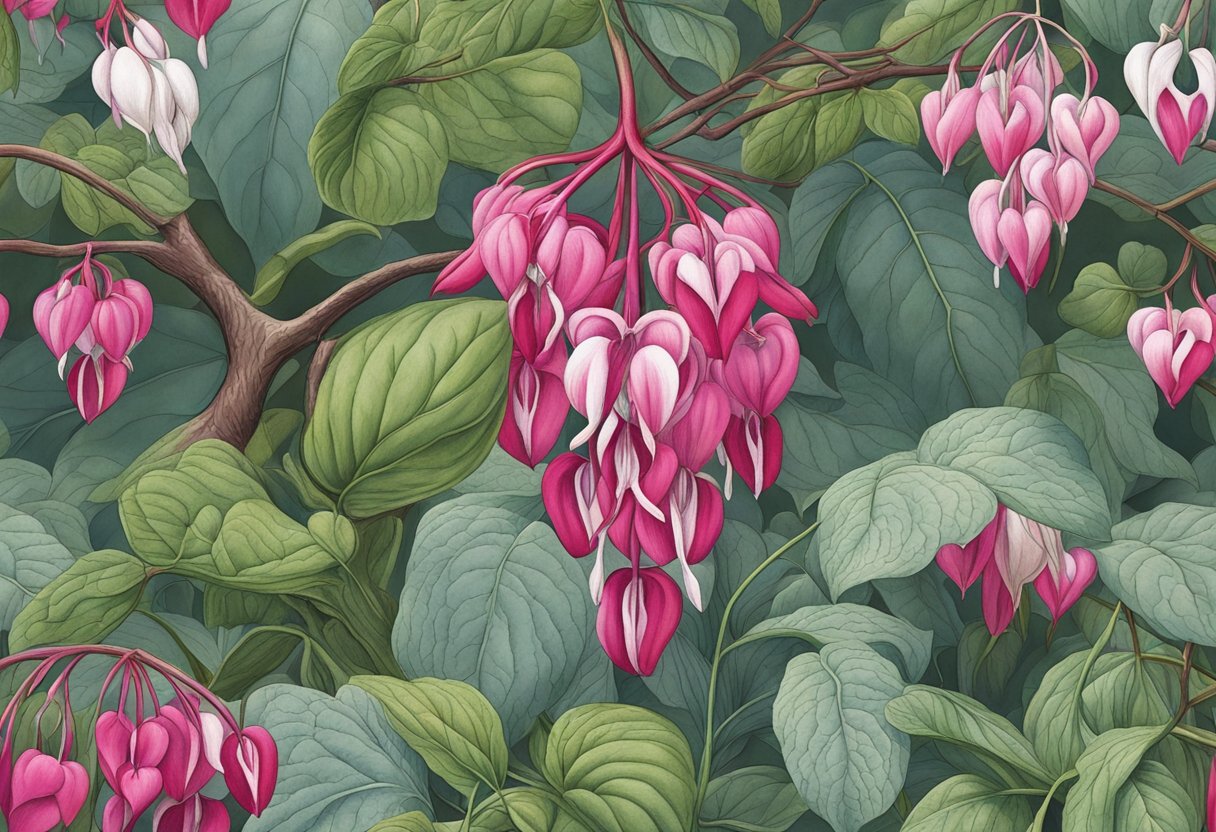
Bleeding Hearts are known for their unique heart-shaped flowers and are popular in many gardens. Here, we address some common questions about these captivating plants.
What is the symbolism behind the Bleeding Heart flower?
The Bleeding Heart flower symbolises deep emotions like love and passion. Its heart-shaped blooms make it a favourite for expressing romantic feelings.
When is the typical blooming period for Bleeding Hearts?
Bleeding Hearts usually bloom in the spring. The flowering period can last from late spring to early summer, depending on the climate and growing conditions.
Are all parts of Bleeding Hearts considered toxic?
Yes, all parts of the Bleeding Heart plant are toxic when ingested. This includes the flowers, leaves, and roots, and they can be harmful to humans, dogs, and cats.
What are the optimum growing conditions for Bleeding Hearts to thrive?
Bleeding Hearts thrive in light shade and require humus-rich, well-drained soil. In cooler climates, they can tolerate full sun, but too much shade will hinder blooming.
How large can a Bleeding Heart plant grow?
A mature Bleeding Heart plant can grow up to three feet tall and spread about the same width. The size may vary based on the variety and growing conditions.
What is the botanical name for the Bleeding Heart?
The botanical name for the Bleeding Heart is Dicentra spectabilis. This name is used to describe the classic varieties known for their iconic, heart-shaped flowers.