Last updated 7 August 2026. This page was reviewed on that date. Prices, rates and opening hours change often in Singapore — confirm anything that matters directly with the business before you travel or spend.
Quick answer: Looking for a Montessori preschool in Singapore that sticks to the philosophy, not just the name? Brighton Montessori brings 29 years of experience; House on the Hill runs a family-led bilingual immersion; Greentree Montessori offers nature-infused learning at a gentle price. Monthly fees span about S$1,050 to over S$2,500, so there’s something for different budgets while keeping the child-led approach.
For parents mapping out the year ahead—from CNY family gatherings to the steady rhythm of school drop-offs—finding a preschool that feels like an extension of home is everything. Perhaps you’ve already compared Bestcare Montessori fees as part of your planning. Now you’re looking for a place where the routines stick, the teachers know your child’s favourite colour, and the mornings never feel rushed.

This is one of 19 guides in Best Tuition, Events & Services in Singapore — start there if you would rather compare before you commit.
Brighton Montessori

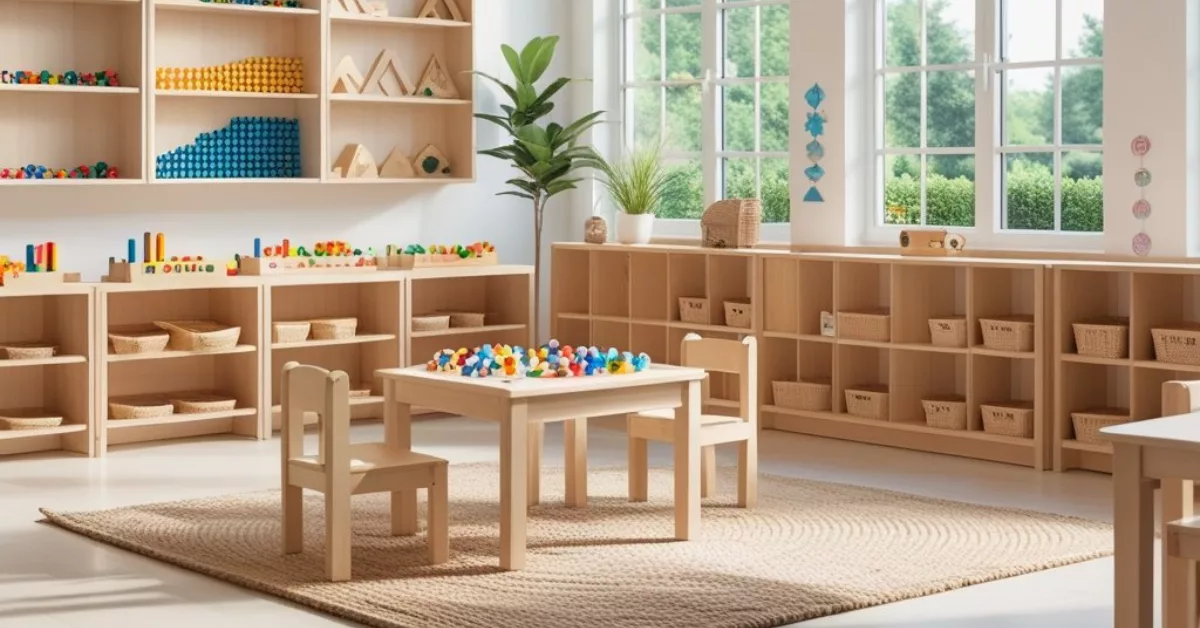
With nine centres across the island and 29 years behind them, Brighton Montessori has been quietly shaping little minds long before many of today’s competing names existed. Their programmes—Pre-Nursery, Playgroup, and Kindergarten—lean heavily on hands-on sensory play, language, mathematics, and practical life skills. Low teacher-child ratios are the norm, so you won’t have to worry your kid gets lost in the crowd.
They carry SPARK certification across all centres and a Parents’ Choice Preschool/Childcare Award 2024. Full-day fees start from S$1,994.70 for children and S$2,528.80 for infants.
Visit them at Crystal Court (456 River Valley Road, #01-01, Singapore 248342, tel: +65 6588 3883) or in neighbourhoods like Mountbatten and Hillview. Brighton Montessori’s website has the full list and tour bookings.
If you’re the kind of parent who sleeps better knowing there’s a proven system and certified staff, this one is a steady pick.
Brighton Montessori suits parents who believe a great school doesn’t need to shout. With nine locations, there’s likely one near your weekend wet market run, which makes school drop-offs surprisingly breezy. The calm, orderly classrooms signal that every term, every week, your child’s routine is in safe hands.
House on the Hill Montessori

Run by the same family since day one, House on the Hill feels less like a business and more like a close-knit kampong for tiny explorers. They offer infant care and preschool programmes built around their own HotH Method—experiential learning, bilingual Mandarin immersion, and mixed-age classrooms that let older kids naturally guide the younger ones. The outdoor spaces are a real plus; children get to run and touch grass, not sit indoors all day.
Half-day fees start at S$1,950 and full-day at S$2,300. You’ll find their campuses at Mount Sophia, Balmoral, Pasir Panjang, and the Hollandse Club. House on the Hill Montessori welcomes visits by arrangement.
For parents who want a warm, family-led atmosphere and believe Mandarin exposure should start early, this is a comforting choice.
House on the Hill feels made for families who want their children to grow up with a sense of belonging, not just a syllabus. The mixed-age setup means big kids learn patience, little ones learn confidence—and every afternoon outdoor play session feels like a natural extension of close-knit neighbourhood life. Perfect if you’re after a steady, unhurried rhythm all year long.
Raffles Kidz International

Raffles Kidz International arrived in 2013 and quickly earned its stripes as a bilingual powerhouse that blends Montessori with inquiry-based learning. They run playgroup, nursery, and kindergarten levels with half-day, early dismissal, and full-day options. What sets them apart is that enrichments are already included in the fee, so you won’t face surprise costs later—a very practical detail for budget-minded parents.
Monthly fees range from S$1,500 to S$1,750. Centres are in Jurong West, Punggol, and Yishun (1 Yishun Ave 7, Singapore 768923, tel: +65 6235 4009). Raffles Kidz International has more details online.
This one hits the sweet spot for heartland families who want a strong bilingual grounding and transparent pricing without hidden extras.
Nothing on this page is a paid placement. If you know a place that should be here, let us know before the next update.
While you’re sorting out preschool logistics, you might also be on the hunt for rechargeable batteries in Singapore to keep all those toys humming, or checking out premium tyre brands in Singapore for the family car.
Raffles Kidz International is a sensible pick for parents who like their finances as tidy as their child’s timetable. Everything is bundled in, so you won’t get that sinking feeling when a new term brings a fresh list of extras. The bilingual programme runs steadily through the day, making it a reliable choice as the school year unfolds from Hari Raya to June holidays.
Josiah Montessori

Josiah Montessori takes the core Montessori approach and layers on bilingualism, performing arts, and a dedicated support arm called Josiah Care. So it’s not just academics—it’s a full childhood experience. The in-house Musical Arts Programme gets children singing and moving as part of the daily rhythm, while Josiah Enrich boosts phonetics and mathematics for those ready to fly.
Fees are available upon enquiry. With centres at Suntec City (tel: +65 6336-6906), Changi Business Park, Aperia, Pasir Ris, Tampines Mart, and Raffles Place, there’s likely one near your workplace or home. Josiah Montessori can arrange a chat.
This suit parents who want a creative, arts-rich education with the option of extra developmental support woven into the same Montessori day.
Josiah Montessori understands that some children learn best when their whole body is part of the lesson. The daily musical arts sessions give structure to the week—like a regular sing-along that quietly builds confidence, not just curriculum. Enquire about fees when you’re ready, and imagine a childhood where every term ends with a little performance your whole family will cherish.
Nest Preschool

Nest Preschool keeps things pure, offering Montessori from as young as 2 months old right through to 6 years. Their Nido Programme for infants, Toddler Programme, and Children’s House stick closely to sequenced materials and child-led exploration. Bilingual Mandarin-English exposure runs through the day, and they give parents real-time updates—so you know exactly what junior did, ate, and discovered.
Fees are on enquiry. They are in Ubi, Hillview, Bishan, and Bidadari. Reach them at (+65) 8089 7476 or visit Nest Preschool for more.
If you value a small, intimate setting and want to be kept firmly in the loop, this one’s damn shiok for peace of mind.
Nest Preschool steps in right from infancy, which means your child’s very first months outside home are held by caregivers who truly understand the Montessori way. The real-time updates turn your phone into a gentle window—less ‘I wonder how baby is’ and more ‘look, he’s painting.’ For parents easing into the return-to-work rhythm, it’s a reassuring constant.
Greentree Montessori

Greentree Montessori has been doing this since 1990, spreading across campuses in the north with a nature-infused philosophy that borrows not just from Montessori but also RIE and Pikler. Their Infant Community (2 months to 3 years) and Children’s Houses (18 months to 6 years) are designed so that even the youngest ones spend time outdoors. Field trips and family workshops make the experience feel alive and connected.
Fees start at S$1,050 for a 4-hour session, S$1,550 for half-day, and S$1,750 for full-day—very manageable for the depth they offer. Their main address is 45 Jalan Mata Ayer, Singapore 759130 (tel: +65 6756 4382), with more spots in Sembawang, Upper Thomson, and Bishan. Greentree Montessori welcomes enquiries.
Families in the north who want their kids muddy, curious, and ready for primary school—their alumni readiness rate says a lot without needing to shout.
Greentree Montessori has always been for families who believe fresh air and natural light are as important as any learning material. Regular field trips and family workshops mean you don’t just drop your child off—you sometimes join the adventure. Located in the north, it brings a sense of unhurried, earthy consistency to every school day, come rain or shine.
Lodestar Montessori

Lodestar Montessori offers a rare Montessori journey in Singapore that stretches from preschool all the way to adolescence, so once your child starts here, there’s a clear path forward. The Preschool (ages 3-6) uses garden-enhanced exploration, the Elementary (6-12) builds self-regulation, and the Erdkinder programme (12-18) adds community service. It’s a progression you don’t often find in Singapore.
Fees are on enquiry. The preschool is at 23 Jalan Teliti, weekdays 08:30 to 15:30; the older levels are at 24 Jalan Selaseh, 08:30 to 16:00. Lodestar Montessori can walk you through the whole timeline.
The whole philosophy here is mistake-friendly—kids learn it’s okay to try and fail, something many of us adults still haven’t mastered. For parents who want their child to stay in one nurturing ecosystem from toddlerhood to teenage years, this is a rare find.
Nothing on this page is a paid placement. If you know a place that should be here, let us know before the next update.
On a totally different note, when you finally get a date night, a good sukiyaki experience in Singapore can be just the thing. And if someone in the family needs a recovery plan, our guide to physiotherapists in Singapore is worth a look too.
How to choose
Start with practicalities: location, budget, and schedule. Montessori schools in Singapore typically charge S$1,000 to S$2,500 a month, with some infant care fees going higher. Half-day and flexible options exist, so ask if you only need mornings.
Then look at what matters to your family beyond the Montessori label. Do you want bilingual immersion? Raffles Kidz and House on the Hill weave Mandarin into daily life, while Nest and Josiah offer it too. Is outdoor play non-negotiable? Greentree’s nature-infused campuses and House on the Hill’s spacious grounds are big draws. If you plan to stay put for the long haul, Lodestar’s preschool-through-adolescence path might save you a school hunt later.
Don’t hesitate to visit—most will welcome a tour. Observe how the children move about, how the guides interact, and whether the environment feels calm and purposeful. The right fit usually announces itself within minutes.
| Preschool | Age Range | Programmes / Highlights | Price (per month) | Best For |
|---|---|---|---|---|
| Brighton Montessori | 18 months – 6 years | Pre-Nursery to Kindergarten, low ratios, SPARK certified | From S$1,994.70 (child full-day) | Proven track record, certified quality |
| House on the Hill Montessori | Infant – 6 years | HotH Method, bilingual Mandarin, outdoor play | From S$1,950 (half-day) / S$2,300 (full-day) | Family warmth, Mandarin immersion |
| Raffles Kidz International | Playgroup – K2 | Bilingual inquiry, all-inclusive enrichments | S$1,500 – S$1,750 | Transparent pricing, heartland locations |
| Josiah Montessori | Check with the business | Montessori + Musical Arts, Josiah Care support | Enquire | Arts integration, extra developmental help |
| Nest Preschool | 2 months – 6 years | Nido, Toddler, Children’s House, real-time updates | Enquire | Pure Montessori, intimate setting |
| Greentree Montessori | 2 months – 6 years | Nature-infused, RIE and Pikler influences, field trips | S$1,050 (4-hr) / S$1,550 (half-day) / S$1,750 (full-day) | Outdoor learning, northern suburbs |
| Lodestar Montessori | 3 – 18 years | Preschool to adolescence, mistake-friendly approach | Enquire | Long-term continuity, gentle philosophy |
Summary
Montessori preschools in Singapore range from long-established names like Brighton and Greentree to newer, family-centred options like House on the Hill and Nest. Whether you’re after bilingual immersion, nature play, or a path that goes all the way to secondary school, the right fit depends on your child’s temperament and your family’s priorities—and there’s a school on this list that can match.
Disclaimer: Details can change; do confirm with the school directly before making any decisions. All information here has been gathered from publicly available sources and is accurate to the best of our knowledge at the time of writing.
Read next
Frequently asked questions
Lodestar Montessori is the sort of place you choose when you’re thinking not just about the next year but the next decade. The preschool garden teaches patience, the elementary programme builds inner discipline, and the adolescent years add meaning through service. It’s a path that keeps the same gentle rhythm from your child’s first day right up to the teenage years—consistency that’s rare and precious.
What is a Montessori preschool?
A Montessori preschool follows Dr. Maria Montessori’s method, where children learn through self-directed activity, hands-on materials, and mixed-age classrooms, with guides who observe and facilitate rather than lecture.
How is Montessori different from a regular preschool in Singapore?
Montessori classrooms emphasise independence, choice, and practical life skills. Children move at their own pace with specially designed materials, whereas traditional preschools often follow a teacher-led, uniform schedule.
At what age can my child start Montessori preschool?
Several schools in this list accept infants from 2 months old in their infant communities, while most preschool programmes begin around 18 months to 3 years. Check each centre’s specific intake age.
Do Montessori preschools in Singapore prepare children well for primary school?
Yes. Many on this list, like Greentree Montessori, report 100% primary school readiness, and most incorporate primary-preparation elements such as early literacy and numeracy, often with a bilingual focus.
Are these Montessori preschools bilingual?
Bilingual programmes are common. Raffles Kidz, House on the Hill, Nest Preschool, and Josiah Montessori all feature Mandarin-English immersion, while others may offer exposure depending on the campus.
How much do Montessori preschools cost in Singapore?
Monthly fees typically range from about S$1,050 for a short-day programme to over S$2,500 for full-day infant care. Several charge around S$1,500 to S$2,000 for a full day. Many offer fee details upon enquiry.