How to Remove Stains from Furniture: Simple Tips and Tricks
Do you have a stubborn stain on your favourite piece of furniture that just won’t budge? Whether it’s a coffee spill on your sofa or a wine stain on your dining chair, removing stains from furniture can be a daunting task. But don’t worry, with a little bit of know-how and elbow grease, you can get your furniture looking as good as new again. In this article, we’ll guide you through the process of removing stains from furniture, so you can keep your home looking clean and fresh.

The first step to removing a stain from furniture is identifying the type of stain you’re dealing with. Different types of stains require different treatments, so it’s important to know what you’re dealing with before you start. For example, a water-based stain, such as coffee or tea, will require a different approach to an oil-based stain, such as lipstick or grease. Once you’ve identified the type of stain, you can then move on to treating it.
When it comes to removing stains from furniture, there are a variety of methods you can use depending on the type of stain and the material of your furniture. From using natural remedies like vinegar and baking soda to commercial stain removers, there are plenty of options to choose from. In some cases, you may need to refinish or protect your furniture after removing a stain to prevent it from happening again in the future. In the following sections, we’ll cover everything you need to know to get your furniture looking its best again.
Key Takeaways
- Identifying the type of stain is the first step to successfully removing it from your furniture.
- There are a variety of methods you can use to remove stains from furniture, including natural remedies and commercial stain removers.
- Refinishing and protecting your furniture after removing a stain can help prevent future stains and keep your furniture looking great for years to come.
Identifying and Treating Different Types of Stains

When it comes to removing stains from furniture, it’s important to know what type of stain you’re dealing with before attempting any treatment. Here are some common types of stains and how to treat them:

Water Stains and Heat Marks
If you’ve accidentally left a hot cup of tea on your wooden coffee table or spilled water on it, you may notice a white ring or mark left behind. To remove water stains and heat marks, you can try using a microfiber cloth and a hairdryer. Simply hold the hairdryer close to the stain and move it around until the mark disappears. If the stain is stubborn, try using mayonnaise or toothpaste. Apply a small amount to the stain, let it sit for a few minutes, and then wipe it off with a clean cloth.
Ink, Paint, and Grease
Ink, paint, and grease stains can be tough to remove from furniture, but it’s not impossible. For ink stains, try using rubbing alcohol or a mixture of baking soda and water. Apply the solution to the stain and let it sit for a few minutes before wiping it off with a clean cloth. For paint stains, use a scraper or a putty knife to gently remove as much of the paint as possible. Then, apply rubbing alcohol or vinegar to the stain and wipe it off with a clean cloth. For grease stains, try using dish soap or a mixture of baking soda and water. Apply the solution to the stain and let it sit for a few minutes before wiping it off with a clean cloth.
Scratches and Gouges
Scratches and gouges can be unsightly on wooden furniture, but they can be fixed with a little bit of effort. For minor scratches, try using olive oil or furniture wax. Apply a small amount to the scratch and rub it in with a clean cloth. For deeper scratches and gouges, use a wood filler to fill in the damaged area. Once the filler has dried, sand it down until it’s smooth and then apply a protective coating to the area.
Remember, prevention is always better than cure when it comes to stains on furniture. Always use coasters and try to avoid placing hot or cold items directly on wooden surfaces. By taking care of your furniture, you can keep it looking beautiful for years to come.
Refinishing and Protecting Your Furniture
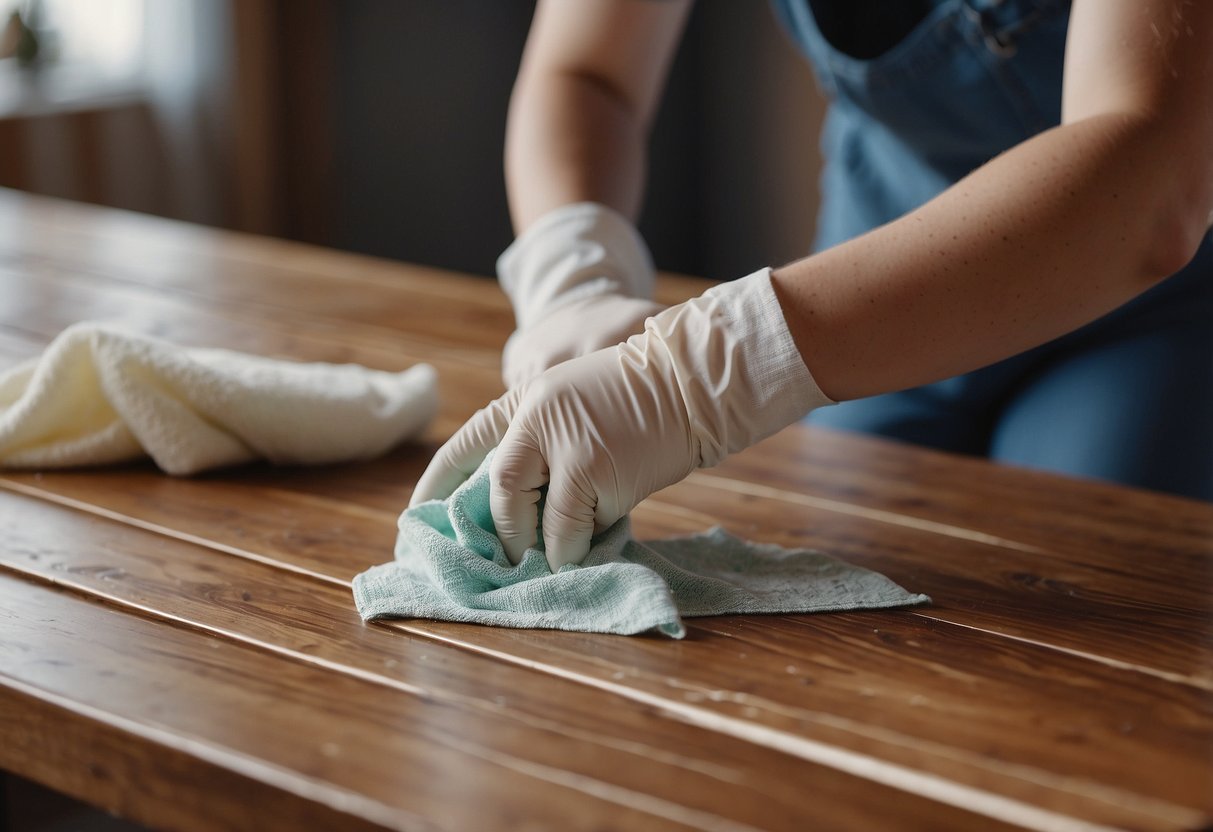
If you’ve tried removing stains from your furniture but it still doesn’t look quite right, it may be time to consider refinishing it. Refinishing your furniture can give it a new lease of life and make it look as good as new. Here are some tips on how to sand, refinish, and protect your furniture.
Sanding and Refinishing
To refinish your furniture, you’ll need to sand it down to remove the old finish. Start by using a plastic scraper to remove any loose or flaking finish. Then, use medium-grit sandpaper to sand the surface of the furniture. Be sure to wear a respirator mask to protect yourself from the dust.
Once you’ve sanded the furniture with medium-grit sandpaper, switch to fine grit sandpaper to smooth out the surface. Sand with the grain of the wood to avoid damaging it. After sanding, wipe the furniture down with a tack cloth to remove any dust.

Applying Protective Finishes
After sanding, you can apply a protective finish to your furniture. There are several types of finishes you can use, including furniture polish, wax, or a protective coating. Furniture polish and wax are easy to apply and will give your furniture a nice shine. A protective coating, on the other hand, will provide a more durable finish that will protect your furniture from scratches and spills.
To apply a protective finish, use a soft cloth or brush and apply the finish in thin, even coats. Be sure to let each coat dry completely before applying the next one.
When to Seek Professional Help
Refinishing your furniture can be a fun DIY project, but it can also be time-consuming and difficult. If you’re not comfortable sanding and refinishing your furniture yourself, it may be best to seek professional help. Professionals, such as cleaning services, can refinish your furniture for you and ensure that it looks great.
In addition, if your furniture has significant damage or if you’re not sure what type of finish to use, it’s best to seek professional help. A professional can help you choose the right finish for your furniture and ensure that it looks its best.
Remember, protecting your furniture is key to making it last for years to come. Use coasters to protect your furniture from spills and apply mineral oil to natural wood to keep it looking great. With a little care and attention, your furniture will look great for years to come.
Frequently Asked Questions
What’s the best method to take stains out of wooden furniture?
The best method to remove stains from wooden furniture depends on the type of stain and the type of wood. In general, the first step is to identify the type of stain and the depth of the damage. For surface stains, you can use gentle abrasives or solvents, while deeper stains may require sanding and refinishing. It’s always a good idea to test any cleaning solution on an inconspicuous area of the furniture first to make sure it doesn’t damage the wood.
Can you suggest a top-notch couch stain remover?
There are many commercial products available for removing stains from couches, but it’s important to choose one that is appropriate for the type of fabric and the type of stain. Always read the label and follow the instructions carefully. Alternatively, you can make your own stain remover using household ingredients such as vinegar, baking soda, and dish soap. Mix them together in the right proportions and apply to the stain, then blot with a clean cloth.
Is it possible to lift stains from a sofa using baking soda?
Baking soda can be an effective stain remover for some types of stains, especially those caused by food or drink spills. Sprinkle baking soda on the stain and let it sit for a few minutes, then vacuum it up. You can also make a paste with baking soda and water and apply it to the stain, then wipe it away with a damp cloth.
How can one tackle old, set-in stains on a couch?
Old, set-in stains can be more difficult to remove, but it’s not impossible. You may need to use a combination of cleaning solutions and techniques, such as a commercial stain remover, vinegar, or baking soda. It’s important to be patient and persistent, and to test any cleaning solution on an inconspicuous area first to make sure it doesn’t damage the fabric.
What types of stains are typically impossible to remove from a sofa?
Some types of stains, such as ink, oil, and rust, can be very difficult or impossible to remove from a sofa. It’s important to act quickly when a stain occurs, and to avoid using harsh chemicals or scrubbing too vigorously, as this can cause further damage to the fabric.
Does vinegar work effectively for removing stains from furniture?
Vinegar can be an effective natural cleaner for removing stains from furniture, especially those caused by food or drink spills. Mix equal parts white vinegar and water, apply to the stain, and blot with a clean cloth. However, vinegar is acidic and can damage some types of finishes or fabrics, so it’s important to test it on an inconspicuous area first and to dilute it properly.