

How to Finish Pine Wood Furniture: A Beginner’s Guide
If you’re looking to finish your pine wood furniture, you’ve come to the right place. Pine is a popular choice for furniture due to its affordability and easy workability. However, it can be tricky to finish pine wood in a way that looks polished and professional. Fortunately, with a little bit of knowledge and some elbow grease, you can achieve a beautiful finish on your pine furniture.

Before you start applying any finish to your pine furniture, it’s important to prepare the wood properly. Pine has a tendency to absorb stain unevenly, resulting in a blotchy finish. To prevent this, you’ll need to use a pre-stain conditioner before applying any stain. Once the conditioner has dried, you can apply your stain of choice. Water-based stains are a good option for pine furniture, as they dry quickly and don’t emit harmful fumes. Finally, you’ll need to apply a clear coat to protect the wood and give it a glossy finish.
Key Takeaways
- Proper preparation is key to achieving a beautiful finish on pine furniture.
- Use a pre-stain conditioner to prevent blotchiness when staining pine wood.
- Water-based stains and clear coats are a good choice for finishing pine furniture.
Preparing Pine for Finishing

Before applying any finish to your pine furniture, it is important to properly prepare the wood. This will ensure that the finish adheres evenly and looks beautiful. In this section, we will cover two important steps in preparing pine for finishing: sanding techniques and applying wood conditioner.

Sanding Techniques
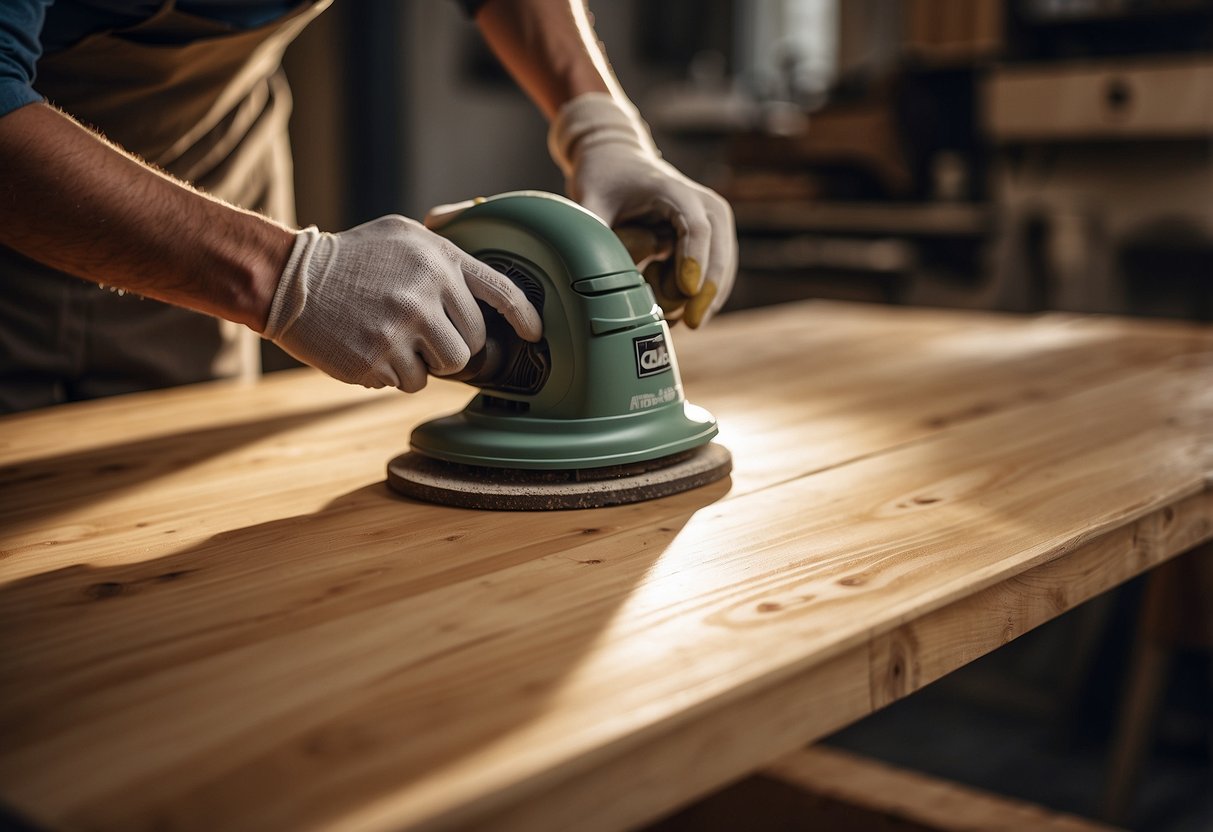
Sanding is an essential step in preparing pine for finishing. It helps to smooth out any rough spots, remove any scratches and prepare the surface for the finish. To sand pine, you will need sandpaper and an orbital sander.

When sanding pine, it is important to pay attention to the grain of the wood. Pine has a soft wood grain that can easily be damaged if not sanded correctly. Always sand with the grain of the wood to avoid creating swirl marks.
Start with a coarse grit sandpaper, such as 80 or 100 grit, and work your way up to a finer grit, such as 220 grit. This will ensure that the surface is smooth and free of any scratches or rough spots.
When sanding pine, it is important to pay attention to the growth rings and pores of the wood. The soft wood between the growth rings can wear down quicker than the rings if not sanded correctly. Sanding with the grain will help to prevent this.
Applying Wood Conditioner
Pine has a tendency to absorb stain unevenly, resulting in a blotchy appearance. To prevent this, it is recommended to apply a pre-stain conditioner to the wood before staining. This will help to even out the absorption of the stain and create a more uniform finish.
To apply the wood conditioner, use a clean cloth or brush and work it into the wood, following the grain. Allow it to penetrate the wood for 5-15 minutes, then wipe off any excess with a clean cloth.
After applying the wood conditioner, sand the wood again with a fine grit sandpaper, such as 220 grit. This will help to smooth out any raised wood fibers and prepare the surface for the stain.
By following these sanding techniques and applying a wood conditioner, you will be able to prepare your pine furniture for a beautiful finish that will last for years to come.
Applying Finish to Pine Wood

When it comes to applying finish to pine wood, there are a few things to keep in mind to ensure a beautiful and durable result. In this section, we will discuss the two main steps involved in finishing pine wood: staining and sealing.
Staining Pine
Staining pine wood can be a bit tricky, as it tends to absorb stain unevenly and can result in blotchy or streaky finishes. To avoid this, it is recommended to use a pre-stain conditioner that helps to seal the wood and prevent it from absorbing too much stain. This will result in a more even finish.
When choosing a stain for your pine wood, keep in mind that oil-based stains tend to penetrate the wood more deeply and result in a richer colour, while gel stains sit on top of the wood and are easier to control. It is recommended to test the stain on a scrap piece of wood before applying it to your project.
To apply the stain, use a brush or cloth and work in the direction of the grain. Be sure to wipe off any excess stain with a clean cloth. For a more antique look, consider using a technique called grain reversal, where you wipe the stain against the grain to create a more aged appearance.
Sealing and Protecting
After the stain has dried completely, it is time to seal and protect the wood. There are several options for this, including polyurethane, shellac, varnish, and lacquer.
Polyurethane is a popular choice for its durability and resistance to scratches and water damage. It is available in both oil-based and water-based varieties, with the latter having a lower odour and faster drying time.
Shellac is a natural product that provides a beautiful, natural look to the wood. It is easy to apply and dries quickly, but may not be as durable as other options.
Varnish is a topcoat that provides a hard, protective layer to the wood. It is available in both oil-based and water-based varieties, with the former being more durable but having a stronger odour.
Lacquer is a fast-drying, durable option that provides a high-gloss finish. It is available in both spray and brush-on varieties.
No matter which option you choose, be sure to apply it in a well-ventilated area and follow the manufacturer’s instructions carefully. Applying multiple coats will provide added protection and durability.
By following these steps and using the right products, you can achieve a beautiful and durable finish for your pine wood furniture.
Frequently Asked Questions
What’s the best way to seal pine furniture for indoor use?
To seal pine furniture for indoor use, you can use a clear polyurethane sealer, which will protect the wood from scratches, spills, and stains. First, sand the furniture with fine-grit sandpaper, then wipe it down with a tack cloth to remove any dust. Apply the sealer with a brush or roller, following the manufacturer’s instructions. Allow the sealer to dry completely before applying a second coat.
How do you achieve a white finish on pine wood furniture?
To achieve a white finish on pine wood furniture, you can use a white-pigmented stain or paint. First, sand the furniture with fine-grit sandpaper, then wipe it down with a tack cloth to remove any dust. Apply the stain or paint with a brush or roller, following the manufacturer’s instructions. Allow the first coat to dry completely before applying a second coat, if necessary.
What kind of varnish should be used on pine wood?
A polyurethane varnish is ideal for use on pine wood, as it provides a durable, clear finish that resists scratches, spills, and stains. First, sand the wood with fine-grit sandpaper, then wipe it down with a tack cloth to remove any dust. Apply the varnish with a brush or roller, following the manufacturer’s instructions. Allow the varnish to dry completely before applying a second coat.
Can you darken pine wood without using stain?
Yes, you can darken pine wood without using stain by applying a coat of boiled linseed oil. This will enhance the natural grain of the wood and darken it slightly. First, sand the wood with fine-grit sandpaper, then wipe it down with a tack cloth to remove any dust. Apply the boiled linseed oil with a brush or rag, following the manufacturer’s instructions. Allow the oil to dry completely before applying a second coat, if necessary.
What’s the ideal sealer for a pine tabletop?
For a pine tabletop, the ideal sealer is a clear polyurethane sealer, which will protect the wood from scratches, spills, and stains. First, sand the tabletop with fine-grit sandpaper, then wipe it down with a tack cloth to remove any dust. Apply the sealer with a brush or roller, following the manufacturer’s instructions. Allow the sealer to dry completely before applying a second coat.
How should pine wood be treated for outdoor use?
To treat pine wood for outdoor use, you should use a weather-resistant finish, such as an exterior-grade varnish or paint. First, sand the wood with fine-grit sandpaper, then wipe it down with a tack cloth to remove any dust. Apply the finish with a brush or roller, following the manufacturer’s instructions. Allow the finish to dry completely before applying a second coat, if necessary. It’s also important to store the furniture in a dry, covered area when not in use to prolong its lifespan.