

How to Clean Mould off Wooden Furniture: A Simple Guide
If you have wooden furniture in your home, it’s important to know how to properly clean mould off of it. Mould can not only damage your furniture, but it can also pose a health risk to you and your family. In this article, we will cover some effective methods for cleaning mould off of wooden furniture and preventing it from coming back.
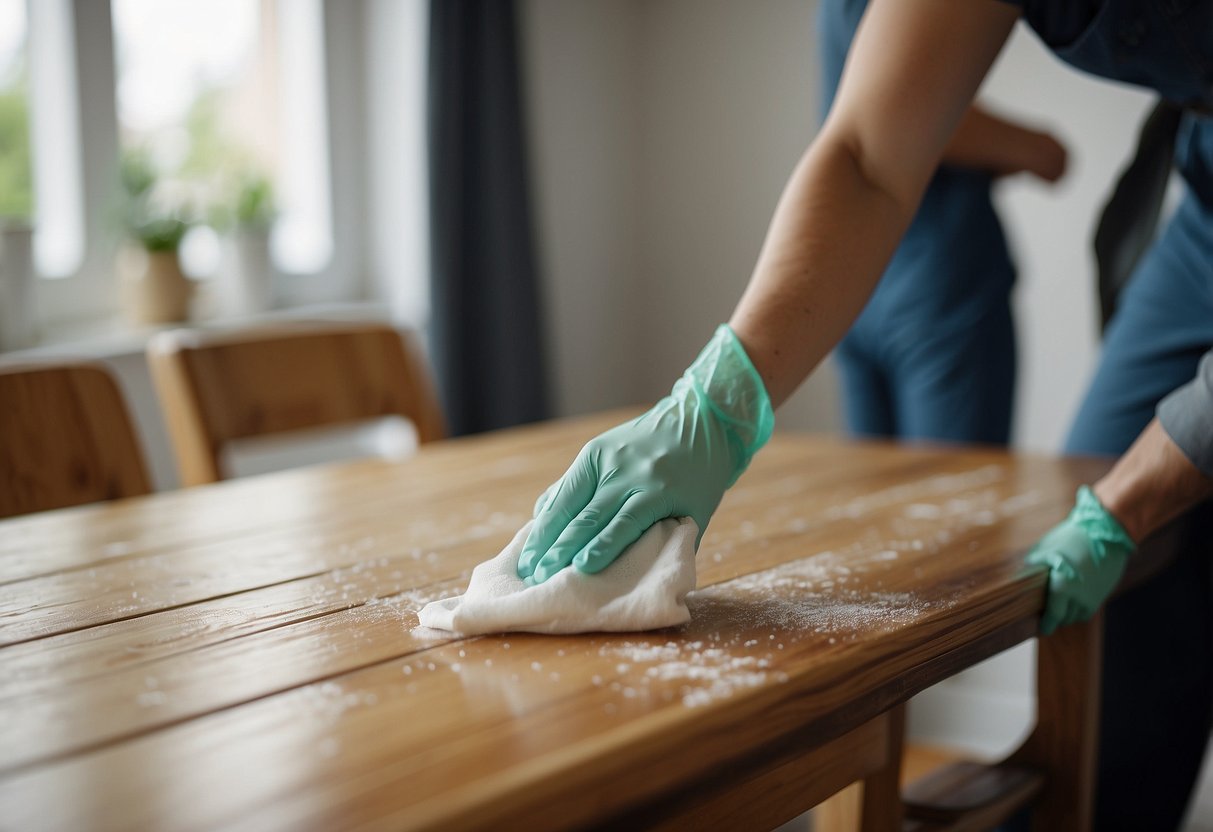
First, it’s important to understand what mould is and why it can be harmful. Mould is a type of fungus that can grow on almost any surface, including wooden furniture. It thrives in warm and damp environments, making it a common problem in areas with high humidity levels. If left untreated, mould can cause respiratory problems and other health issues.
Now that you understand the dangers of mould, let’s talk about how to effectively clean it off of your wooden furniture. There are several methods you can use, depending on the severity of the mould. It’s important to act quickly and wear protective gear, such as gloves and a mask, to avoid inhaling any spores.

Understanding Mould on Wooden Furniture
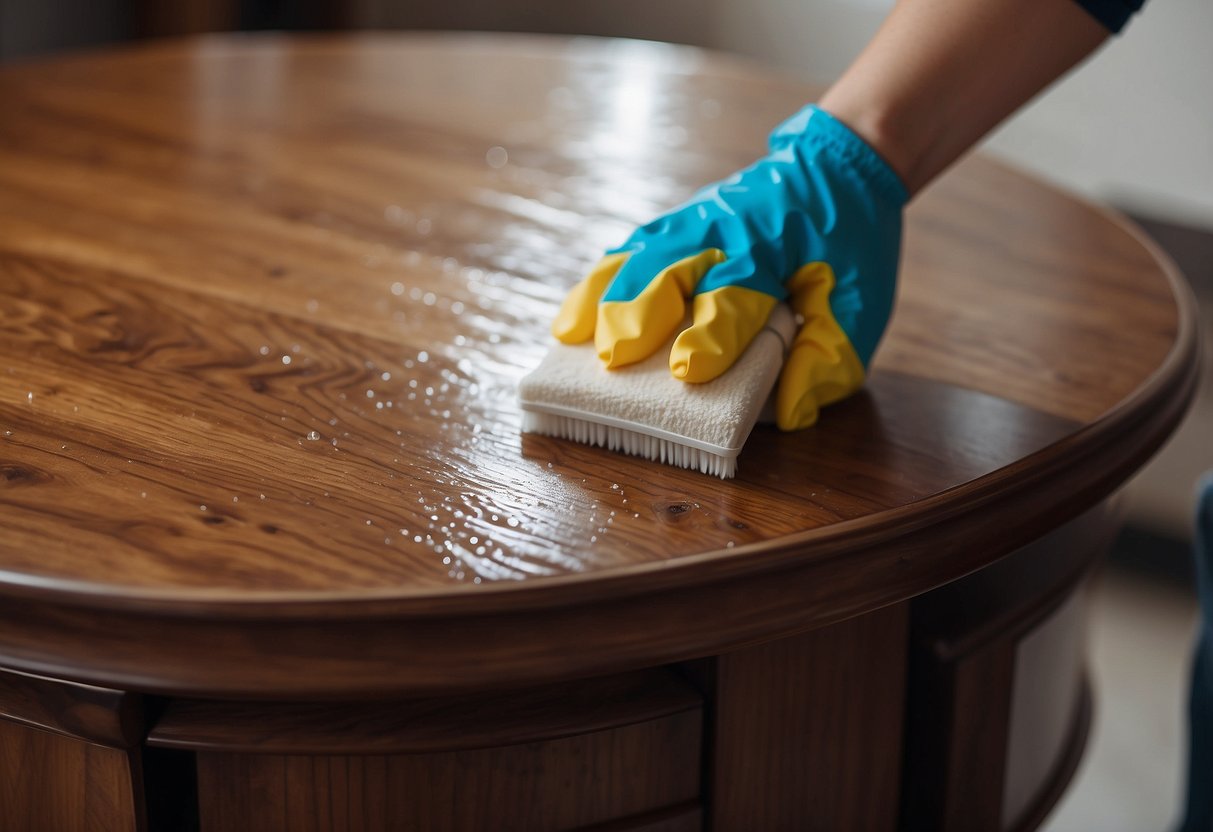
Mould on wooden furniture is a common problem, especially in areas with high humidity levels. Mould growth not only affects the appearance of your furniture but can also pose health risks to you and your family. In this section, we will discuss the types of mould, health implications, and causes of mould growth on wood.

Types of Mould and Health Implications
Mould comes in different colours, including black, white, and green. Black mould is the most dangerous as it produces mycotoxins that can cause serious health problems, including respiratory issues, headaches, and fatigue. White and green mould are less harmful, but they can still cause allergic reactions in some people.
Mould spores can travel through the air and cause health problems when inhaled. People with allergies or respiratory problems are particularly susceptible to mould-related health issues. If you notice mould on your wooden furniture, it’s essential to take immediate action to prevent it from spreading and causing health problems.
Causes of Mould Growth on Wood
Mould growth on wooden furniture is caused by excess moisture. High humidity levels, water leaks, and poor ventilation can all contribute to mould growth. If your furniture is placed in a damp or humid area, it’s more likely to develop mould.
To prevent mould growth on your wooden furniture, it’s essential to keep the humidity levels in your home under control. You can use a dehumidifier to remove excess moisture from the air. If you notice any water leaks, fix them immediately to prevent moisture from seeping into your furniture.
In conclusion, understanding mould on wooden furniture is crucial to prevent its growth and protect your health. By taking the necessary precautions, you can keep your furniture mould-free and enjoy a healthy living environment.
Effective Cleaning and Prevention Methods
Preparing for the Clean-Up
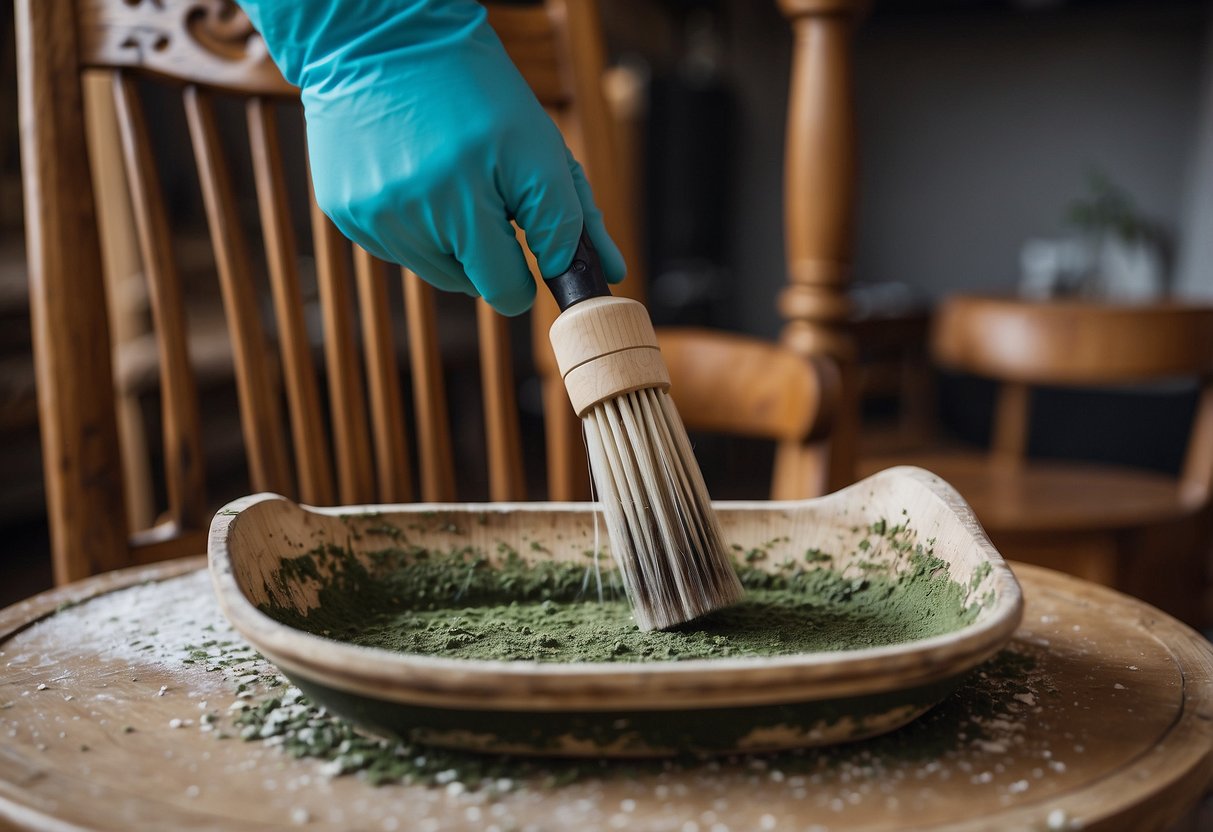
Before you start cleaning, make sure to wear protective gear such as rubber gloves, a face mask, and safety goggles to protect your skin and eyes. If you have a respiratory condition, consider wearing an air mask. Also, cover the surrounding area with plastic to prevent the spread of spores.
Step-by-Step Mould Removal Process
To remove mould from your wooden furniture, follow these simple steps:
- Start by vacuuming the affected area to remove loose mould spores.
- Mix a cleaning solution of one part bleach and three parts water or use eco-friendly options like vinegar, borax, or hydrogen peroxide.
- Apply the solution to the affected area with a spray bottle or a sponge.
- Scrub the area with a soft-bristled brush or a scrub sponge, making sure to get into all the patches of mould.
- Rinse the area with clean water and dry it thoroughly with a cloth or a fan.
- Sand the affected area to remove any remaining traces of mould.
- Apply a wood cleaner and let it sit for about 15 minutes.
- Rinse the area with water and dry it thoroughly.
Preventive Measures to Keep Mould at Bay
To prevent mould growth, you need to keep your wooden furniture dry and well-ventilated. Here are some tips to help you prevent mould from growing on your wooden furniture:
- Keep your furniture away from humid areas and direct sunlight.
- Use a dehumidifier to reduce moisture levels in your home.
- Open windows and doors to improve air circulation.
- Refinish untreated wood with a protective coating such as primer or paint to prevent moisture from penetrating the wood.
- Clean and dry spills immediately to prevent mould growth.
- Use natural solutions like tea tree oil or distilled vinegar to clean mould from wood.
- Avoid using harsh cleaning agents that can damage the wood’s surface or remove its colours.
By following these effective cleaning and prevention methods, you can keep your wooden furniture free from harmful mould and mildew.
Frequently Asked Questions
What’s the best way to remove mildew from antique wooden furniture?
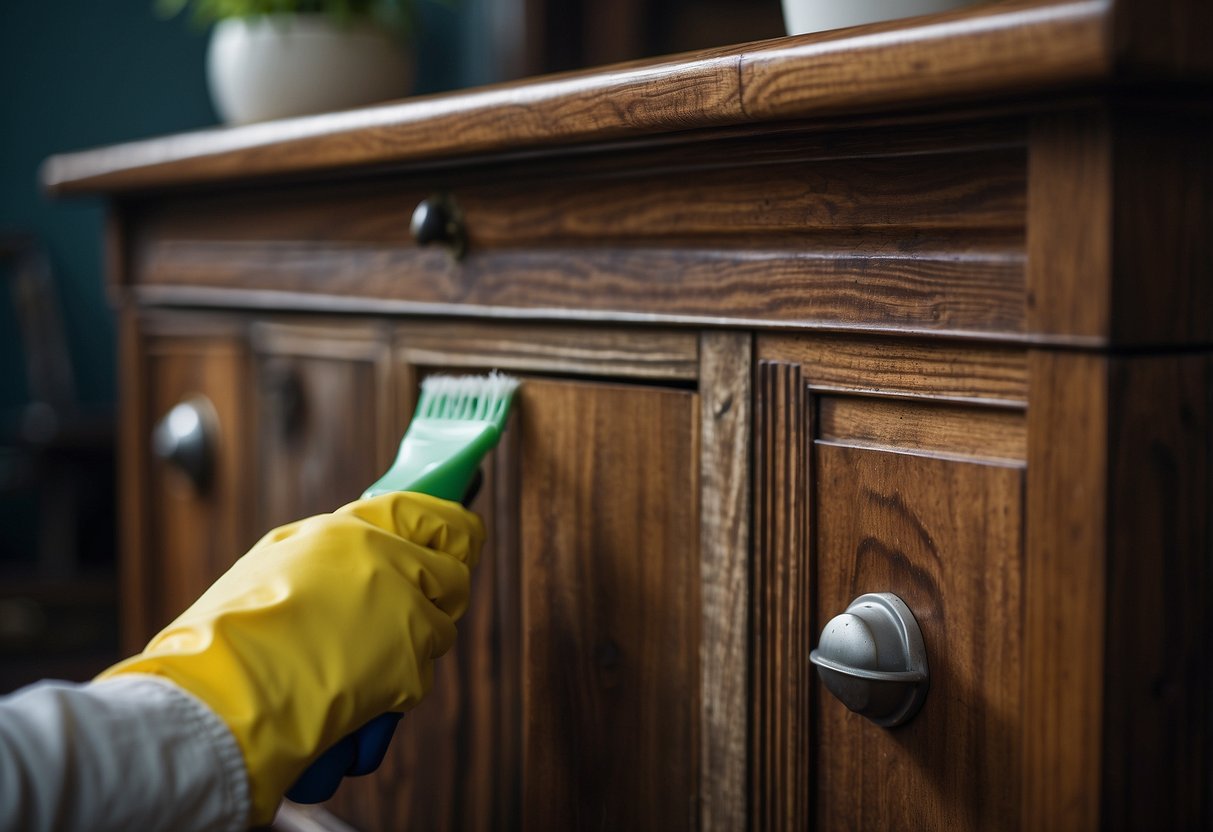
To remove mildew from antique wooden furniture, you can use a solution of equal parts water and white vinegar. Apply the solution to the affected area and let it sit for at least 30 minutes before wiping it off with a clean, dry cloth. You can also use a commercial mildew remover, but be sure to follow the instructions carefully and test it on an inconspicuous area first.
Can mould on wooden furniture be harmful to health?
Yes, mould on wooden furniture can be harmful to health, especially for people with allergies or respiratory problems. Mould spores can cause allergic reactions, respiratory problems, and other health issues. It’s important to remove mould from wooden furniture as soon as possible to prevent it from spreading and causing further damage.
What are effective methods to prevent mould growth in wooden cabinets?
To prevent mould growth in wooden cabinets, it’s important to keep them dry and well-ventilated. Avoid storing damp or wet items in the cabinets, and make sure there is adequate air circulation. You can also use a dehumidifier or moisture absorber to control humidity levels in the surrounding area.
How can I tackle powdery white mould appearing on my wood surfaces?
To tackle powdery white mould on wood surfaces, you can use a solution of one part bleach to four parts water. Apply the solution to the affected area and let it sit for 15-20 minutes before wiping it off with a clean, damp cloth. Be sure to wear gloves and a mask when using bleach.
What substances effectively kill mould on wooden furnishings?
Substances that effectively kill mould on wooden furnishings include white vinegar, hydrogen peroxide, and bleach. Be sure to follow the instructions carefully and test any substance on an inconspicuous area first.
Why does my wooden furniture develop mould, and how can I stop it?
Wooden furniture can develop mould due to high humidity levels, poor ventilation, and exposure to moisture. To stop mould growth, it’s important to keep the furniture dry and well-ventilated. Avoid placing it in damp or humid areas, and use a dehumidifier or moisture absorber if necessary. Regular cleaning and maintenance can also help prevent mould growth.