

Furniture Refinishing Products: A Guide to Restoring Your Old Furniture
If you’re looking to give your old furniture a new lease of life, furniture refinishing products are a great place to start. Whether you’re a DIY enthusiast or a professional restorer, these products can help you transform your furniture into something beautiful and unique. From stripping and sanding to staining and painting, there are a wide variety of products available to help you achieve your desired finish.

Before you get started on your furniture refinishing project, it’s important to prepare your furniture properly. This may involve stripping off old paint or varnish, sanding down rough surfaces, and filling in any cracks or holes. Once your furniture is properly prepared, you can start applying your chosen finishes and treatments. Whether you’re looking for a natural wood finish or a bold pop of colour, there are plenty of products available to help you achieve your desired look.
Key Takeaways
- Furniture refinishing products can help you transform your old furniture into something beautiful and unique.
- Proper preparation is key to achieving a successful furniture refinishing project.
- There are a wide variety of finishes and treatments available to help you achieve your desired look.
Preparing for Refinishing

Before you start refinishing your furniture, it’s important to take some safety precautions. Here are a few things to keep in mind:
Safety First
- Always wear gloves and eye protection when working with chemicals or sanding.
- Work in a well-ventilated area to avoid inhaling fumes.
- If you’re using a chemical stripper, make sure to read the label carefully and follow the instructions.
Gathering Your Materials
To get started, you’ll need to gather some materials. Here’s what you’ll need:

- Sandpaper in various grits (start with a coarse grit and work your way up to a finer grit)
- Chemical stripper (if you’re working with a piece that has a lot of old finish on it)
- Rags and a tack cloth for cleaning up dust and debris
- Steel wool for smoothing out the surface
- A putty knife and wood filler for filling in any scratches or gouges
- Sanding tools such as a power sander or orbital sander (optional)
Surface Preparation
Now that you have your materials, it’s time to prepare the surface of your furniture for refinishing. Here are some steps to follow:
- Clean the surface of your furniture thoroughly with a rag and some warm, soapy water to remove any dirt or grime. Allow it to dry completely.
- If there are any scratches or gouges in the surface, use a putty knife and wood filler to fill them in.
- Sand the surface of the furniture with a coarse grit sandpaper, following the direction of the grain. This will remove any remaining old finish and prepare the surface for the new finish.
- Work your way up to a finer grit sandpaper, following the direction of the grain each time. This will smooth out the surface and prepare it for staining or painting.
- Clean the surface again with a tack cloth to remove any dust or debris.
By following these steps, you’ll be well on your way to refinishing your furniture and achieving a smooth finish.
Applying Finishes and Treatments
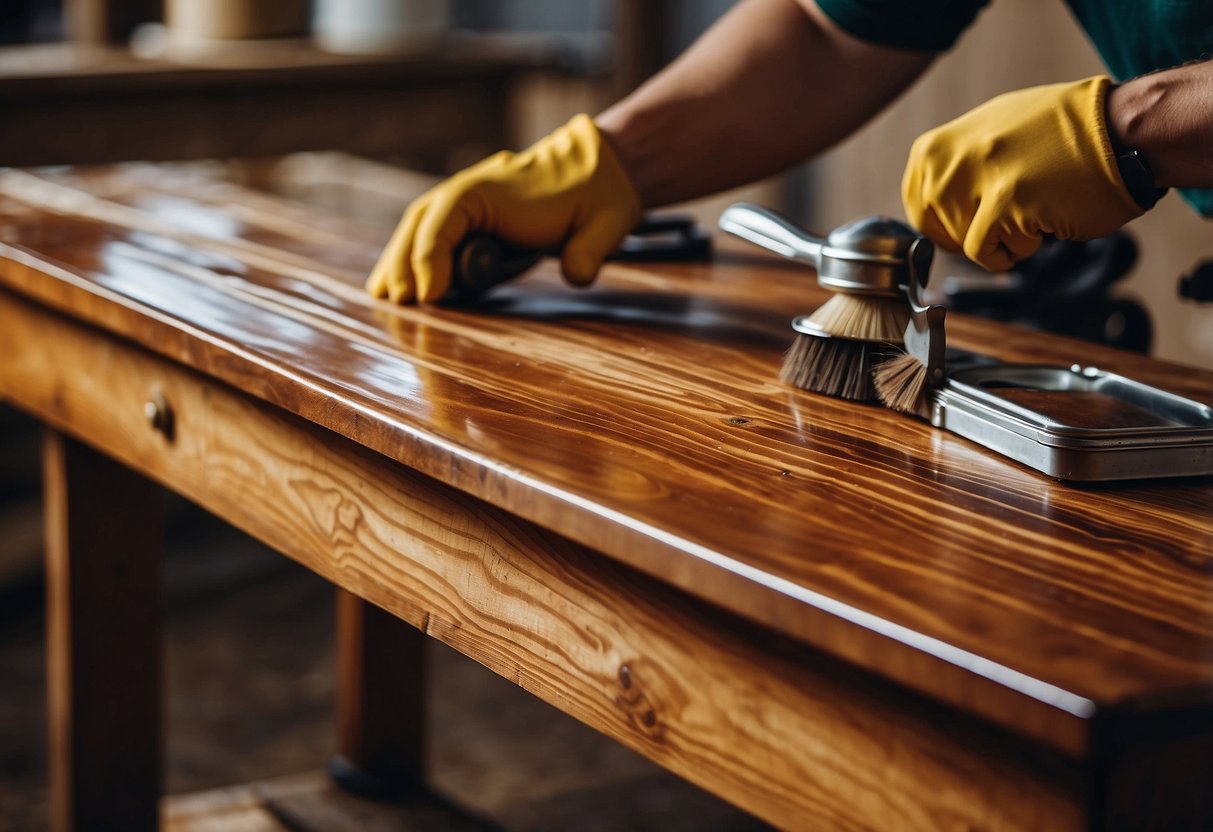
When it comes to refinishing your furniture, applying finishes and treatments is an important step to ensure a flawless finish. In this section, we will discuss the three main categories of finishes and treatments: stripping and staining, varnishing and protecting, and final touches.
Stripping and Staining
Before you can apply a new finish to your furniture, you need to remove the old one. Chemical strippers such as Citristrip and paint stripper can be used to remove old finishes. Once the old finish is removed, you can apply a wood stain to change the colour of your furniture. Oil-based stains and gel stains are popular options for staining wood furniture. Remember to use wood conditioner before staining to ensure an even finish.
Varnishing and Protecting
After staining, you can apply a varnish or top coat to protect the wood and give it a polished look. Polyurethane is a popular option for varnishing furniture as it provides a durable finish. You can apply it with a foam brush or a sponge. Furniture wax can also be used to protect the wood and add shine. Remember to let the varnish or wax dry completely before using your furniture.

Final Touches
Once your furniture is refinished, you may notice some finish damage or water rings. Howard’s Restor-A-Finish can be used to repair minor damage and restore the finish. For water rings, use a towel or sponge to apply mineral spirits and then wipe with a dry cloth. If your furniture requires repairs, epoxy putty can be used to fill in gaps and holes. Remember to dispose of any used chemicals properly.
By following these steps, you can successfully refinish your wood furniture, tables, chairs, and cabinets. Proper refinishing techniques can breathe new life into your furniture and help you save money on replacements. Whether you are a seasoned carpentry expert or a novice woodworker, refinishing projects can be a rewarding experience. Don’t forget to prime your furniture before painting it to ensure a smooth finish.
Frequently Asked Questions
What are the top-rated products for refinishing wooden furniture?
There are many great products for refinishing wooden furniture, but some of the top-rated ones include Minwax Wood Finish, General Finishes Gel Stain, and Rust-Oleum Ultimate Wood Stain. These products are known for their quality and ease of use, and they come in a variety of colours to suit your needs.
How can I find the best local suppliers for furniture refinishing materials?
One of the best ways to find local suppliers for furniture refinishing materials is to search online for stores in your area. You can also ask for recommendations from friends or family members who have experience with furniture refinishing. Additionally, you can check with local hardware stores or home improvement centres.
Could you recommend a method for restoring furniture without the need to sand it?
Yes, there are several methods for restoring furniture without the need to sand it. One popular method is using a liquid sander, which is a chemical solution that dissolves the old finish, allowing you to wipe it away. Another method is using a heat gun, which can soften the old finish, making it easier to scrape away.
What tools are essential for a professional furniture refinishing job?
Some essential tools for a professional furniture refinishing job include sandpaper or a power sander, scraper, paint stripper, brushes or foam applicators, tack cloth, and a protective finish such as polyurethane, wax, or lacquer. Additionally, safety gear such as gloves, goggles, and a mask are important to protect yourself from harmful chemicals.
Can you explain the difference between restoring and refinishing furniture?
Restoring furniture involves repairing or replacing damaged parts of a piece, such as fixing a broken leg or replacing a missing drawer. Refinishing furniture involves stripping off the old finish and applying a new one to restore the piece’s appearance. While both processes can improve the look of a piece, restoring is more focused on repairing functionality, while refinishing is more focused on aesthetics.
What are the steps to using a furniture refinisher like Minwax effectively?
The first step is to prepare the surface by sanding it and removing any old finish. Next, apply the Minwax refinisher with a brush or cloth, making sure to follow the manufacturer’s instructions. Allow the refinisher to sit for the recommended amount of time, then wipe away any excess with a clean cloth. Finally, apply a protective finish such as polyurethane or wax to seal the new finish and protect the wood.